


-
414 Block B, ZT Times Plaza, Wuhan, Hubei, Kina

Blogg
Vad globala data säger oss om försäljningstillväxten för vikbara produkter
Funny thing is, the phrase “foldable sales growth” sounds like it belongs to a phone analyst, not a mobility supplier. Fair. But the behavior behind the numbers? It travels. People buy foldables for one boring, very human reason: they hate hassle. They want gear that stores fast, moves easy, and doesn’t turn daily routines into a chore.
That’s why this topic actually lands for EZBKE better than some people might expect. When buyers keep watching foldable categories across industries, they’re not chasing novelty only. They’re chasing convenience that holds up after the first week. In scooters, that matters even more. A dealer, importer, or fleet guy looking at Vikbar elektrisk skoter lines usually isn’t asking, “Is this trendy?” He’s asking something less sexy: will this SKU create after-sales mess, warehouse friction, or rider complaints six months later?
And EZBKE’s positioning already leans into that language. Not fluffy lifestyle talk. Actual procurement talk. A 15Y anläggning för tillverkning av elektriska skotrar, ISO-certifierad produktion, bulk grossist, OEM/ODM-anpassning, plus a foldable line built around UL2272-certified safety, aircraft-grade hinges, IP54 waterproofing, and urban fleet practicality. That’s the kind of stack that speaks to buyers who’ve been burned before. And yeah, that happens a lot.
Foldable smartphone market growth is still moving, just not in a straight line
But here’s the ugly truth: people love to flatten this market into a neat little headline. “Foldables are booming.” Or, on the other side, “foldables are failing.” Neither version tells the whole story. Not even close.
IDC said foldables would still grow 10.5% in 2024 and keep a 15.9% five-year CAGR through 2028. TrendForce put 2024 shipments at 17.8 million units. Counterpoint came in colder and said 2024 growth was only 2.9%, while also warning that 2025 could dip before 2026 rebounds. Then you get the quarterly whiplash: 49% YoY growth in Q1 2024, 45% in Q2 2025och en record Q3 2025 med 14% YoY growth.
Messy market.
That’s actually the point. Foldables are still growing, but not in a smooth, spreadsheet-friendly way that makes analysts look smart on LinkedIn. Launch windows distort demand. Regional rollouts skew quarterly comps. Price cuts wake the channel up. New hardware fixes old objections. Then buyers come back. Sometimes.
| Specific point | Uppgifter | Vad det egentligen innebär | Källa |
|---|---|---|---|
| 2024 foldable growth stayed positive | 10.5% | Long-term demand still exists | IDC |
| 2024 growth also looked flat in some tracking | 2.9% | Momentum is real, but uneven | Counterpoint |
| Q1 2024 surge | 49% YoY | Launch timing can distort the story | Counterpoint |
| Q2 2025 rebound | 45% YoY | Recovery can happen fast when the lineup improves | Counterpoint |
| Q3 2025 record quarter | 14% YoY | The category still has expansion room | Counterpoint |
Foldable smartphone market penetration is still small
Now this part matters more than people admit.
TrendForce said foldable phone shipments in 2024 would hit 17.8 million, but that still translated to only 1.5% of the total smartphone market. For 2025, the forecast moved to 19.8 million units and roughly 1.6% penetration. Barely a jump. Even by 2028, the category is expected to reach just 4.8%.
So yes, the market is growing. But mainstream? Not really. Not yet.
And frankly, that’s where a lot of brands get confused. They think “different” is enough. It isn’t. Not in phones. Not in scooters. A foldable product wins when it removes real-world pain—storage pain, carry pain, transit pain, service pain. If it only looks clever in a launch video, forget it. The sell-through gets ugly fast.
That’s why the foldable story, stripped of hype, comes down to this: portability only works when the product doesn’t punish the user somewhere else. Hinge wobble, repair issues, dead weight, awkward carry geometry, fussy locking systems—buyers notice all of it. Fast.
China foldable smartphone sales and Europe growth show where demand really comes from
Yet global averages can be a trap. They smooth everything out, and once you smooth everything out, you miss the actual demand engine.
Counterpoint said China’s foldable smartphone sales grew 27% in 2024. Europe did even better in relative terms, with 37% growth in 2024, and HONOR’s book-type foldables in Europe jumped 377%. Big numbers. But more importantly, they show that category momentum doesn’t arrive everywhere at the same time.
That pattern feels familiar, honestly.
In scooters, it’s the same movie with different props. A foldable unit doesn’t suddenly sell everywhere because someone slapped “urban mobility” on the brochure. It sells when the local scene makes sense for it—rail commuters, dense city users, hotel operators, business parks, tourism routes, even dealers who already know compact SKUs are easier to move and easier to stack in the back-end flow.
That’s where demand usually starts:
- last-mile commuters who combine train, bus, and scooter
- hotel and tourism operators that need compact storage
- campuses and parks chasing uptime instead of fancy storytelling
- dealers who want fewer QA tickets and cleaner product turns
Context drives the orderbook. Hype doesn’t. Not for long.
Foldable smartphone market competition is changing fast
And then there’s the brand chessboard. This part gets fun.
TrendForce showed Samsung’s foldable share dropping from 45.2% in 2024 till 35.4% in 2025, while Huawei, Honor, Motorola, and Xiaomi gain ground. That shift wasn’t random. It came from better engineering, price pressure, thinner form factors, and brands figuring out how to pitch the segment without overcooking the message.
That matters because categories usually get healthier once they stop leaning on one dominant player to carry the whole show. More brands means more price bands. More price bands means more realistic entry points. More entry points means the channel stops treating the category like a fragile showroom experiment.
For scooter buyers, the translation is pretty direct. They don’t just want a nice sample with shiny plastics and a good deck photo. They want a platform strategy—something that can flex by market, by wattage, by compliance need, by channel margin, by rider profile. That’s where OEM/ODM stops being factory jargon and starts becoming a margin tool.
Fällbar elektrisk skoter: Varför fällning snabbt säljer snabbare
Here’s where it gets practical.
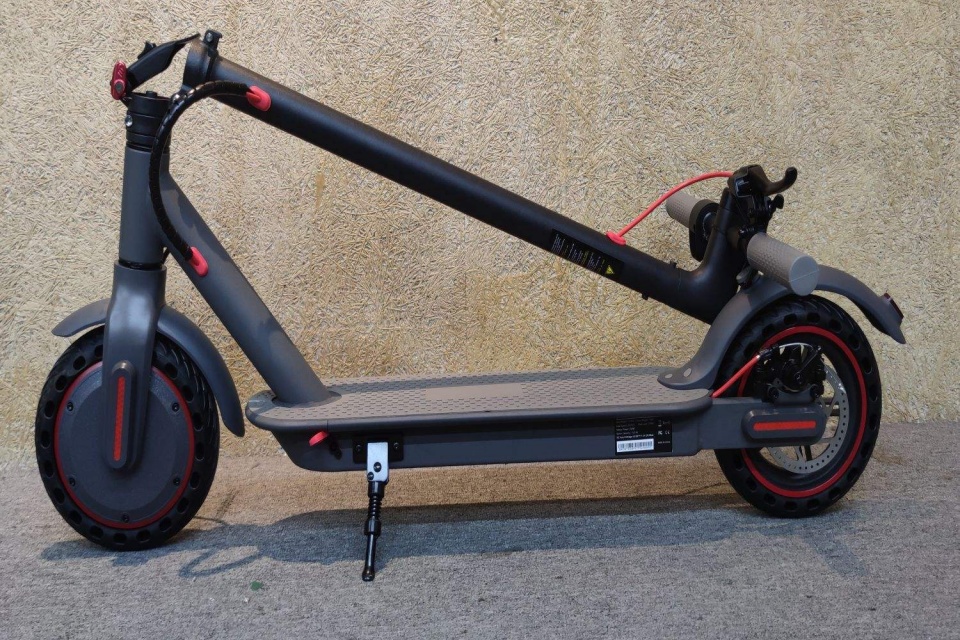
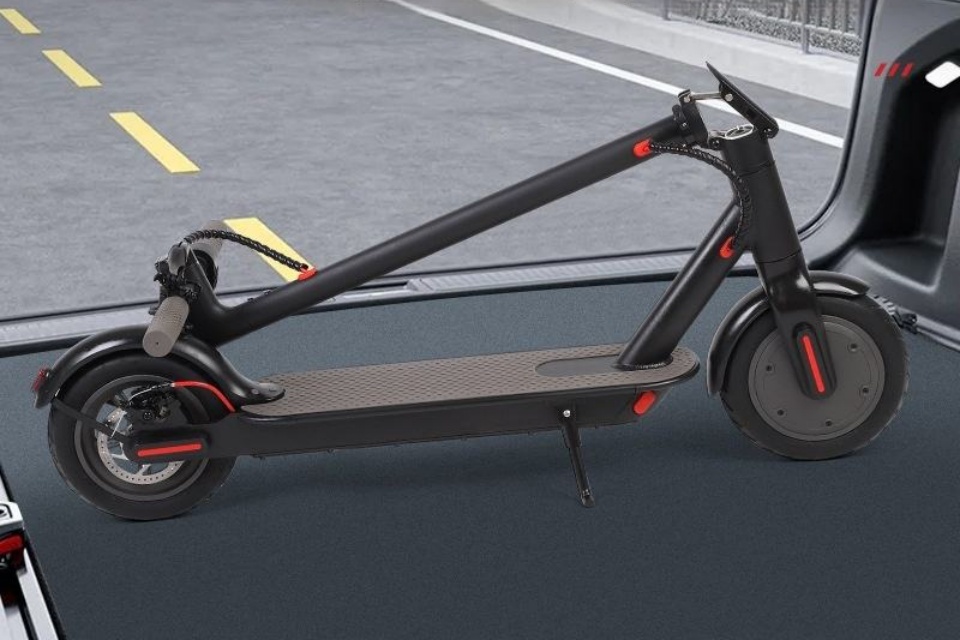
EZBKE’s own foldable range already frames the pitch the right way. Not as a gimmick. Not as a toy. As an operational advantage. The Vikbar elektrisk skoter category talks about UL2272-certified safety, gångjärn av flygplanskvalitet med 20 000+ cykler, IP54 waterproofing, och OEM-anpassning av bulk for urban fleets and shared mobility. That language works because it answers buyer objections before they become objections.
People don’t interact with foldables only while riding. That’s the rookie mistake in a lot of product pages. Real users carry them into lifts, slide them into trunks, stand them next to desks, tuck them into apartment corners, stash them behind hotel counters, and throw them into fleet vans between rotations. That off-ride behavior—the boring part—is usually where the sale is won or lost.
Foldable Electric Scooter with One-Step Folding
A folding system can make or break the SKU. Simple as that.
If it takes too many steps, feels sloppy, or starts developing play after repeat use, the product becomes a headache. Dealers know it. Riders know it. Service teams definitely know it. So when EZBKE leans into one-step folding och en sekundär säkerhetsspärr, that’s not just spec-sheet filler. That’s anti-return logic. Real-world stuff.
Lättviktig hopfällbar elektrisk skoter för pendlare
Weight matters more than some brands want to admit. A lot more.
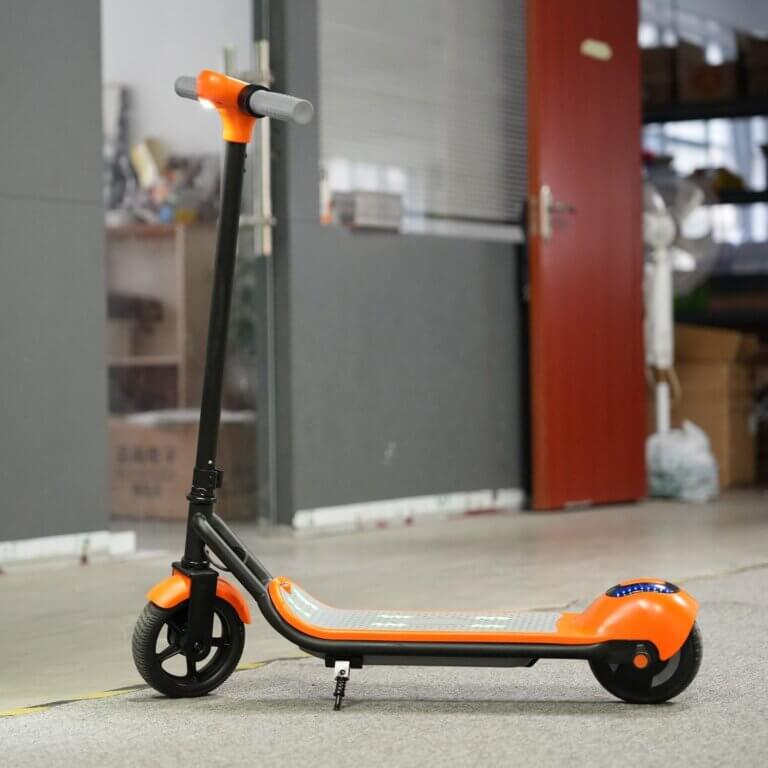
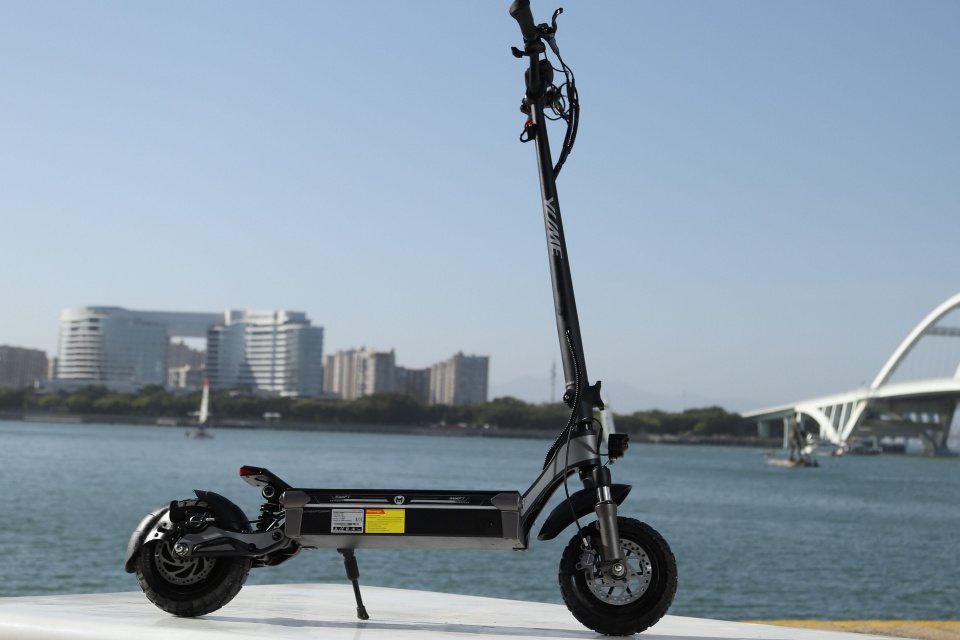
One kilo here, one kilo there—suddenly the thing stops feeling portable and starts feeling like dead inventory with handlebars. The site positions K1 around an ram i aluminiumlegering, city commuting, and easier carry. K2 comes across as more wholesale-friendly, with roughly 18 kg nettovikt and multi-range setup for different buyer tiers. Two different sales stories. Both useful.
That split is smart. One product speaks to commuter convenience. The other speaks to channel packaging, spec laddering, and broader distribution logic. Not glamorous, but very sellable.
OEM/ODM och grossistförsäljning
This is where the commercial angle gets serious.
K1 is described with 250W/350W motor options, region-fit speed versions, plus bits like USB, LCD, och fjärrstart. K2 pushes a 450W motor, 25/35/50 km range tiers, and container-loading clarity. From my experience, this is exactly the stuff real buyers scan for when they’re trying to reduce sourcing risk without starting from zero every season.
Not romance. Ops logic.
| Buyer pain point | What they actually want | EZBKE / Urban M angle |
|---|---|---|
| Fleet uptime pressure | durable hinges, service-friendly hardware, fewer returns | Foldable category is positioned for urban fleets and shared mobility |
| Friktion vid efterlevnad | safety marks, waterproof baseline, battery-ready docs | UL2272, IP54, and compliance-first language show up across the foldable content |
| Channel complexity | different power and speed options by market | K1 supports 250W/350W and region-fit setup |
| Wholesale scaling | predictable carton logic and container planning | K2 content highlights loading efficiency and fleet logic |
| Private label growth | custom branding without redoing the whole platform | OEM/ODM, bulk customization, packaging and branding support |
That also explains why Urban M fits so naturally into the conversation. It doesn’t have to be pitched like some futuristic concept brand. Better not to, actually. The stronger pitch is much simpler: Urban M gives buyers a foldable format that works in real urban mobility scenes—commuting, tourism, fleet rotation, and dealer-led city programs where storage, durability, and turnaround time matter more than flashy copy.
What global data really tells us about foldable sales growth
So what’s the real takeaway?
Not that buyers love “innovation” in the abstract. They don’t. That word gets abused to death. What the global data really shows is something way less glamorous and way more useful: buyers stick with foldables when the format removes friction without creating new annoyances.
That lesson jumps neatly from smartphones to scooters. If you’re selling Vikbar elektrisk skoter products through wholesale, fleet, or OEM/ODM channels, the pitch can’t stop at “it folds.” That’s weak. Everyone says that. The stronger argument—the one that actually survives procurement review—is this:
it folds fast, stores clean, ships smart, meets compliance needs, and keeps your ops team out of trouble.
That’s why K1, K2, and the wider Urban M foldable line make sense here. They sit in the sweet spot where foldable demand usually gets real: portability, hinge durability, service logic, channel fit, and commercial flexibility. The kind of stuff people actually pay for.
And honestly? That’s enough. Buyers don’t need magic. They need less friction, cleaner sell-through, and a supplier that seems to understand how the business really runs.