


-
414 블록 B, ZT Times Plaza, 우한, 후베이성, 중국

블로그
What Makes a Foldable Scooter Airport-Friendly?
A lot of sellers talk like airport-friendly just means a scooter folds fast. Nice pitch. Not enough.
Here’s the ugly truth: a model can snap shut in seconds and still turn into a mess at check-in, a red flag for cargo staff, or a flat no because of the battery pack. That’s where buyers get burned. In real travel, “airport-friendly” is about less friction from the first curb drop to the last-mile ride after landing—terminal movement, handling, storage, compliance, and all the annoying little handoff moments in between. That’s the part many product pages skip.
And for dealers, importers, and fleet buyers, that difference is huge. You’re not only moving a unit. You’re moving a product that should cause fewer support tickets, fewer warehouse complaints, fewer “why is this stuck at the airport?” emails. That’s why this topic fits the Foldable Electric Scooter category well, especially for brands that work in OEM/ODM, bulk wholesale, and 도시 모빌리티 lanes. EZBKE positions its foldable range around city rentals, campus mobility, and last-mile use, while Urban M sits inside a broader electric mobility story built by Wuhan Jiebu Electronics with 15 years in the trade, OEM capability, and a global supply focus.
Foldable Scooter Airport-Friendly Means More Than a Fast Folding Mechanism
Let’s not romanticize the hinge.
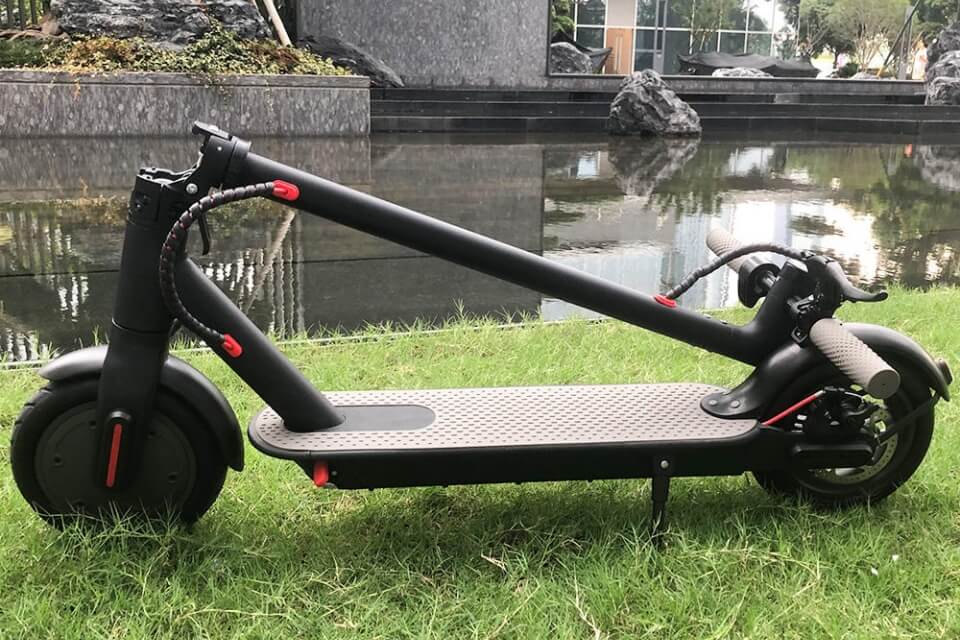
A 접이식 스쿠터 becomes airport-friendly when it clears four real-world tests, and none of them care about ad copy. The battery has to pass airline logic. The folded dimensions and curb weight have to make sense for handling. The unit has to behave in crowded terminals without feeling like a clumsy brick. And, maybe most important for channel buyers, it can’t create ops drag after the sale. That’s the real KPI.
But classification changes the game too. A lot.
If a device is treated as an assistive mobility aid, it can fall under a different rule path. That sounds helpful, and it is, but don’t oversell it. I frankly believe too many suppliers throw around “airline approved” like confetti, then disappear when the customer gets stonewalled at the counter. Airlines can apply stricter rules. So the cleaner line is this: airport-friendly for travel use, yes; automatic approval on every airline, no. Not even close.
Lithium Battery Rules for Mobility Scooter Air Travel
This is the chokepoint.
Not the deck. Not the stem. Not the display panel. The battery.
For this kind of mobility-device context, the battery size limit is one of the first things airlines and airport staff care about. If the pack is too large, poorly labeled, or not protected the right way, the whole trip can stop right there. In some cases, the battery may need to be removed, protected from short circuit, and carried separately based on the airline’s rules and the device design. That’s not a small detail—it’s the gatekeeper.
300Wh Battery Limit and Carry-On Battery Handling
Sounds dry. It isn’t.
This one spec can decide whether a trip goes smooth or goes sideways fast. From my experience, once a buyer starts asking about removable packs, watt-hours, short-circuit protection, and cabin handling, they’re no longer shopping on vibes. They’re trying to avoid a blow-up at the worst possible time. That’s why spec-sheet hygiene matters so much. A pretty brochure won’t save the shipment. The battery data might.
Airline Approval and Extra Check-In Time
And then there’s the paperwork layer—because of course there is.
Advance arrangements and extra check-in time may be necessary. Operators may also ask for the manufacturer name, model number, battery type, total weight, dimensions, removable parts, and transport test information. That tells you something useful, maybe obvious, maybe not: airport-friendly is not only a hardware story. It’s hardware plus paperwork plus staff handoff. Miss one leg of that stool and the whole thing wobbles.
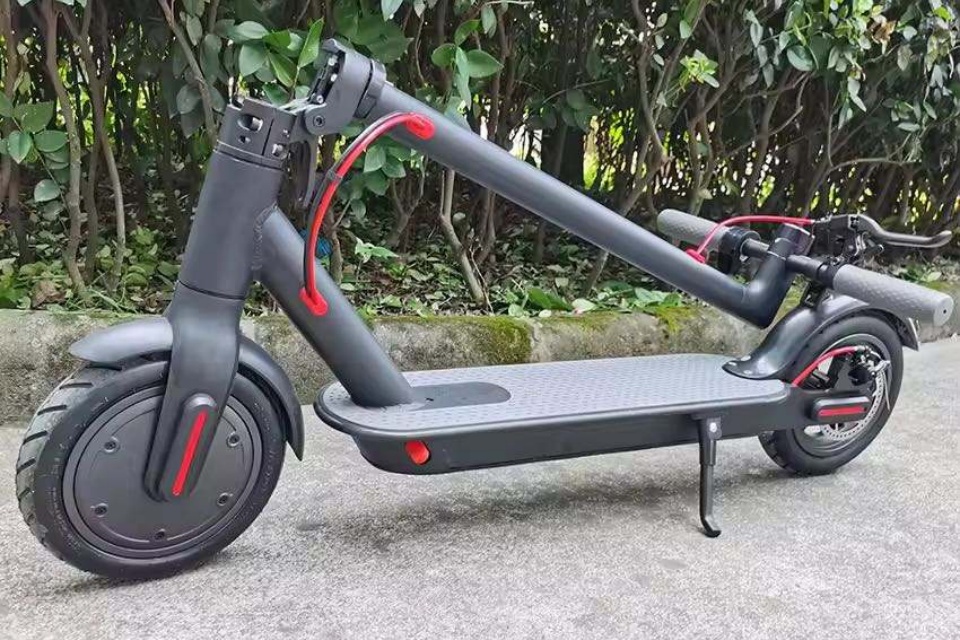
Foldable Electric Scooter Size and Weight for Airline Handling
Now let’s talk about the ugly warehouse side of it.
Operators often need the device’s length, width, and height in advance so they can confirm whether the aircraft door and cargo compartment can accommodate it. Total weight matters too because it affects loading and securing inside the aircraft. So, no, “it folds” doesn’t magically solve the stowage problem. A unit can collapse neatly and still be awkward, top-heavy, too chunky around the bars, or just plain annoying for ramp crews to move without babying it. That’s where products start feeling high-maintenance.
There’s also the handling-risk angle. A scooter or mobility device can get scratched, delayed, or damaged in transit, and that risk is not theoretical. It’s one more reason why compact folds, fewer fragile protrusions, and clear battery procedures matter a lot. In the trade, that’s where the difference between a clean turnover SKU and a service-nightmare SKU starts showing.
Why K1 and K2 Make Sense in Travel-Use Scenarios
This is where the product architecture actually gets interesting.
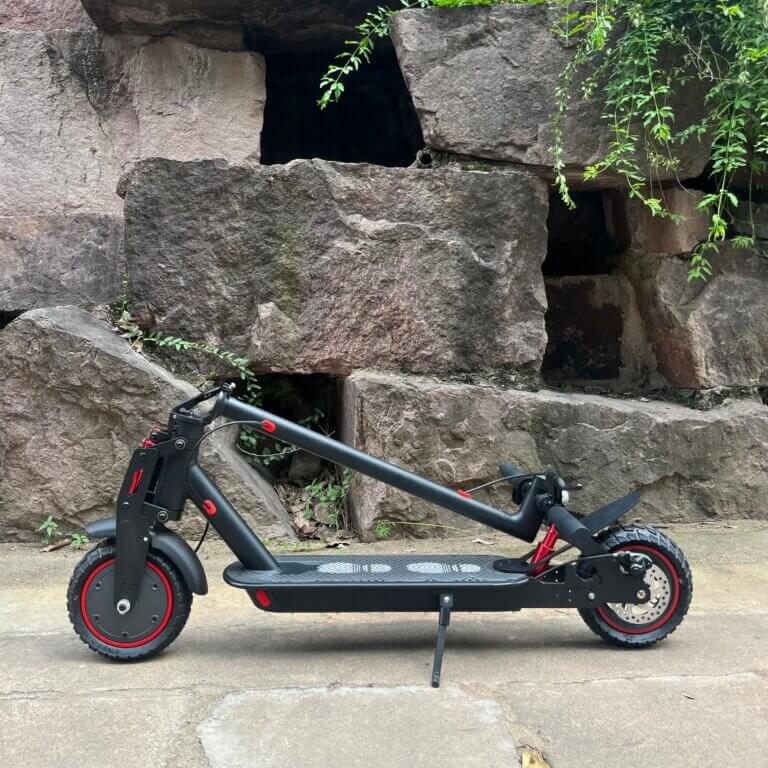
The K1 uses an aluminum alloy folding frame, offers 250W and 350W versions for regional compliance, and lists a 35–40 km range with 3–4 hour charging. The K2 lists 18 kg net weight, 25/35/50 km range options, and container-friendly loading density. EZBKE’s own foldable-sales content also highlights one-step folding, weather-ready construction, compliance-minded positioning, and the kind of carry-friendly spec choices that help in subway, office, elevator, and dense urban settings. None of that automatically means airline approval, of course, but it does show the products are built around real use cases instead of fluff. That matters. Buyers can tell.
And, honestly, there’s a commercial angle here that people don’t say out loud enough: a good foldable platform is easier to pitch across more scenes. Commuter retail. Campus. Hospitality. Property fleets. Light rental. A bad one? It becomes dead stock with fancy photos.
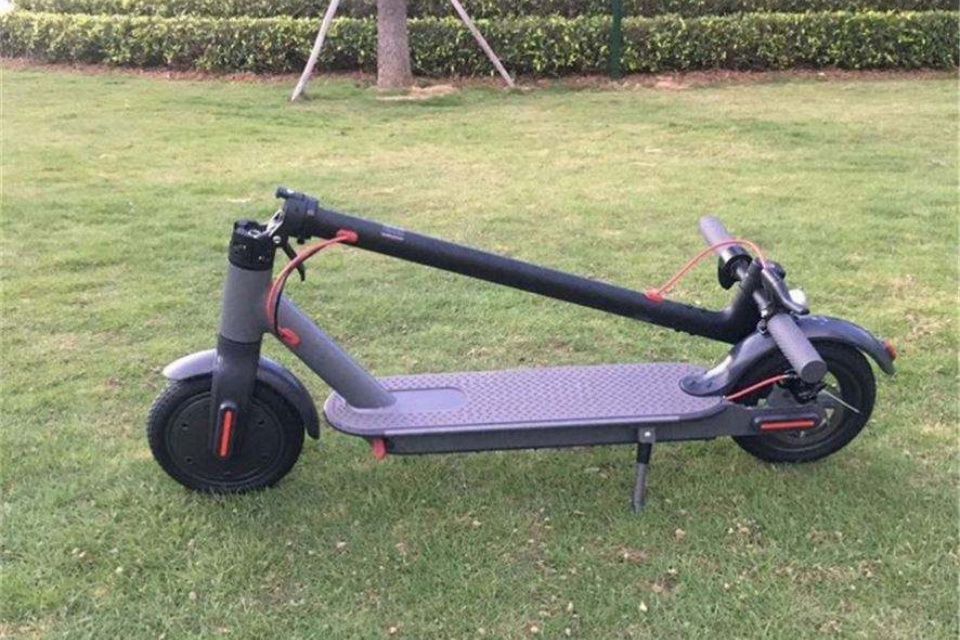
Airport Terminal Mobility and Last-Mile Travel Scenarios
Most people hear “airport-friendly” and think only about the airplane. But airports are ecosystems. Big ones.
A foldable scooter also has to work in the terminal, between gates, near parking structures, across rail links, inside hotel storage rooms, and on the final leg after touchdown. That’s why foldability, portability, lighting, weather resistance, and charge turnaround still matter even when airline rules are the big compliance gate. EZBKE already frames foldable scooters around 도시 임대, campus movement, tourist mobility, and last-mile use. That positioning makes sense because it matches actual rider behavior—messy, multi-stop, sometimes rushed, rarely ideal.
But here’s the thing: buyers don’t really want “cool.” They want less friction. Easier storage. Easier grab-and-go. Easier van loading. Easier room placement for hotel operators. Less clutter in the back room. Better answers when a property manager asks about battery handling or certifications. That’s the sort of language that gets closer to a PO. Not just a click.
Related Arguments and Source Table
| 인수 제목 | 특정 포인트 | Why it strengthens the article | 출처 |
|---|---|---|---|
| Lithium Battery Rules for Mobility Scooter Air Travel | In this mobility-device context, battery size, removable pack design, and short-circuit protection directly affect whether the scooter can travel more smoothly by air. | Gives the article a hard compliance anchor instead of vague “travel-friendly” language. | FAA, TSA |
| Airline Approval and Extra Check-In Time | Advance arrangements may be needed, and operators may ask for model number, battery type, weight, and dimensions for approval. | Shows that airport use is also a documentation workflow, not only a product feature. | FAA, IATA |
| Foldable Electric Scooter Size and Weight for Airline Handling | Dimensions and total weight matter because operators need to check aircraft door fit, cargo placement, and handling practicality. | Proves that “compact fold” has a practical reason, not just a marketing one. | IATA |
| Assistive Device Baggage Rules | Rule treatment can change if the product is classed as an assistive mobility device rather than a standard electric scooter. | Adds nuance and credibility, while reminding readers that classification matters. | DOT |
| K1 Foldable Electric Scooter for Urban Travel | K1 uses an aluminum alloy folding frame, 250W/350W options, 35–40 km range, and 3–4 hour charging. | Gives a concrete product example tied to portability and fast-turn use. | EZBKE K1 page |
| K2 Foldable Electric Scooter for Compact Logistics | K2 lists 18 kg net weight, multiple range options, and container loading density for bulk movement. | Connects airport-friendly thinking with dealer logistics and fleet practicality. | EZBKE K2 page |
Foldable Electric Scooter OEM/ODM Value for Dealers and Fleet Buyers
So what makes a foldable scooter airport-friendly?
Not one thing. That’s the point.
It’s compliance first, then handling, then real travel usability, and then the business side right behind all that. The strongest products in this lane usually aren’t the loudest ones. They’re the models with cleaner battery logic, saner fold geometry, less ops drag, and better paperwork when someone on the airline side starts asking the tedious questions nobody on the sales side wanted to hear. That’s how this market really works.
For a supplier like Urban M, that turns into a natural commercial advantage. You’re not only selling Foldable Electric Scooter units. You’re helping dealers, wholesalers, and fleet buyers move through compliance checks, property-access questions, regional motor rules, and SKU planning with less guesswork. K1 and K2 already show that logic in different ways. One leans into adaptable urban commuting specs. The other leans into scalable, compact logistics. That’s solid product planning. Maybe not flashy. Better than flashy.
보통.