


-
414 Block B, ZT Times Plaza, Wuhan, Hubei, China

Blog
Which E-Bikes Are Bestsellers In Urban Markets?
If you sell or source e-bikes for cities, you don’t care about “cool photos” only.
You care about SKUs that move fast, less headache in after-sales, and solid long-term margin.
So, which e-bikes actually sell in urban markets right now?
Short answer: city/urban, pedal-assist, lithium-battery bikes with hub or mid motors – plus a fast-growing niche of cargo and folding models.
Below I’ll walk you through the market data, real urban use cases, and how models like the Urban M range from EZBKE fit into this picture.
Urban Electric Bike Market Overview
Urban demand isn’t a side story any more. It’s the main track.
Industry reports put the global e-bike market around the tens of billions of dollars in 2024 and expect it to roughly double or more by the early 2030s. Inside that, city / urban models take well over half of total volume, with some studies tracking urban/city share at more than three quarters of the market.
Why? Simple:
- Cities are pushing low-emission zones.
- Commuting costs with cars keep going up.
- Younger riders don’t want car ownership; they want flexible mobility.
So when we say “bestsellers in urban markets”, we’re really talking about:
- Standard commuter / city e-bikes
- Cargo e-bikes for last-mile and family
- Folding city bikes for riders with small apartments and multi-modal trips
To make that more concrete, think of the urban catalog on EZBKE – our Electric Bike range is basically built around these exact scenarios.
City/Urban E-Bike Market Share Snapshot
| Indicator | Recent data (approx.) | Why it matters for bestsellers |
|---|---|---|
| Overall e-bike market | Tens of billions USD, strong double-digit growth | Growing pie, but more competition. You need the right spec, not random models. |
| City / urban segment | Biggest share (often tracked at 70%+ in some reports) | Urban bikes are the bestseller group globally. |
| Battery type | Lithium packs >95% share | If you’re not using lithium, you’re basically out of the main game. |
| Drive type | Pedal-assist dominates, throttle is niche in many regions | PAS feels natural to riders and plays nicer with regulations. |
| Motor layout | Hub motors take the majority, mid-drive grows in higher-end | Hub = cheap and easy to service; mid-drive = performance and hills. |
You can already see the pattern:
Urban + PAS + lithium + hub or mid motor is the template behind most top-selling city bikes.
Best-Selling Urban Electric Bike Types
Urban demand splits very clean into a few winning shapes:
- Commuter / city e-bikes – daily rides, home–office–shop.
- Cargo e-bikes – last-mile delivery, family hauling.
- Folding commuters – dense cities, small flats, multi-modal trips.
Below I’ll map each type to real EZBKE models so it’s not just theory on a slide.
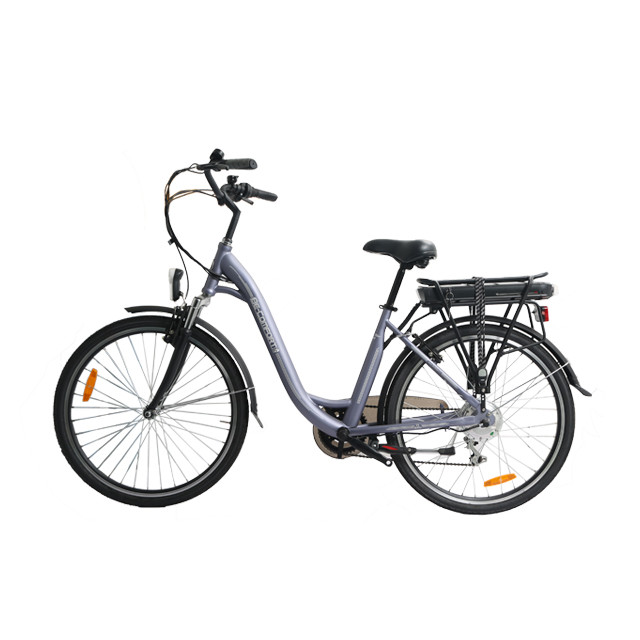
Commuter and City Electric Bikes
Picture a typical weekday rider:
- 10–20 km per day
- Some hills but nothing crazy
- Needs lights, racks, fenders
- Wants reliability, not a toy bike
That’s where commuter / city e-bikes win big. Global data shows these bikes usually run:
- Pedal-assist only
- Legal top speed around 25 km/h
- Lithium battery, hub or mid motor
- Simple drivetrains and city-friendly geometry
On the EZBKE side, a few models slot right into this commuter bucket:
- B01 – long-distance oriented, built for riders who care more about practicality than gimmicks.
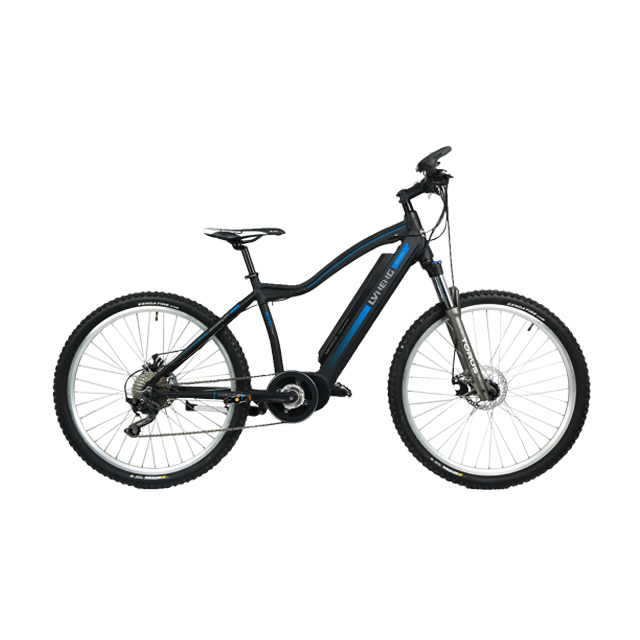
- C02 – a fast mid-drive city bike, compact packaging, long-range battery, Shimano gears, and proper pedal-assist. Good choice for hillier cities or premium fleets.
- C06 – adult road-style frame, aimed at tougher daily use where roads are not always smooth.
- LN26M01 – a juiced adult model with mid-motor and all-rounder urban geometry.
For distributors and fleet operators, these are the bread-and-butter commuters.
You drop them into rental fleets, subscription programs, or regular B2C channels. TCO is predictable, spec matches what people already expect from a modern urban e-bike.
Urban Cargo Electric Bike for Delivery and Family Use
Cargo e-bikes used to be a niche. Not anymore.
In Europe and parts of Asia, cargo e-bikes are now serious tools for last-mile delivery and family transport. Vans get stuck, parking is pain, and fuel cost doesn’t go down. A solid cargo bike fixes a big part of that.
EZBKE has two very clear workhorses in this space:
- 350W Electric Cargo Bike with Dual Battery & Heavy-Duty Rack
- Bafang mid-drive motor, 24″ wheels, aluminum frame
- Dual lithium packs for long range with pedal assist
- Front and rear cargo racks, digital display
- Designed for logistics, groceries, and utility work
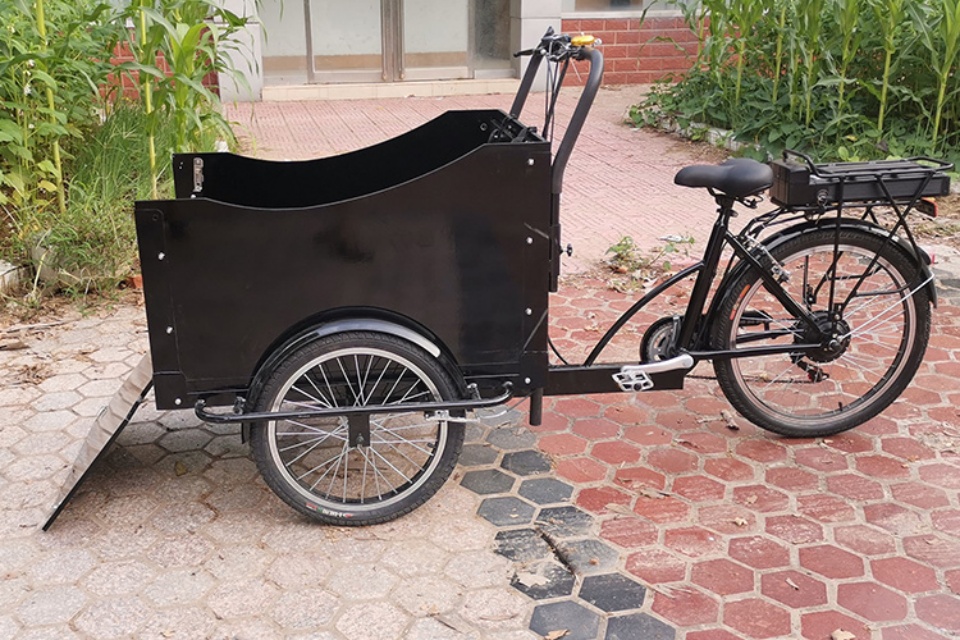
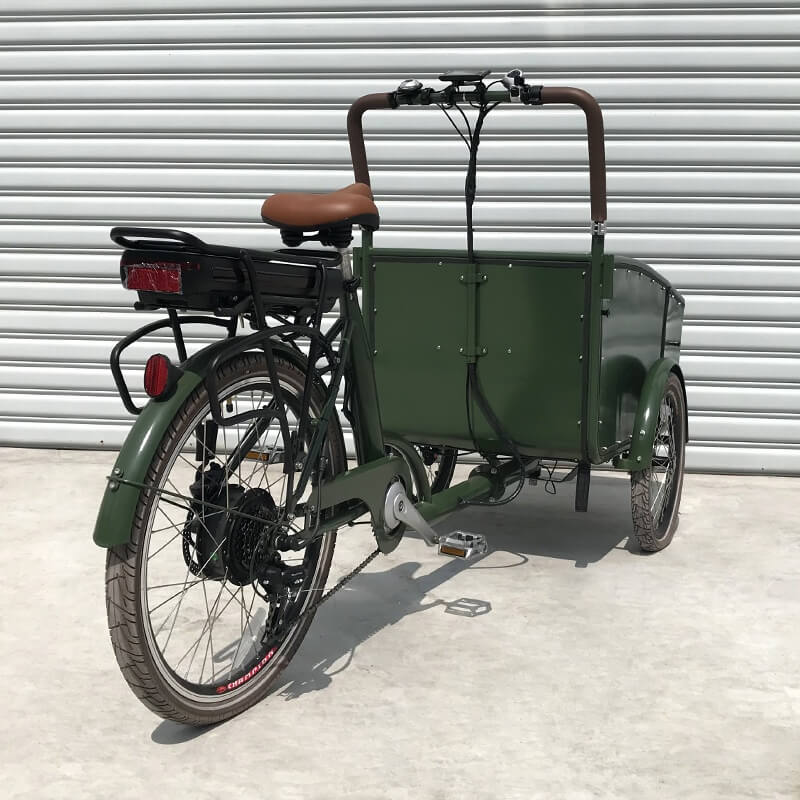
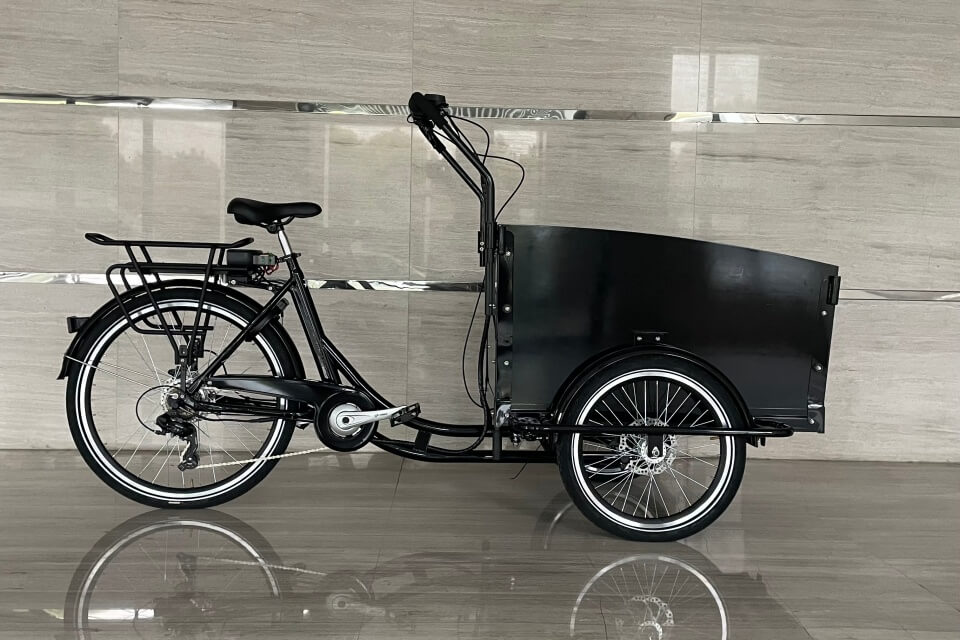
- 750W 3-Wheel Electric Cargo Bike with Large Front Box
- 3-wheel platform for extra stability
- Big front box with integrated lighting
- Range and speed tuned for urban operations
- Certification and container-friendly packing, so it scales better for wholesalers
For food delivery, parcel drop, or even school runs, this kind of platform gives you:
- High payload
- Easy handling at low speed
- Less stress with parking and city access rules
From a buyer’s perspective, this isn’t “nice gadget”. It’s pure uptime and revenue per vehicle.
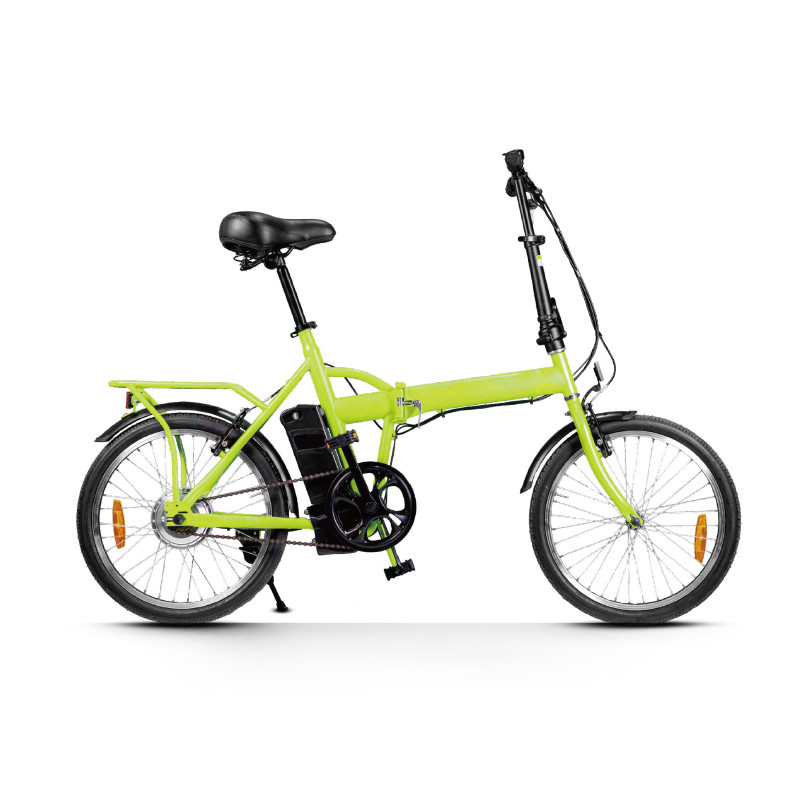
Folding Electric Commuter Bikes for Dense Cities
Folding and compact commuters are another bestseller type in urban areas.
Why they move so well:
- Many tenants have no garage, only a small hallway or balcony.
- Office workers want to bring the bike inside, not lock it outside all day.
- Riders mix metro, train, and bike in a single trip.
For this crowd, a light, compact, folding bike sells on first look.
In the EZBKE lineup, you’ve got:
- F20 – a small folding electric commuter city bike, targeted at eco-conscious commuters and delivery services that need compact, customisable units.
- LN26M03 – a folding electric bicycle for adults, flat-packed for efficient shipping and easy warehouse-to-store logistics.
- M04 – foldable adult e-bike, built with “no extra drama—just smart design and reliable performance” in mind.
These are classic high-density-city products.
You push them into student fleets, hotel mobility, short-term rental, or B2C markets where “can I store this in my flat?” is the first question buyers ask.
EZBKE Urban M Electric Bike Models and Urban Use Scenarios
EZBKE positions itself as an OEM / ODM electric bike solution provider with:
- Custom frame and motor specs
- Options for sodium-ion batteries for down to −15°C climates
- IoT diagnostics and remote fault detection
- IATF / ISO-grade production and container-scale capacity
That matters for wholesalers and fleet owners: you’re not just buying a single bike, you’re buying a platform you can roll out by the container and still keep service cost under control.
EZBKE Urban Electric Bike Models and Typical Scenarios
| Model | Type | Urban scenario | Value for wholesalers / fleets |
|---|---|---|---|
| 350W Electric Cargo Bike (dual battery) | 2-wheel cargo e-bike | City logistics, parcel, grocery, heavy-duty last-mile | Long range with dual packs, Bafang mid-drive, proper racks – designed for high utilisation. |
| 750W 3-Wheel Electric Cargo Bike | 3-wheel cargo trike | Food delivery, big-box delivery, family use | Stable under heavy load, large front box, city-friendly speed, easy to brand and scale. |
| B01 | Lightweight commuter | Entry-level city rider, bike-share, corporate commute schemes | Practical spec, easy to explain to end users, good margin potential for volume orders. |
| C02 | Fast mid-drive commuter | Longer urban trips, hilly cities, premium shared fleets | Mid-drive, PAS, and compact packaging give better climbing and lower shipping cost per unit. |
| C06 | Road-frame e-bike | Mixed city / suburb, rougher streets | Stronger frame, still urban-ready, good for markets with not-so-perfect roads. |
| F20 | Folding commuter | High-density cities, students, delivery riders | Compact, folding, customisable; ideal for small apartments and multi-modal trips. |
| LN26M03 / M04 | Adult folding e-bikes | General city riders, hotel / rental fleets | Folding geometry, adult sizing; flexible SKUs for different channels. |
In short, the Urban M portfolio already covers the shapes that global urban data tells us are best-selling: commuters, cargo, and folders.
How These Urban E-Bikes Solve Real City Problems
Let’s move away from spreadsheets and look at what actually hurts in cities.
Use Case: Last-Mile Delivery & Micro-Logistics
You run a small delivery fleet or manage micro-logistics for a brand. Your headaches:
- Vans stuck in traffic
- No parking near the drop-off point
- Fuel costs eating margin
- Drivers wasting time circling blocks
A dual-battery cargo bike or a stable 3-wheel cargo trike lets you:
- Swap batteries quickly instead of parking for charging
- Park closer to the door
- Cut fuel exposure entirely
- Move more parcels per hour in dense districts
The 350W dual-battery cargo bike and the 750W 3-wheel cargo bike are both set up for this kind of use: real racks, serious boxes, long range, and packing details thought through for bulk buyers.
You’re not just buying a “cool delivery bike”. You’re buying more drops per shift.
Use Case: Daily Commuting & Shared Fleets
Now imagine you operate a city-wide subscription and sharing program.
What do you need?
- Bikes that normal people understand in two seconds
- Low service cost
- Specs that stay inside local regulations
- Frames that survive real-world abuse
Models like B01, C02, C06, LN26M01 and the folding F20 / LN26M03 / M04 hit those boxes: familiar look, pedal-assist, sensible speed cap, and components that mechanics already know how to work with.
Because the global market is already dominated by pedal-assist, lithium packs, and hub or mid motors, you’re playing inside a pattern riders expect. There’s no need to “educate the market” from zero.
You also get:
- Better serviceability – fewer exotic parts, more standard spares
- Fleet visibility – with IoT, you can see where bikes are and what’s failing before it becomes downtime
- Container efficiency – especially on models designed with compact packaging in mind, so you squeeze more units into the same freight cost
These details are what make a bike not just nice on a product page, but actually profitable over its full life in your fleet.
Key Buying Criteria for Urban Electric Bike Wholesalers
When you strip away the noise, a real urban bestseller usually ticks these boxes:
- Aligned with macro demand
- City / commuter, cargo, or folding format
- Pedal-assist, legal speed, lithium packs, hub or mid motor
- Clear scenario fit
- “This is for commuting.”
- “This is for delivery.”
- “This is for tiny apartments and metro + bike trips.”
If a SKU tries to be everything, it often sells to no one.
- Wholesale-ready
- OEM / ODM support
- Stable lead times
- Container-level packing plans and MOQs
That’s exactly the game EZBKE is playing as a 15-year manufacturer with its Urban M and other electric ranges.
- Service and support
- Easy access to parts
- Remote diagnostics where possible
- Documentation that doesn’t make your techs suffer
- Regulation compliance
- Speed limits and power rules
- Brake and lighting requirements
Get this wrong and you don’t have a bestseller – you just have blocked inventory.
Urban riders are voting every day for practical, pedal-assist city machines, plus a strong wave of cargo and folding e-bikes. Global numbers and street reality say the same thing.
If you’re building a product line or sourcing for your brand, start from that reality.
Then look at how the Urban M and related Electric Bike models line up: commuters, cargo, folders, all with OEM/ODM and bulk-friendly production behind them.
That’s how an e-bike moves from “nice brochure” to a real bestseller in urban markets.