


-
414 Block B, ZT Times Plaza, Wuhan, Hubei, China

Blog
What Retailers Need To Know About E-Bike Warranty Policies
Below I’ll pull together what industry warranty articles say, plus what we see on the factory side at EZBKE / Urban M as a 15Y electric scooter manufacturer plant that also builds Electric Bike, Electric Kick Scooter, Electric Motorcycle, Foldable Electric Scooter and Sharing Scooter for OEM/ODM and wholesale channels.
E-Bike Warranty Policies Retailers Need To Understand
Most e-bike warranties in the market follow the same pattern:
longer coverage for the frame, shorter for motor, battery and electronics.
Several warranty guides and brand policies show:
- Many brands give lifetime or long-term frame coverage for the first owner.
- Motors, batteries and other electric parts sit around 1–2 years.
If you don’t explain this split clearly, you’ll get that angry line at the counter:
“But I thought the bike was covered for life?”
Frame vs Motor and Battery Warranty in Electric Bikes
Think of warranty in three layers:
- Frame & fork – long-horizon items
- Electric drive – motor, controller, display, sensors, harness
- Battery – often with its own rules (cycles, storage, swelling, etc.)
Industry examples show frame coverage ranging from 2 years up to “lifetime”, while motors and batteries usually sit at 1–3 years.
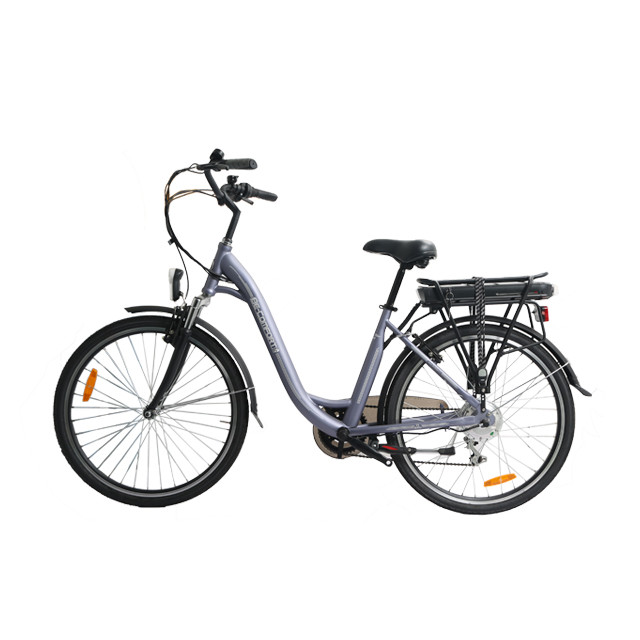
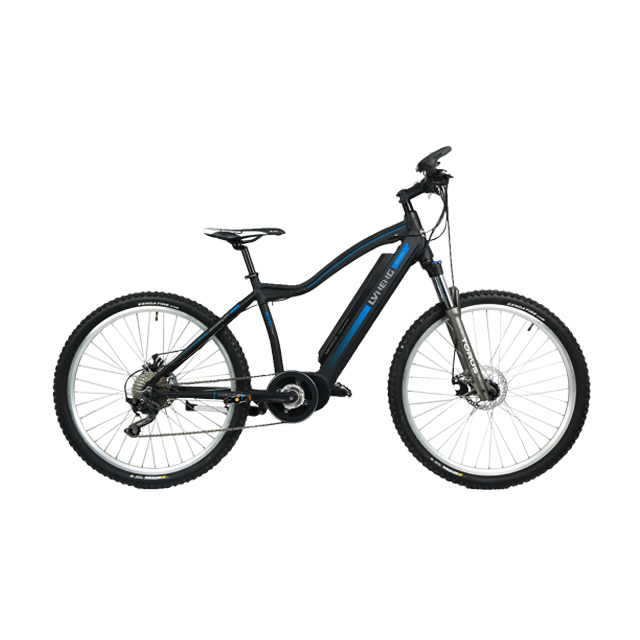
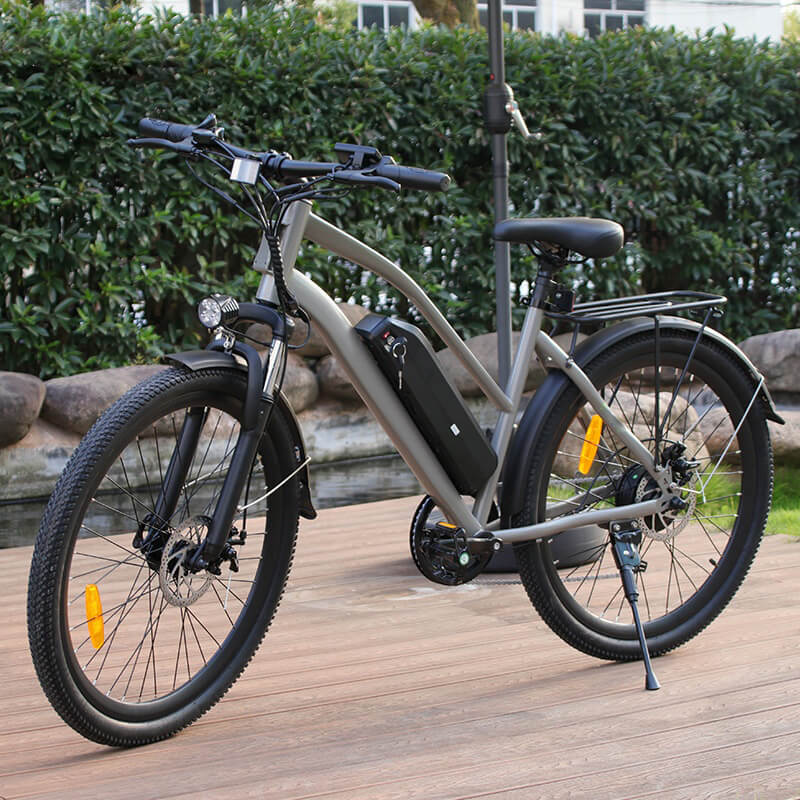
So if you’re selling a mid-drive city bike like your C02 fast 30 mph mid drive electric bicycle manufacturer type model, the frame might be safe for many years, but the motor and pack will hit the end of warranty much earlier.
Your sales talk has to match that reality. Otherwise you’re basically promising free drive units forever without planning the spare-parts pipeline.
Manufacturing Defects vs Wear and Tear in E-Bike Warranty
Another big gap between what the text says and what customers hear:
- Warranties cover: defects in materials and workmanship under normal use
- They don’t cover: brake pads, tires, chains, cosmetic damage, crashes, silly DIY hacks
Service and warranty guides repeat this line over and over: an e-bike warranty is a safeguard against manufacturing defects, not a lifetime service plan.
So when a delivery rider burns through brake pads on a 350W Electric Cargo Bike with Dual Battery & Heavy-Duty Rack, that’s consumable, not “factory problem”.
You dont want to negotiate that every single time. Put it into your sales script and your printed warranty card from day one.
Table: Key E-Bike Warranty Terms Retailers Should Know
| Aspect | Typical e-bike warranty terms (from industry articles) | What it means for retailers | Main sources |
|---|---|---|---|
| Frame vs electric components | Frame often covered for many years or “lifetime” for the first owner; electric and mechanical parts usually 1–2 years. | Don’t let buyers assume “everything is lifetime”. Train staff to separate “frame warranty” from “drive system warranty” clearly. | Refurb & brand warranty summaries for e-bikes and multi-brand dealer tables. |
| Scope: defects vs wear | Warranties focus on defects under normal use, not on normal wear or abuse (overloading, bad storage, DIY mods). | Build a clear list of “in-warranty” vs “out-of-warranty” parts (pads, tires, chains, paint, crash damage) and stick it on the workshop wall. | Service articles and retailer guides on what an e-bike warranty actually covers. |
| Commercial vs private use | Some brands cut motor/electronic coverage in half or exclude warranty for rental / delivery use. | If you sell to fleets (delivery, sharing, Urban M style operators), you must know if their use-case quietly voids the standard warranty. | Brand policies that reduce warranty period for rental fleets or exclude commercial use. |
| Activation: registration & proof | Warranty often requires online registration and valid proof of purchase; sometimes even ownership transfer steps. | Build a habit: at handover, register the bike with the customer and remind them to keep the invoice. No registration = weak warranty. | E-bike warranty registration pages and limited-warranty conditions. |
| Who handles the claim | Many brands say the retailer is the first contact point and must route claims, parts and advice. | Your shop isn’t just “middleman”. You’re the face of the warranty, so your processes, stock and training must match. | Dealer-facing warranty pages that put first-line responsibility on the selling agent. |
| Extended warranty & profit | Industry reports show that extended warranties and service plans can bring double-digit margin uplift for retailers. | Warranty isn’t only a cost; structured extended plans can be a real revenue stream if you have parts and a factory partner behind you. | Retail-focused warranty profitability analysis for e-bikes and consumer electronics. |
E-Bike Warranty Impact on Retailer Margin and Risk
Let’s be blunt: if you treat warranty as “just some paper from the brand”, you pay for it later.
Electric Bike Warranty Responsibilities: Manufacturer vs Retailer
On paper, the factory promises the warranty. In real life, the customer walks into your shop, not into a plant in Wuhan or Europe.
Several corporate policies literally say: if there’s a problem, first talk to the dealer who sold you the bike; that dealer then sources parts and guidance from HQ.
When buyers go factory direct, like in a classic “electric bike factory direct sale” model, the dynamic flips: the buyer now owns warranty negotiation directly with the manufacturer. One of your own articles already points out that factory-direct pricing comes with more after-sales responsibility on the buyer’s side.
So as a retailer or small wholesaler you should ask:
- Who pays labour for warranty repairs?
- Who holds buffer stock for motors, batteries, harnesses?
- Who manages the RMA queue and the SLA with riders?
If the answer is “we’ll figure it out later”, that’s risk sitting right on your cash flow.
Extended E-Bike Warranty Programs and After-Sales Revenue
On the positive side, extended warranties are not just paperwork. One warranty analytics study for e-bike retailers showed that structured extended coverage can drive margin uplift in the double-digit range, similar to how big-box electronics stores make strong profit on protection plans, not just hardware.
To make this work, you need:
- Reliable spec (no mystery controllers that fail under heat)
- Stable spares supply
- Clean processes for claims, ticket tracking, and turn-around time
This is where a factory like EZBKE helps: 15 years of production, ISO-certified lines, and an IATF-grade capacity above 100K units per year means you can align your extended warranty promises with real component pipelines, not wishful thinking.
Cargo and Urban Electric Bike Warranty Scenarios
Now let’s get into street-level scenes. Warranty risk feels very different for a weekend commuter vs a cargo fleet.
Electric Cargo Bike Warranty for Last-Mile Delivery Fleets
Take your two cargo workhorses:
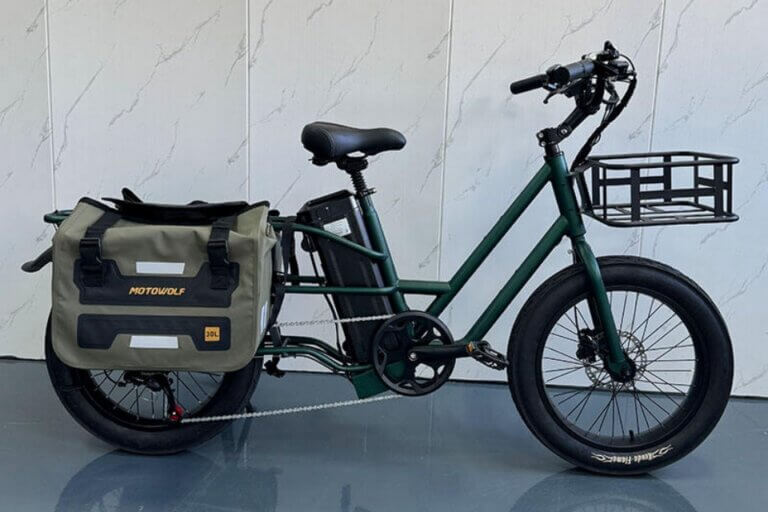
- 350W Electric Cargo Bike with Dual Battery & Heavy-Duty Rack – range-focused, dual packs, mid-drive.
- 750W 3-Wheel Electric Cargo Bike with Large Front Box – trike platform, low center of gravity, big box in front.
These rigs live hard lives: stop–go traffic, curb hits, full loads, maybe three different riders per day. Fleet feedback and Reddit-style failure stories show that when cargo bikes are badly spec’d or badly maintained, batteries sag, racks crack, and controllers cook under continuous load.
If your warranty terms still assume “private, weekend leisure use”, you’ll drown in claims:
- Motors rated for light use but pushed into full-shift delivery
- Batteries cycled too deep, too often
- Commercial use that technically halves warranty period in the fine print
So for B2B buyers you should:
- Negotiate clear commercial-use warranty (e.g., separate terms for fleets)
- Align warranty with the duty cycle of cargo bikes
- Use models like the dual-battery 350W cargo bike when uptime matters more than raw wattage
Urban M style operators running micro-hubs in dense cores care less about a pretty brochure and more about: uptime, predictable TCO, and how fast you turn a dead motor back into revenue.
Urban Commuter and Folding Electric Bike Warranty Issues
Now switch to commuters:
- B01 lightest long distance hyper electric bicycle supplier – light, long-range commuter, now also mapped to UL 2849 for safety.
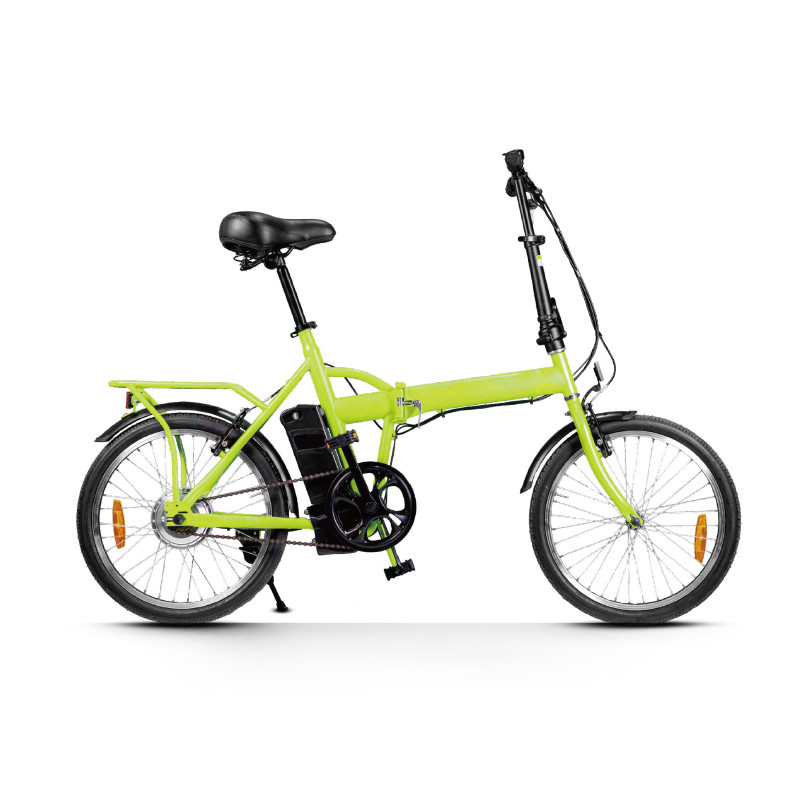
- F20 small folding electric commuter city bicycle wholesaler – folding frame, tight city living.
- LN26M03 electric folding bicycle for adults near me factory and M04 Best electric bicycles for adults near me factory – adult-focused lines that share parts and geometry.
Here, warranty pain points change:
- Hinges and folding joints see constant cycles → more chance of play or creaks
- Bikes often live indoors → building managers and fire codes care about certified batteries
- Riders carry them into trains, elevators, apartments → cosmetic damage, dropped bikes, bent rotors
Safety standards like UL 2849 for e-bikes are now a selling point and a warranty lever: if your models pass strict testing, you can confidently back them with cleaner coverage language and fewer “mystery fires” on the evening news.
And the Urban M vibe shows up here too: simple cabling, sensible throttle/assist mapping, and robust frames mean fewer crash claims and fewer “this thing feels cheap” complaints that later morph into warranty fights.
Checklist for Sourcing OEM/ODM Electric Bike Warranty Support
You’re not just picking a frame and a color. You’re picking a warranty story you’ll live with for years.
Key Questions About Electric Bike Warranty Before You Sign
When you talk with any OEM/ODM factory (including us at EZBKE), bring this short list:
- Warranty structure – How many years on frame? How many on motor, battery, controller, display? Different for fleets vs private riders?
- Conditions – What behaviours void warranty (non-authorized repairs, overloading, firmware mods)? Is commercial use explicitly included or reduced?
- Activation flow – Does the bike need online registration? How do you handle ownership transfer, especially in markets with formal registration like Singapore?
- Parts and logistics – Who holds safety stock for motors, packs, controllers, harnesses? What is the normal lead time?
- Service playbook – Is there a documented process (SOP) for diagnosis, photos, batch issues, and when to approve swap vs repair?
- Shared platforms – Can you build a lineup (for example B01 lightest long distance hyper electric bicycle supplier, C06, LN26M01/LN26M03, M04) on a shared parts family so your SLAs stay sane and your mechanics don’t juggle 20 different SKUs?
From our side, Urban M and EZBKE try to make this boring stuff easier: shared spares across families, sealed harnesses, potted controllers on request, dual-battery options for heavy duty work, UL-certified lines where it matters, and after-sales content that already talks about real-world failures instead of hiding them.
Because at the end of the day, a “good” warranty for retailers is simple:
- Clear rules
- Hardware that actually survives the job
- A factory partner that doesn’t disappear when tickets start coming in
Get those three right, and warranty stops feeling like a cost center and starts feeling like part of your product strategy.