


-
414 Block B, ZT Times Plaza, Wuhan, Hubei, China

Blog
The Most Requested E-Bike Customizations Retailers
Retailer requested e-bike customizations (OEM/ODM) — argument map
| Customization keyword (what buyers actually type) | What retailers usually request | Why they request it (retail pain) | What you should lock in (OEM/ODM spec) | Source | Where EZBKE examples fit |
|---|---|---|---|---|---|
| UL 2849 / UL 2271 / certification mark | “Is the complete electrical system certified?” + “Can you show label/mark on bike or packaging?” | Stores don’t want fire/liability drama, and some jurisdictions require third-party certification + visible marking | Target standard(s), test lab route (NRTL / ISO/IEC 17065), label placement (frame/battery/box), documentation pack | UL / SGS / NBDA | EZBKE positions as OEM/ODM supplier; align compliance + labeling per model line |
| Pantone Color Matching | “Match our brand color exactly” | Wall display sells. If the color is “off,” the bike looks cheap next to premium brands | Pantone code(s), finish (matte/gloss/metallic), QC delta tolerance, decal placement map | OEM branding guidance | Any SKU—especially city/commuter lines like C02/C06 |
| Custom Logo Printing / decals | “Logo on frame + battery + motor cover” | Retailers want brand recognition and repeat customers | Artwork files, print method, durability standard, placement diagram | OEM branding guidance | Works across EZBKE Electric Bike range |
| Battery options / long range | “More range” / “dual battery” / “removable battery” | Fewer returns and better reviews; delivery/fleet buyers need uptime | Voltage, Ah/Wh band, removable vs fixed, wiring harness standard | UN 38.3 transport constraints + OEM practice | 350W cargo dual battery (long range), commuter models (70 km class) |
| 110–220V charger / global compatibility | “One charger for multiple markets” | Dealers selling cross-border hate charger chaos | Charger spec, plug pack, safety approvals, packaging insert | EZBKE product specs / OEM norms | C02/C06/LN26M03 mention universal voltage support |
| PAS modes / legal speed | “Make it compliant for our market” | Shops don’t want tickets, fines, or angry customers | PAS tuning, speed limit, controller profile, labeling text | UL + SGS notes on standards; EN 15194 context | C06/M04 explicitly target 25 km/h style compliance |
| Cargo rack / front box / load rating | “We want delivery-ready hardware” | Last-mile demand, rentals, B2B programs | Rack spec, box volume, max load, axle/brake upgrade | EZBKE cargo SKUs | 750W 3-wheel cargo w/ front box, 350W cargo |
| Flat-packed / container loading | “Retail-ready packaging” | Less damage, faster receiving, easier inventory turns | Carton size, protection, assembly level, spare parts kit | EZBKE product pages | LN26M03 flat-packed, many models list container qty |
| IoT diagnostics | “Can we do fleet maintenance faster?” | Fleet contracts need quick fault finding, fewer RMAs | Diagnostics module option, data fields, service workflow | EZBKE category positioning | Great for rentals, campus fleets, delivery programs |
UL 2849 and UL 2271: retailers now ask “certified electrical system?” first
If you’ve sold into retail, you’ve heard this vibe: “Don’t show me the paint yet—show me the safety file.” That’s because UL 2849 focuses on the e-bike electrical system as a complete combination (drive train + battery + charger), and the industry treats it as a key fire-safety checkpoint.
SGS also points out how the U.S. market pressure grew after CPSC outreach, and how NYC’s law made it illegal to sell/lease/rent certain powered bicycles there without UL 2849 certification and a certification mark displayed on packaging/docs or on the device/battery.
NBDA goes even more direct: they’re urging stakeholders to adopt UL standards and explicitly support retailers who request UL-certified e-bikes and batteries from suppliers.
Practical OEM/ODM tip: write your compliance line in the RFQ like a buyer would:
- “Target: UL 2849 system certification + UL 2271 battery certification.”
- “Marking: label/wordmark on frame + battery + master carton.”
- “Docs: test summary + label artwork + packaging photo.”
It’s boring, but boring is what retailers want here.
Pantone Color Matching and Custom Logo Printing: branding that sells on a showroom wall
After safety, the next retailer ask is usually brand consistency. If your store runs a commuter wall with matching helmets, locks, and a tidy color palette, one “almost-blue” bike kills the vibe fast.
OEM branding notes commonly list Pantone Color Matching and custom logo printing (frame/battery/motor cover) as standard options, plus finish types like matte or metallic.
How to make this feel real (not powerpoint):
- A shop owner doesn’t say “we want customization.”
They say: “Can you match our shop’s green? The same green on our sign.” - They also ask: “Will that decal peel after one rainy season?” (yep, they do)
So, your spec shouldn’t just say “custom color.” It should include: Pantone code + finish + decal placement diagram. You’ll save 20 emails, easy.
UN Manual of Tests and Criteria Sub-Section 38.3: the battery detail that quietly controls your logistics
Retailers don’t always say “UN 38.3,” but your importer, forwarder, or compliance partner will. The UN Manual’s Sub-Section 38.3 lays out required transport tests (T.1–T.8) for lithium cells/batteries, and it treats certain changes (like energy/voltage shifts beyond thresholds) as a “new type” that needs testing again.
Translation into retailer language:
If you swap battery spec mid-stream, you can trigger paperwork pain. That leads to delayed launches, backorders, and retailers get cranky.
So when a buyer asks “can we upgrade the battery?”, your best answer is:
“Yep, but we’ll keep the battery family stable across SKUs, so shipping + compliance stays smooth.”
(And yeah, I know, “family stable” sounds weird. But it works.)
Battery options and global voltage compatibility: fewer RMAs, better reviews
Retailers love range claims, but they hate warranty returns. That’s why you see requests like:
- dual battery
- removable battery
- universal 110–220V charger
EZBKE’s line already hints at the patterns retailers prefer:
- Cargo SKUs highlight dual battery and long-range positioning
- Several commuter models call out 110–220V style global charging support
Where this turns into business value:
A retailer can build a cleaner SKU ladder:
- “Entry commuter” (simple battery, simpler display)
- “City plus” (bigger pack, better display)
- “Delivery spec” (dual battery + heavy rack)
That ladder helps sell-through, and your buyer looks smart in front of their boss. (Not “smart move,” ok? just… less headache.)
PAS, EN 15194, and market speed limits: “legal compliance” is a customization request
Some retailers sell one country. Some sell multiple. Either way, they ask for market compliance—especially around pedal assist (PAS) behavior and speed.
UL notes that EN 15194 is a published e-bike standard, while also discussing how UL 2849 evaluates electrical system safety differently.
On the product side, you can see how different EZBKE SKUs align to different “city legal” expectations:
- C06 lists PAS sensor and a 25 km/h style spec set
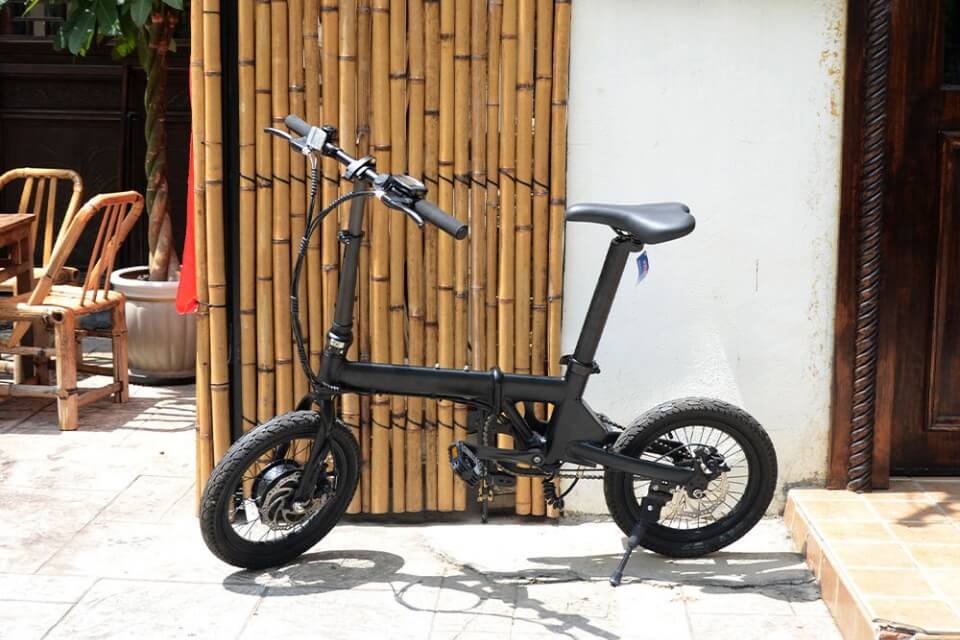
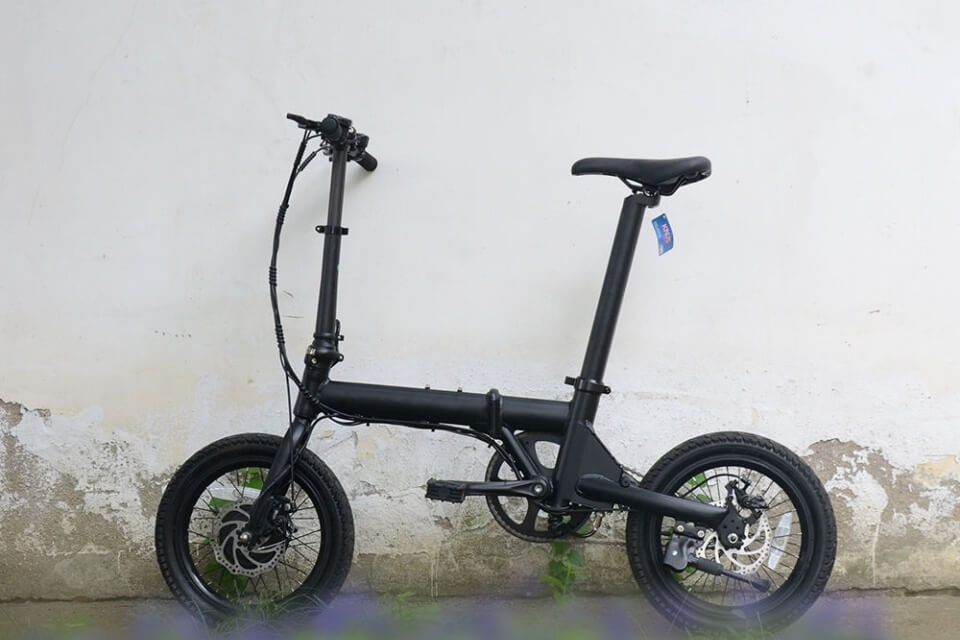
- M04 positions itself as a foldable city option with “compliant with most e-bike regulations” language
OEM/ODM spec tip: don’t just say “PAS.” Say:
- PAS sensor type
- assist ratios / modes
- speed cap behavior
- display language + units (km/h vs mph)
Retailers will ask anyway, so you might as well lead.
Cargo hardware: front box, heavy-duty rack, and load rating sell the “last-mile” story
Cargo is where retailers get super practical. They don’t want a “nice bike.” They want a tool.
EZBKE’s cargo lineup gives you clean examples:
- 750W 3-wheel electric cargo bike with large front box = obvious fleet / delivery use case
- 350W electric cargo bike with dual battery & heavy-duty rack = range + utility positioning
When a retailer asks for “cargo customization,” they usually mean:
- rack geometry
- box mounting points
- brake upgrades
- max load labeling
That’s not sexy marketing. It’s what closes fleet deals.
Electric Bike OEM solutions: why EZBKE fits retailer-driven customization
EZBKE positions its Electric Bike category around OEM-ready features like sodium batteries (-15°C) and IoT diagnostics, and also frames itself as an OEM supplier with scalable manufacturing and flexible customization.
And your product pages make it easy to “match a request to a SKU” fast:
- Wholesale Peak Power 450W Electric Bike calls out power and certification language like CE / EN15194 on the spec block
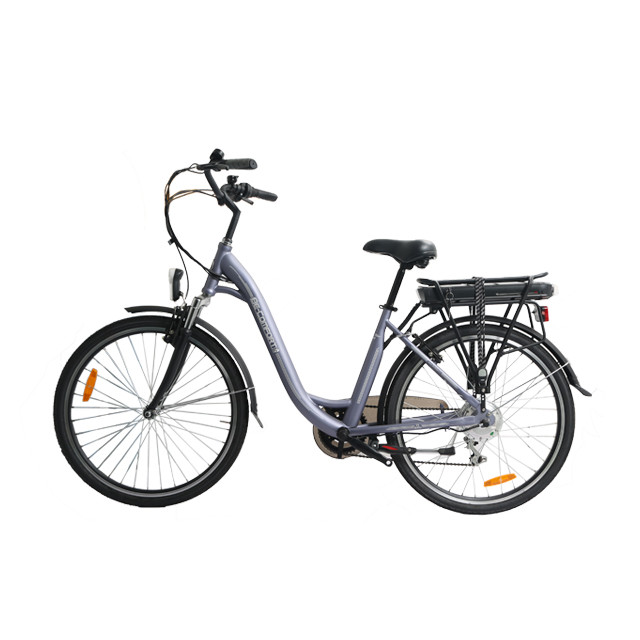
- C02 and C06 read like commuter templates retailers can rebrand (gears, lights, packaging, etc.)
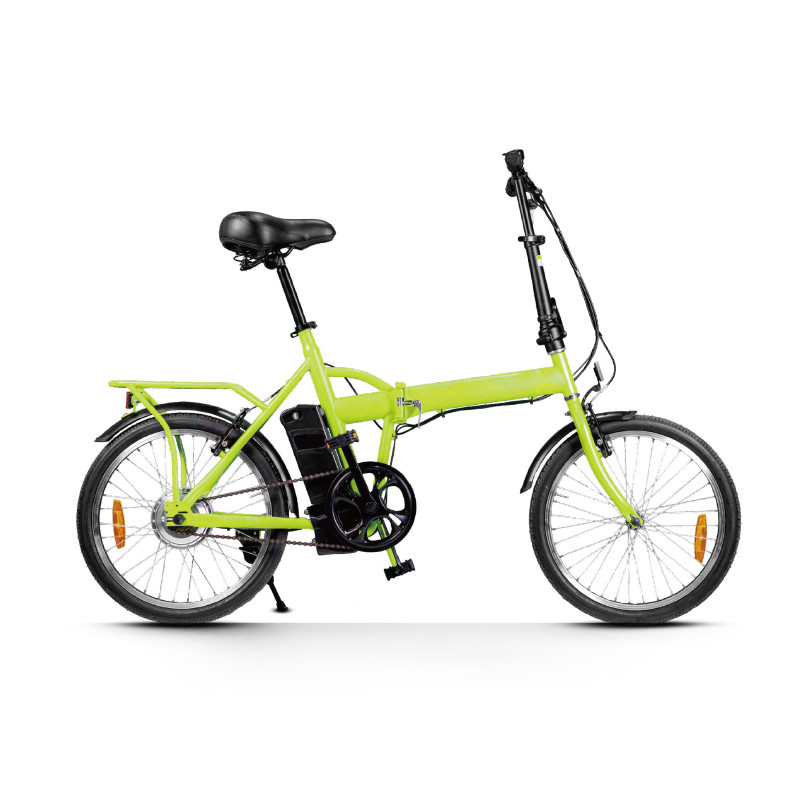
- Folding options (like LN26M03 and M04) map well to “apartment commuter” and “store-and-go” channels
Also, you asked for Urban M to show up naturally: your About page ties Urban M to Wuhan Jiebu Electronics and positions it as a mobility brand.
Packaging size, flat-packed, and container loading: the unsexy customization that retailers love
A retailer buyer might never say “container optimization,” but they’ll absolutely say:
“Can you ship it safer, and can my warehouse process it fast?”
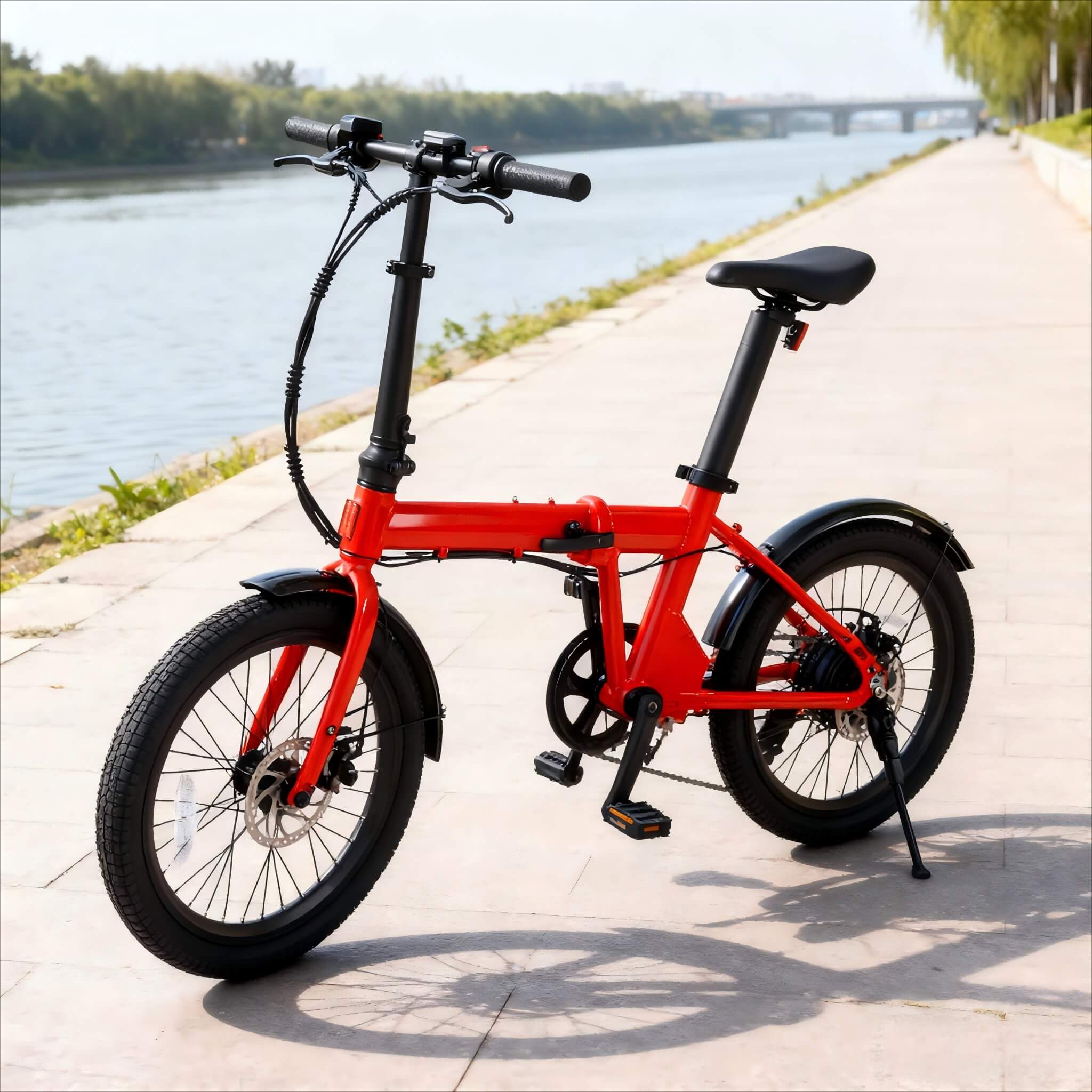
EZBKE pages repeatedly mention compact packaging, flat-packed shipping, and loading quantities (which matters for stocking plans and damage rates).
Quick, practical add-on: include a “spares bag” (pads, inner tube, common bolts) by default. It reduces service tickets. It also makes your dealer network feel supported. simple but works.