


-
414 Block B, ZT Times Plaza, Wuhan, Hubei, China

Blog
The Impact Of Battery Size On Scooter Performance
In this article, we pull together insights from recent industry guides on “The Impact Of Battery Size On Scooter Performance” and mix them with real numbers from the EZBKE electric kick scooter lineup. You’ll see clear arguments, a data table, and practical use cases you can actually use in sales calls and fleet planning.
Battery Size and Electric Kick Scooter Range
If you need one key metric for battery size, it’s Watt-hours (Wh). Industry guides agree that Wh is basically the “fuel tank” for an electric scooter:
Wh = Voltage (V) × Capacity (Ah)
A recent range article gives a simple example: a 1440 Wh scooter battery with an average consumption around 30 Wh/km will deliver roughly 48 km of range (1440 ÷ 30). The math is simple, and it matches what we see on your own products:
- GS1 vs GS1-Pro electric scooter for heavy adults 400lbs
- GS1: 36V 7.8Ah battery → about 30 km range
- GS1-Pro: 36V 13Ah battery → about 50 km range
Same platform, same frame, but a bigger energy pack. You get a clear step-up in distance.
On the high-end side, our 4000W Dual Motor Electric Kick Scooter with 100km Range runs a 52V 19.2Ah or 21Ah battery pack. Depending on configuration, that means roughly 80–100 km maximum range on one charge.
So the first big point is very simple:
Bigger battery (higher Wh) → higher theoretical range.
But “theoretical” is doing alot of work here.
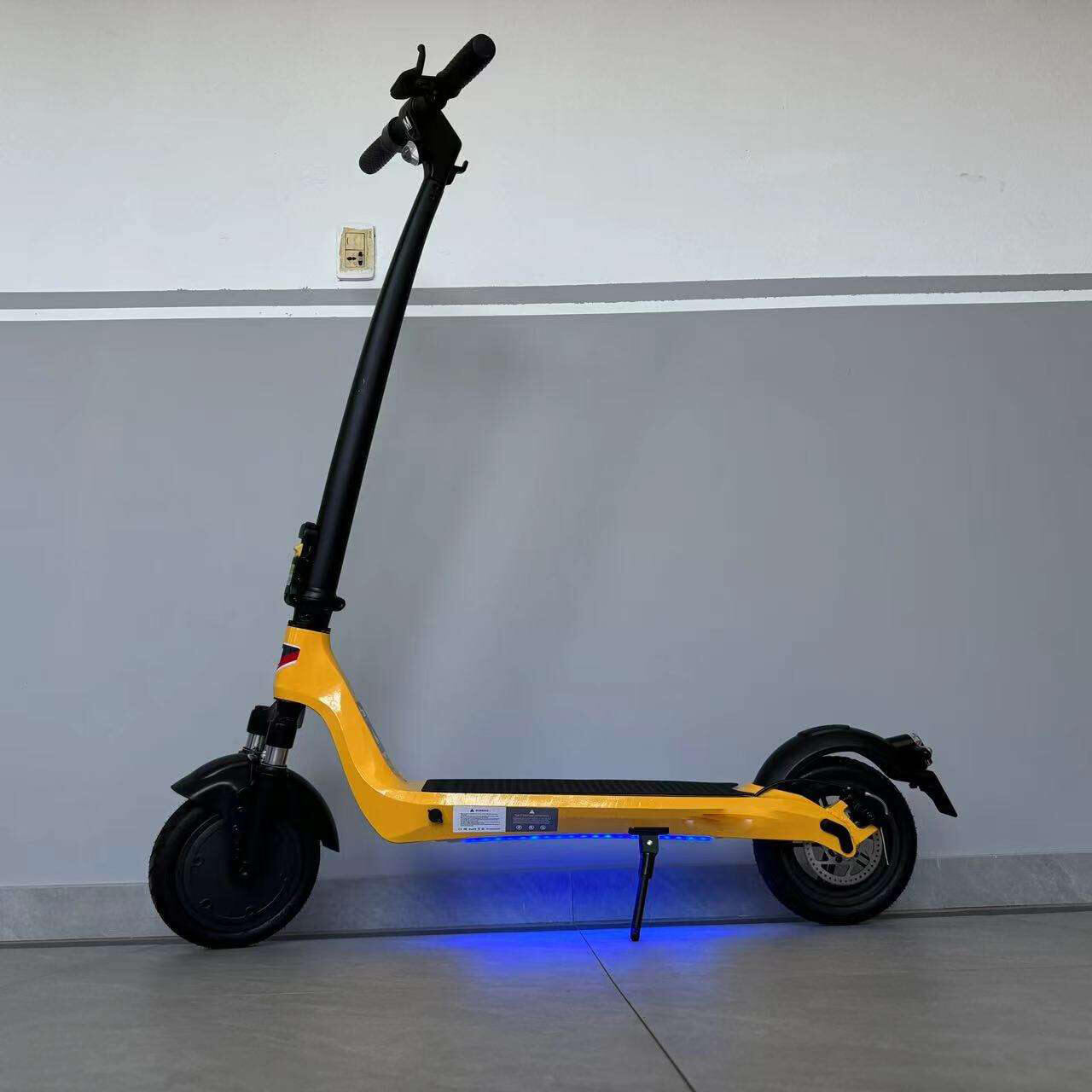
Real-World Range Factors: Rider Weight, Terrain, Speed
Real-world tests from multiple brands and range guides all say the same thing: battery size sets the ceiling, but your riding style decides how close you get.
Recent content from scooter makers and B2B suppliers highlights these main factors:
- Rider weight & payload
Heavy rider + backpack + cargo box = more energy per kilometer. For fleets carrying 100–120 kg loads, range can drop visibly vs. a 60 kg commuter. - Terrain & gradient
Flat bike lane? Easy. Short, steep ramps? Energy spike. For last-mile delivery in hilly districts, you will feel that difference in your battery SOC (state of charge). - Average speed
Riding at full throttle all the time burns through Wh much faster than cruising in Eco mode. - Temperature & weather
Cold days hurt lithium efficiency; wind and rough road surfaces also nibble away at your range.
This is why two GS1-Pro scooters with the same 36V 13Ah pack can show very different daily mileage:
- A light commuter on flat roads might stay close to the advertised 50 km.
- A 110 kg rider doing heavy stop-and-go in a hilly city might only see 35–40 km before low-battery warnings show up.
So when you talk to dealers or fleet owners, don’t only sell the “lab number”. Ask:
“What’s your typical route profile, load, and target average speed?”
That’s how you turn battery size into something that actually solves their range anxiety, not just a nice brochure line.
Battery Size, Power Output and Scooter Performance
Battery size doesn’t just decide how far you go. It also affects how you get there.
Power and Voltage in Electric Kick Scooter Performance
Industry comparisons between 60V and 72V systems show that higher voltage allows the controller to push more power with less current, which helps with acceleration and top speed efficiency.
In simple words:
- More voltage = easier to hit higher speed and strong torque
- More capacity (Ah) = you can hold that power for longer without the pack sagging
Your portfolio hits different “duty cycles” with this logic:
- Urbanm G1 electric scooter foldable 40 mph manufacturer
- Built for eco-commuters and last-mile delivery, where you need high cruise speed and strong torque for mixed traffic.
- 4000W Dual Motor Electric Kick Scooter with 100km Range
- Dual motors with peak 4000W, top speed up to 75 km/h, and up to 100 km range from the 52V pack. This is a straight-up performance machine for long routes and heavy-duty fleets.
A small 36V commuter battery can still move fast for short bursts, but if you want a scooter to sit at 40–45 km/h for long stretches, you need both:
- Enough voltage for efficient power delivery
- Enough Wh so the motor doesn’t feel “out of breath” after 10–15 km
That’s why high-power models use bigger battery housings. It’s not marketing, it’s physics.
Bigger Battery vs Portability and Daily Usability
Here’s the trade-off many buyers don’t think about until too late:
Every extra Wh adds weight, bulk, and cost.
Our X3 long range electric folding scooter for adults shows the “sweet spot” strategy:
- 36V / 13Ah battery
- Realistic 25–40 km per charge
- Scooter weight only 14.5 kg, still foldable to 106×19×38 cm, easy to throw in a car trunk or under a desk.
For city commuters and small rental fleets, this kind of setup work pretty well:
- Enough range for a typical day route
- Light enough for apartment stairs and subway
- Charging cycles stay reasonable because you don’t deep-drain the pack every single ride
On the other side, your 4000W dual motor model with 52V 21Ah battery goes up to 34 kg. That’s still manageable, but it’s clearly targeted at:
- Heavy-duty riders
- Delivery fleets with fixed parking
- Sharing operators who don’t ask users to carry the vehicle upstairs
So the “best” battery size is not just big or small. It’s about matching energy to the duty cycle:
- Short urban hops → lighter pack, easy folding
- Long suburban routes / heavy rider → larger module, more Wh, accept extra mass
Battery Size, Cycle Life and Total Running Time
Most modern electric scooter guides put lithium-ion battery life at around 300–500 full charge cycles before you see clear capacity drop. High-grade cells, cared for properly, can reach 500–800 cycles or even close to 1000 cycles.
Why does battery size matter here?
- On a small pack, every fast start and heavy hill climb means higher current per cell.
- On a bigger pack, the same power is spread across more cells, so each cell works a bit easier.
For fleets, that means:
- A larger battery doesn’t only give more range per shift.
- It can also keep more of its original capacity after hundreds of cycles, if you manage charging well.
That’s exactly why your factory also speaks about -15°C sodium batteries / IoT monitoring in the product category page: it’s all about long-term uptime and smart energy management, not just the first 100 rides.
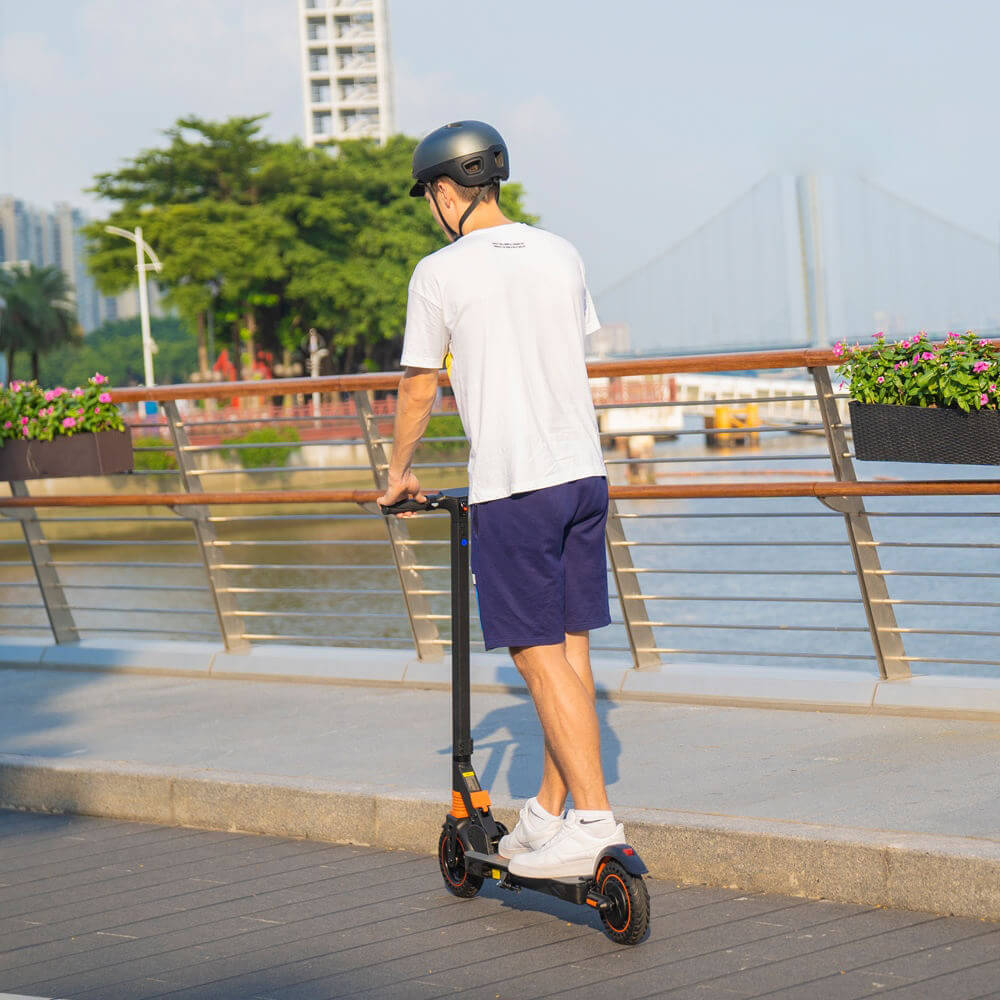
Data Snapshot: How Battery Size Impacts EZBKE Scooter Performance
You can drop a compact table like this into your blog or product brochure to make the argument very visible:
| Model / Use Case | Battery Spec (V / Ah) | Approx. Wh | Claimed Range | Key Performance Angle | Data Source |
|---|---|---|---|---|---|
| GS1 urban commuter | 36V / 7.8Ah | ~281 Wh | ~30 km | Daily trips, lighter riders, low CAPEX entry point | GS1 product specs |
| GS1-Pro heavy adults | 36V / 13Ah | ~468 Wh | ~50 km | Same frame but extended routes, better for fleets with 400lbs riders | GS1-Pro specs |
| X3 long range folding | 36V / 13Ah | ~468 Wh | 25–40 km | Balance of portable weight (14.5 kg) and useful range, ideal for mixed commuting | X3 specs |
| 4000W dual motor performance | 52V / 21Ah | ~1092 Wh | up to 100 km | High-speed routes, long-distance delivery, dual motor torque | 4000W model specs |
| Generic industry long-range scooter | ~1440 Wh | 1440 Wh | ~48 km at 30 Wh/km | Shows standard range math used in many OEM calculators | Recent range formula guides |
You can see how the GS1 → GS1-Pro upgrade is a textbook example for customers: same platform, larger battery, and a very clear bump from 30 km to 50 km range. That’s exactly the type of real case that helps you close B2B buyers who need hard numbers, not marketing fluff.
How Battery Size Plays Out in Real Scenarios
Let’s map battery size to a few actual scenarios you probably hear on Zoom calls:
- Apartment commuter in a dense city
- Wants something foldable, light, easy to store in elevator.
- Rides 10–15 km per day, mostly flat bike lanes.
- Suggested battery: X3 or H1-class pack around 36V / 10–13Ah. One charge can cover 1–2 days, scooter stays under ~15 kg, no crazy range overkill.
- Delivery fleet doing 40–60 km per shift
- Needs reliable range under load, standing starts, some ramps.
- Doesn’t care if the scooter is 4–5 kg heavier.
- Suggested battery: GS1-Pro or Urbanm G1 style capacity; ~450–600 Wh region. You get enough buffer to handle cold days and detours without riders hitting empty mid-route.
- Performance / long-distance operator (suburban, tourist routes)
- Sells high-speed tours, long scenic rides, or premium rental pricing.
- Suggested battery: 52V 19–21Ah like the 4000W Dual Motor Electric Kick Scooter. This is where high Wh really pays off in both range and sustained power.
From a 15-year electric scooter manufacturer plant point of view, your job isn’t to push the biggest battery every time. It’s to match battery architecture + frame + motor to the customer’s route, so their uptime and fleet utilization go up without blowing up charging logistics.
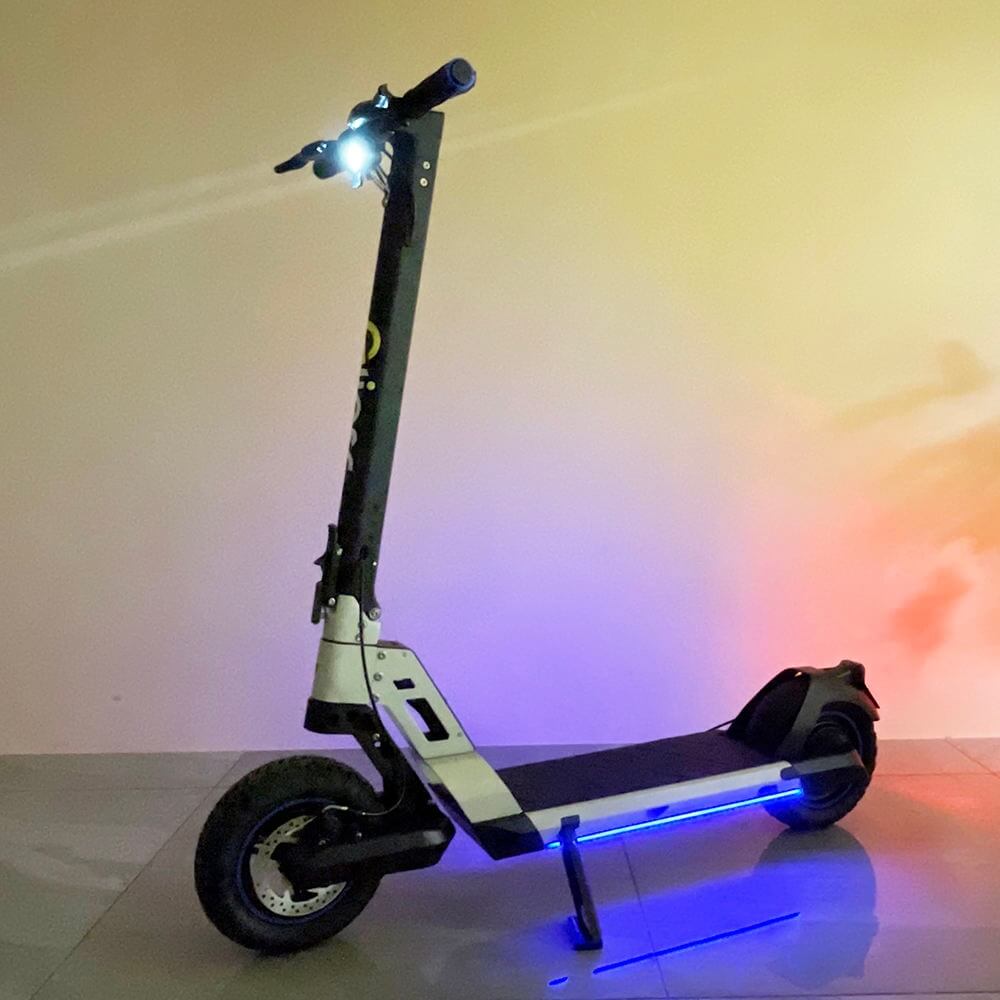
Choosing the Right Battery Size for Your Electric Kick Scooter
To wrap it up, when someone asks “What battery size should I choose?”, you can walk them through four quick checks:
- Daily distance and buffer
- Take their typical one-day mileage.
- Add a safety margin (weather, weight, detours).
- Choose Wh so they don’t deep-drain to 0% every day.
- Load and terrain
- Heavier riders and hilly cities need more Wh for the same distance.
- GS1-Pro and high-capacity models are built precisely for those use cases.
- Portability vs performance
- If your buyer carries the scooter a lot, don’t overspec the battery.
- If the scooter lives in a warehouse or depot, extra weight is less pain, and big packs like the 4000W dual motor are worth it.
- Fleet strategy and branding
- OEM/ODM clients can standardize one frame with two or three battery options, just like GS1 & GS1-Pro, to hit different price points and duty cycles from the same platform.
Battery size is not just a line in the spec sheet. It’s one of the main levers that decides range, torque, comfort, uptime, and long-term battery health for your electric kick scooter project.
Get that part right, and everything else—motor choice, frame design, even IoT integration—starts to fall into place way easier.