


-
414 Block B, ZT Times Plaza, Wuhan, Hubei, China

Blog
Predictive Maintenance for Scooter Fleets
Here’s the ugly truth: most buyers don’t lose sleep over the phrase “predictive maintenance.” They lose sleep over dead units, missed SLA windows, dispatch headaches, and city partners asking why too many vehicles are offline again. That’s the real game. For fleet buyers, rental operators, and OEM/ODM partners, the issue isn’t whether predictive maintenance sounds advanced. It’s whether your Sharing Scooter can stay on the road, keep compliance clean, and keep generating trips without turning your street ops into a fire drill every week.
That’s it.
In shared mobility, uptime is the whole ball game. A scooter can look slick in a brochure and still be a total headache once it hits actual streets—rain, curb knocks, rough riders, battery abuse, bad charging cycles, sketchy parking, the works. When that happens, your service queue fills up fast, your field team starts doing too many truck rolls, and your unit economics get ugly in a hurry. That’s why this topic matters so much for Sharing Scooter programs that need stable wholesale supply. EZBKE’s Urban M category already points at the same pain in practical terms: IP65 sharing-spec hardware, commercial batteries with 1500+ cycles, GPS/Bluetooth lock, OEM customization, and a target to cut downtime to under 5%. That isn’t fluff copy. That’s fleet language. (ezbke.com)
Predictive Maintenance for Scooter Fleets
So what does predictive maintenance for scooter fleets really mean once you strip away the marketing polish? Pretty simple, actually. Don’t wait for the unit to fail in the field if the scooter has already been whispering that something is off for three days straight. The source tied to that exact phrase says operators can watch battery health, motor performance, tire pressure, and accelerometer readings to spot trouble early. Another scooter-focused paper says basically the same thing, just in a more academic voice: pull IoT data and historical service records together, then use them to predict maintenance demand, reduce unscheduled downtime, and stretch component life. Same idea. Different wrapper. (reelmind.ai)
And from my experience, this is where a lot of fleets mess it up. They buy connected hardware, sure, but they don’t build a real feedback loop between telematics, wrench teams, battery ops, and spare-parts planning. So the data exists, but it just sits there like dashboard wallpaper. Nice to look at. Useless otherwise.
Battery health, motor performance, tire pressure, and accelerometer readings
Scooters usually don’t fail out of nowhere. Not really. First you get little signs—battery sag, heat drift, odd vibration, weird braking feel, slow response under load. Then somebody ignores it. Then the unit dies mid-shift and the ops team acts surprised. That cycle happens a lot more than people admit.
If your telematics stack is decent, though, you can catch those signals early and fold repairs into your normal service loop instead of reacting after a roadside failure. That means fewer rescue runs, fewer angry riders, fewer bad reviews, and a lot less wasted wrench time. Street ops people know this already. The trick is building the discipline to act before the failure shows up in public. (reelmind.ai)
Shared E-Scooter Fleet Availability
Here’s where it gets more interesting. A scooter isn’t truly “available” just because the map says it’s there. That logic is too shallow. A 2024 study on shared e-scooters makes the point very clearly: availability is not only about where the scooter sits in space. It also depends on whether the battery can still support the expected trip. And when the researchers modeled availability with battery reality included, the average unavailability rate hit 6.71%—almost double a simpler method that just treated 20% state of charge as the line. That’s a big gap. Bigger than many operators would like to admit. (sciencedirect.com)
Which means, yes, your dashboard can lie.
Battery levels and service quality
Riders don’t care what your backend labels say. “Active.” “Ready.” “Online.” Fine. None of that matters if the scooter can’t complete the ride, struggles uphill, or dies halfway through the trip. So battery management isn’t some side module buried in the ops stack. It’s central. Full stop.
And once you see it that way, a lot of decisions start looking different. Charging policy matters more. Rebalancing logic matters more. Field swap speed matters more. Diagnostics matter more. A fleet-grade system should connect battery data, repair workflow, usage behavior, and deployment planning in one loop. Otherwise, you’re just babysitting a spreadsheet with wheels. (sciencedirect.com)
Condition-Based Maintenance and Predictive Maintenance
Yet another useful angle comes from operator research in Finland, and I frankly believe this is one of the stronger pieces because it sounds like it came from people who’ve actually had to deal with real units in real weather. The study says condition-based maintenance has become critical in fleet operations because operators can use IoT sensors to monitor battery health, motor condition, and other wear indicators, while predictive models help time maintenance better and reduce downtime. It also says something every fleet manager understands in their bones: uptime is king. Every dead unit sitting offline is lost earning time and weaker service reliability. Obvious? Sure. Still ignored all the time. (theseus.fi)
The old “fix it when it breaks” model sounds cheap until you scale. Then it starts chewing through labor, response time, spare stock, and rider trust. It’s a bad loop.
IoT sensors, real-time fleet monitoring, and maintenance KPIs
This is the point where maintenance stops being a workshop issue and turns into an ops-control issue. Once you’ve got decent diagnostics, you can triage faults better, route the easy stuff to field crews, avoid wasting bench time on low-priority cosmetic issues, and keep the wrench queue focused on units that threaten uptime first. That’s not glamorous work. But it’s how grown-up fleets run.
Also, this is where industry jargon actually matters. If your fleet can’t manage MTTR drag, battery swap cadence, fault-code triage, and spare-parts latency, then predictive maintenance won’t save you. The data layer can’t fix sloppy operations by itself. People forget that. (theseus.fi)
Sharing Scooter Hardware for Fleet Uptime
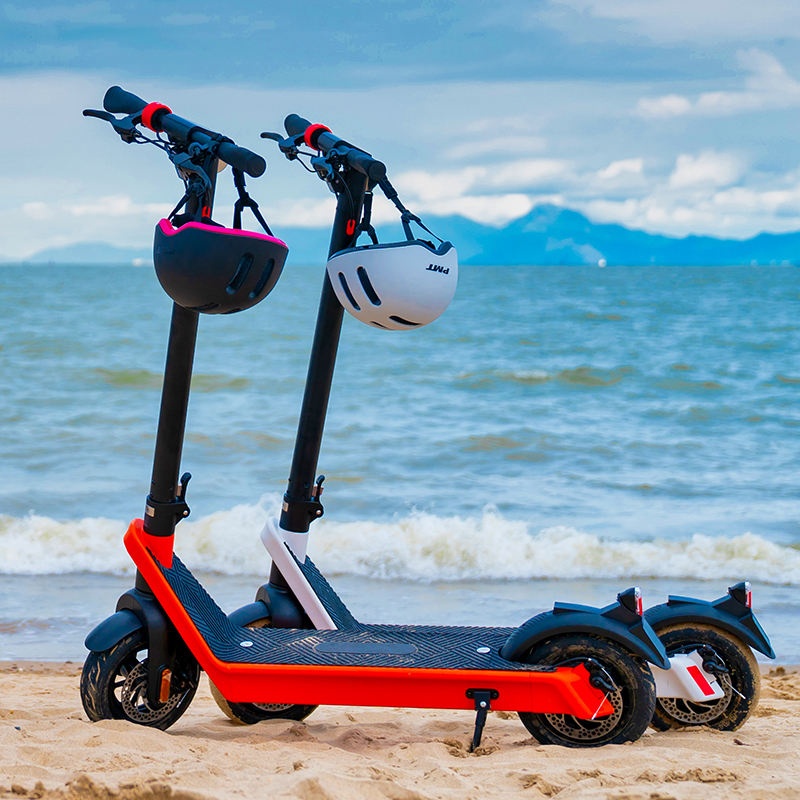
Now, let’s get practical. Predictive maintenance sounds smart on paper, but it works a whole lot better when the underlying scooter is built for fleet abuse instead of retail showroom vibes. Weak consumer-grade units create too much noise—too many random faults, too many surprise failures, too many extra truck rolls, too many parts issues that make your service team curse under their breath. Bad hardware poisons the data.
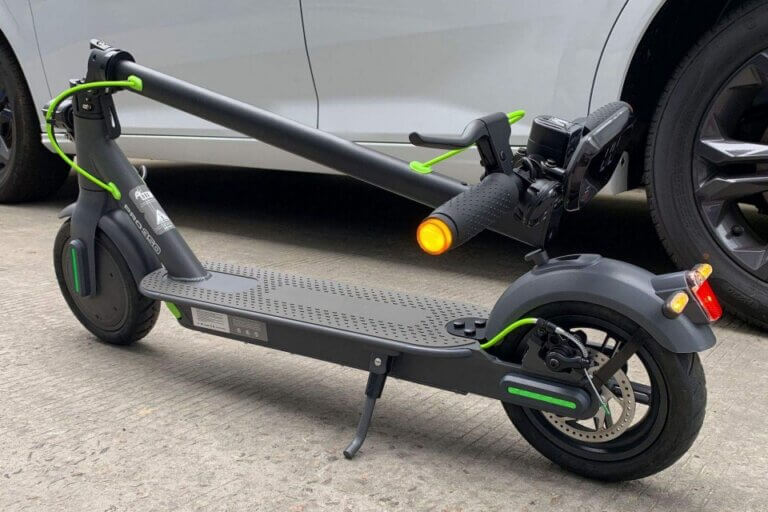
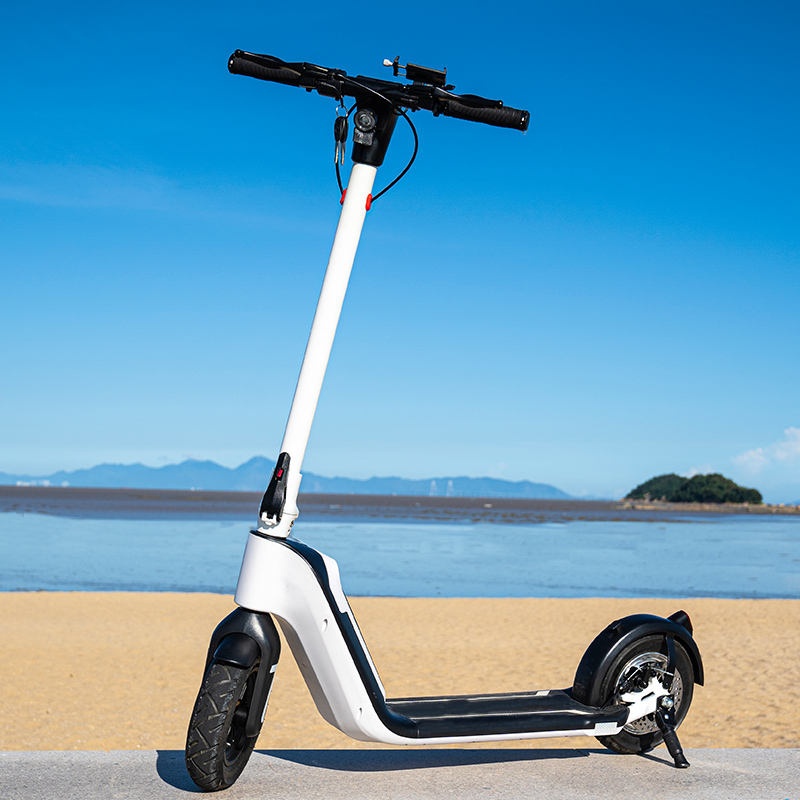
That’s why EZBKE’s Sharing Scooter range is relevant here. The hardware positioning lines up with what the research is basically begging fleets to pay attention to: durability, connectivity, weather resistance, battery reliability, and lower downtime. The category page highlights IP65-rated design, commercial batteries (1500+ cycles), GPS/Bluetooth lock, and city-compliance kits. Read that again and it stops sounding like a product page. It reads more like an uptime checklist. (ezbke.com)
Airless tires and swappable batteries
The FS Pro mobility electric motor scooter for adults supplier page gets even more direct. It says airless tires and swappable batteries reduce fleet upkeep by 40%, and pairs that with 4G connectivity for dynamic pricing and theft prevention. For someone outside the trade, that may sound like feature stacking. For fleet people, it means fewer flats, less service drag, faster redeployment, better visibility, and less wasted field labor.
That matters. A lot.
Because in actual street ops, the little headaches are what kill you first—not the dramatic failures. Flats. Battery lag. lock issues. dead telemetry. avoidable callouts. That’s the junk that quietly wrecks your service efficiency week after week. (ezbke.com)
10-inch non-inflatable tires and IP67-rated controller and battery
Then there’s the S1 foldable electric scooter for adults 300 lbs factory page, which pushes the same logic from another side: 10-inch non-inflatable tires, IP67-rated controller and battery, waterproof motor, EABS + drum brake, and a build meant for sharing fleets or bulk orders. That spec mix isn’t random. It’s very street-ops coded.
Wet roads? Covered better. Rough curbs? Better. Heavy daily turn? Better. Riders who absolutely do not treat the scooter gently? Also better.
And that’s why Urban M fits naturally into this discussion. Not because of branding spin. Because the product language stays centered on uptime, durability, anti-theft integration, and fleet practicality—the exact stuff that matters once a scooter leaves the warehouse and starts taking real punishment. (ezbke.com)
Modified Maintenance KPIs for Shared Scooter Operations
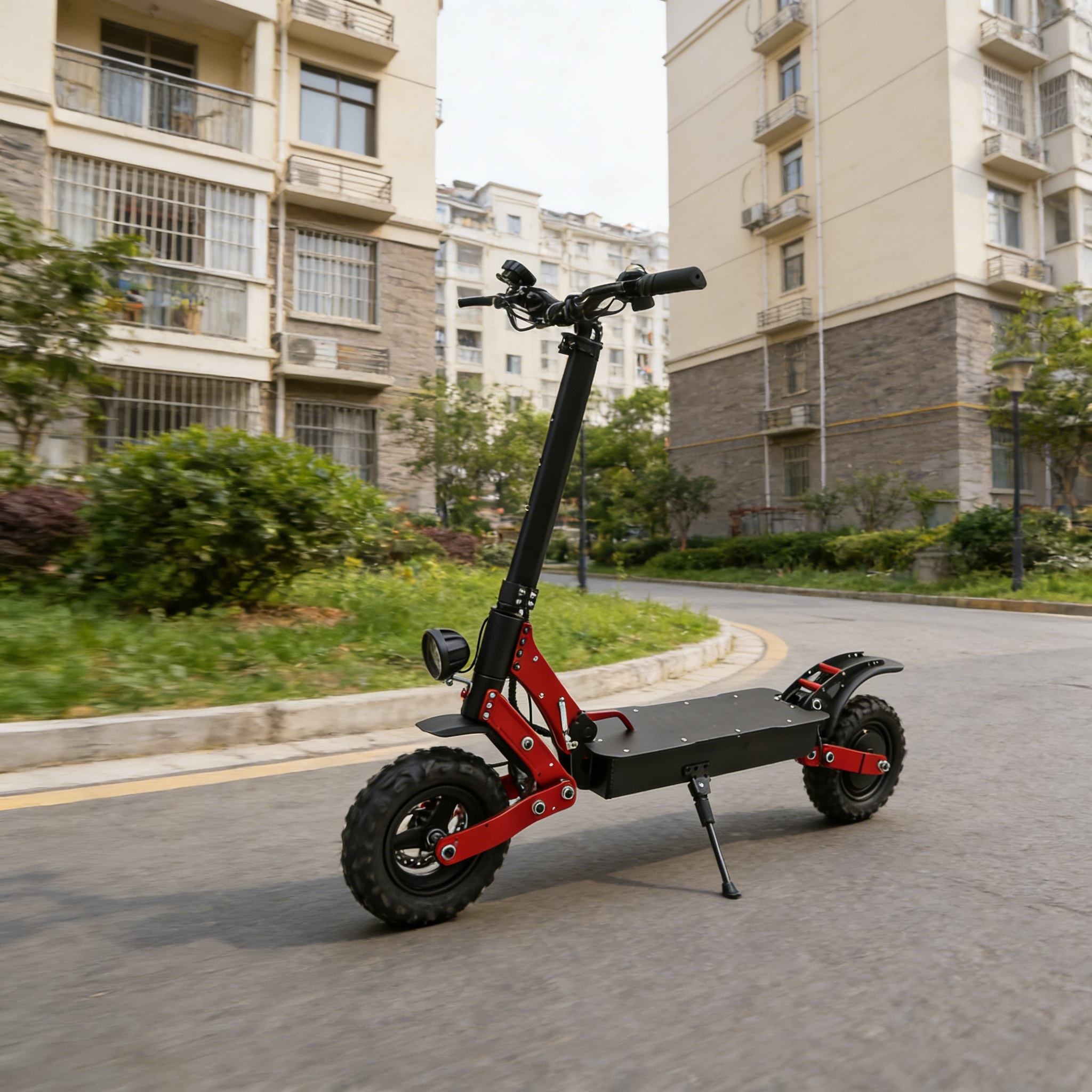
One thing I like about the Finland study is that it doesn’t just wave its hands and say “optimize maintenance.” It gets concrete. It proposes modified maintenance KPIs for shared scooter operations, including Fleet Operational Effectiveness, Scooter Availability Rate, Average Maintenance Cost per Deployed Scooter, Scooter Mean Repair Time, Spare Parts Cost as % of Total Scooter Maintenance, and Scheduled Maintenance Share. That’s useful because it gives operators a scoreboard instead of a vague ambition. (theseus.fi)
And honestly, if a fleet says it cares about uptime but doesn’t track metrics like these, I’d question how serious the operation really is. You can’t manage what you don’t measure. People say that line too much, sure—but here it’s true.
Specific Arguments and Source Table
| Argument title | What it really means | Evidence / data point | Source |
|---|---|---|---|
| Predictive Maintenance for Scooter Fleets | Move from repair-after-failure to repair-before-failure | Uses battery health, motor performance, tire pressure, and accelerometer readings to predict faults early | ReelMind section; scooter PdM paper (reelmind.ai) |
| Shared E-Scooter Fleet Availability | A scooter is not truly available if the battery can’t support the ride | Average unavailability rate reached 6.71% when battery reality was included | Zhao et al., 2024 (sciencedirect.com) |
| Condition-Based Maintenance and Predictive Maintenance | IoT sensors help time repairs based on real wear, not blind intervals | Study says CBM monitors battery health and motor condition; uptime is king | Jones, 2025 (theseus.fi) |
| Modified Maintenance KPIs for Shared Scooter Operations | Fleet maintenance needs an ops dashboard, not workshop guesswork | FOE, Scooter Availability Rate, Mean Repair Time, Spare Parts Cost share, Scheduled Maintenance Share | Jones, 2025 (theseus.fi) |
| Sharing Scooter fleet hardware | Predictive maintenance works better with fleet-grade devices | IP65, 1500+ cycle commercial batteries, GPS/Bluetooth lock, downtime target under 5% | EZBKE Sharing Scooter / Urban M (ezbke.com) |
| Airless tires and swappable batteries | Better hardware reduces service friction in the field | FS Pro claims fleet upkeep reduction of 40% | EZBKE FS Pro (ezbke.com) |
| 10-inch non-inflatable tires and IP67-rated controller and battery | All-weather durability supports lower fault frequency | S1 highlights IP67, non-inflatable tires, sharing-fleet design | EZBKE S1 (ezbke.com) |
Final Take
So here’s my take: predictive maintenance for scooter fleets is not just software. It is the mix of telematics, battery logic, field service workflow, and fleet-grade hardware. Strip any one of those out and the whole thing gets weaker. A fleet that wants fewer breakdowns shouldn’t only ask about speed, range, or how good the scooter looks on a landing page. It should ask about diagnostics, non-inflatable tires, battery swap flow, IP rating, GPS lock, repair KPIs, spare-parts rhythm, and how fast the ops team can close the loop when the data says a unit is drifting toward failure.
That’s the difference between a scooter that earns and a scooter that sits.
And in this business, scooters that sit become expensive very, very fast. (ezbke.com)