


-
414 Block B, ZT Times Plaza, Wuhan, Hubei, China

Blog
Most Common E-Bike Myths — Debunked for Your Customers
But here’s how it usually goes in real shops: a customer walks in “just browsing,” touches a display bike for 12 seconds, then hits you with a warmed-over Facebook comment about fires or licensing, and suddenly you’re not selling a bike—you’re cross-examining the internet with zero exhibits and a clock ticking. It happens. Usually.
I’ve watched perfectly decent deals die because the salesperson tried to “educate” instead of prove—no UL talk, no watt-hour math, no “this is the legal bucket it fits in,” just smiles and vibes (and vibes don’t win against fear). So yeah, I frankly believe most “electric bike myths” exist because the industry let too many trash packs and fantasy spec sheets float around, and now everyone else pays the trust-tax.
The dirty secret behind “myths”
I’m not going to pretend this is all media hysteria. It isn’t. The ugly truth is that lithium-ion failures are real, and when they happen indoors, in dense housing, with cheap chargers and beat-up packs, they’re catastrophic—not “oops,” not “rare,” catastrophic.
New York City basically became the stress-test lab for the whole category, and the numbers are what they are: 268 fires, 18 deaths, 150 injuries in 2023 tied to lithium-ion battery incidents—enough that officials stopped politely suggesting best practices and started pushing hard policy. That doesn’t mean “e-bikes bad.” It means “stop treating the battery pack like a decorative brick.”
So when a customer says “these things blow up,” they’re borrowing a true story… then applying it to the wrong product category. Your job is to separate certified system from mystery-meat battery in one breath.
The myths your customers keep repeating (and the rebuttals that actually work)
Myth 1: “E-bikes randomly catch fire.”
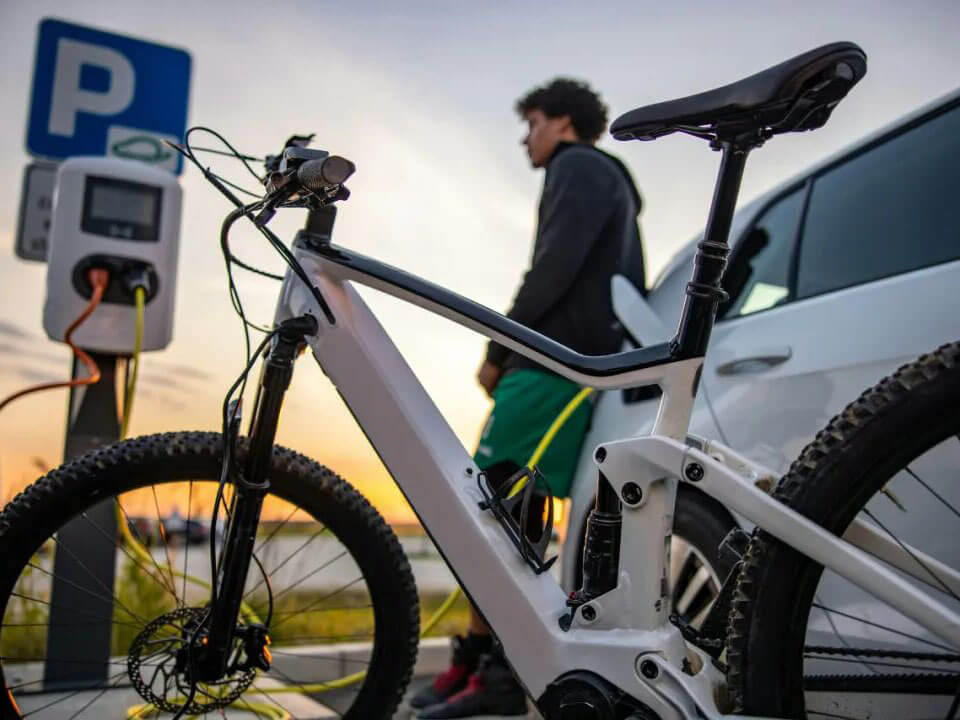
If fires were random, regulators couldn’t target them, and yet they did—because the pattern isn’t spooky, it’s predictable: abused packs, cheap aftermarket chargers, water intrusion, physical impacts, janky BMS behavior, and indoor charging where a small failure turns into a big one fast. Not random. At all.
NYC’s move is the tell: Local Law 39 (signed March 30, 2023) clamps down on sales/lease/rental of powered bikes/devices and even storage batteries unless they meet UL standards (think UL 2849 for the e-bike electrical system; UL 2271/2272 for batteries/devices). And the U.S. consumer safety folks aren’t subtle either—when they see repeat hazards, they name names, including third-party packs like Unit Pack Power (UPP).
What I say at the counter (and yes, it works): “Fires cluster around uncertified packs and mismatched chargers—certified systems and sane charging habits slash the risk.” Then I shut up and let the customer absorb it.
Where you steer them next: keep them in your ecosystem, not a late-night marketplace spiral. Start with your electric bike collection for commercial buyers and keep the conversation on specs.
Myth 2: “E-bike range claims are basically fake.”
Sometimes they’re inflated. Sometimes the customer’s expectations are the problem (headwind + hills + max assist + soft tires = surprise!).
Here’s the only range talk I respect: watt-hours and conditions. Battery energy is the fuel; everything else is drag. A 36V 14Ah pack is roughly 504Wh (36 × 14), and if the rider averages 10–20 Wh/km (flat vs hilly, light vs loaded, chill assist vs full-send), you’re staring at 25–50 km that a serious person won’t argue with.
If someone promises “100 km” and won’t tell you Wh, that’s not marketing—that’s a magic trick.
Use product examples to pin the buyer to reality:
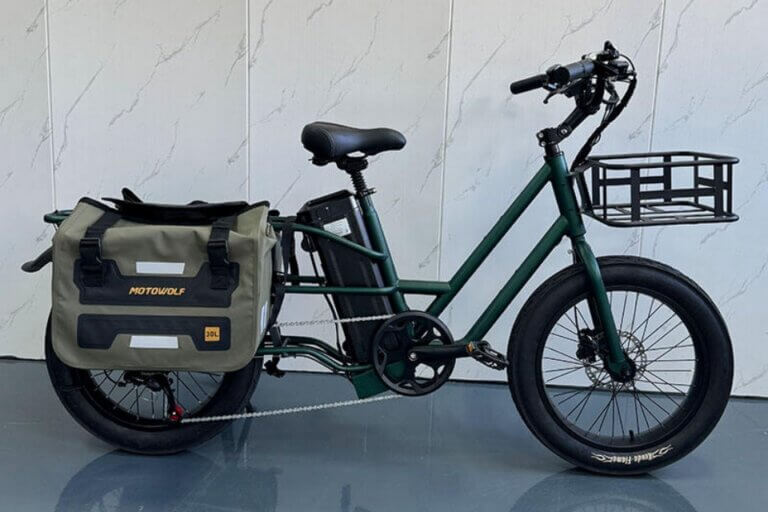
- For delivery and hauling conversations, pull up the 350W electric cargo bike with dual battery and talk about why dual packs matter: more total Wh, less deep discharge per pack, less heat stress (the quiet killer).
- For heavier utility buyers, the 750W 3-wheel electric cargo bike with front box lets you talk stability, payload, and braking confidence—stuff customers actually feel.
Myth 3: “E-bike batteries die in a year.”
Here’s what people mean: “My buddy’s battery got weak.” Here’s what usually happened: stored at 100%, cooked in heat, charged with a sketchy brick, run to empty all the time, then blamed “the tech.”
One long sentence, because the world is messy: lithium-ion packs degrade based on heat, charge level, discharge depth, and cell chemistry, and the difference between “lasts years” and “feels dead fast” is often a pile of small owner habits plus one bad choice (cheap charger, water damage, physical impact) that nobody wants to admit. It depends.
If you want to sound like you’ve done this before (because you should), you mention chemistry without making it a lecture: NMC (LiNiMnCoO₂) often packs more energy density; LFP (LiFePO₄) usually buys you better cycle stability. Tradeoffs. Always tradeoffs.
Myth 4: “You need a license (or registration) to ride an e-bike.”
This one is a legal fog machine. And customers hate fog.
In the U.S., federal consumer law defines a “low-speed electric bicycle” as operable pedals, a motor under 750W, and a top motor-only speed under 20 mph—but states and cities still control road-use rules. Elsewhere it tightens up fast. Singapore, for example, runs type-approval and registration for power-assisted bicycles on public paths and roads.
So my script is simple: “Licensing depends on where you ride and what class this model falls into—tell me your use case, and we’ll match the category.” Then I show the category logic, not my feelings.
Myth 5: “E-bikes are unsafe.”
Look—adoption rises, incidents rise, headlines rise. That’s the pattern in every mobility category, and pretending otherwise makes you sound like you’re selling snake oil. But “unsafe” is lazy language; what they’re actually asking is, “Will this hurt me, and will anyone help me if it does?”
U.S. injury surveillance has flagged growth in micromobility injuries, with one CPSC release noting injuries across micromobility rose nearly 21% in 2022 vs 2021. That doesn’t scare me. It tells me what to fix: fit, brakes, lighting, rider briefings, and not selling under-specced junk to people who’ll ride it like a motorcycle.
Myth 6: “They’re just for lazy people.”
This is social anxiety dressed up as “engineering.” And the fastest way to lose the sale is arguing about virtue.
I say: “Assist is adjustable—you can make it hard or make it easy. The goal is to ride more.” Then I pivot to practical wins: commute time, sweat control, hills, cargo. People buy outcomes, not moral approval.
And if you want to move volume, stop positioning e-bikes as toys. Transport tool. That’s the pitch. Your full products lineup makes it easier because you can show commuters, cargo, and specialty models without changing the story.
Myth-to-script cheat sheet (use this at the counter)
| Myth (what they say) | What’s actually true | The 10-second rebuttal you can use | What to show them |
|---|---|---|---|
| “E-bikes randomly catch fire.” | Risk clusters around uncertified packs/chargers, damage, and bad charging practices; NYC restricted sales/rentals without UL certification. | “Not random—mostly uncertified or abused batteries. Certified systems + matched chargers cut risk hard.” | Certification language, charger guidance, storage/charging checklist |
| “Range claims are fake.” | Range is watt-hours ÷ consumption; conditions matter. | “Give me battery Wh and your terrain—then we’ll estimate honest range.” | Spec sheet: V, Ah, Wh; real-world range bands |
| “Batteries die fast.” | Degradation is use-pattern driven; heat and cheap chargers accelerate aging. | “Treat it right and it lasts years; treat it like a disposable and it won’t.” | Care guide; charger and pack compatibility |
| “I need a license.” | Jurisdiction-specific; U.S. federal definition exists, but local road rules vary. | “In many places, no—if it fits the legal category. Let’s match the bike to your rules.” | Local rules handout; class/category explanation |
| “E-bikes are unsafe.” | Injury trends rise with adoption; risk is mitigated by training + equipment. | “Safety improves when the bike is correctly specced and the rider is equipped.” | Helmet + brake/lighting spec discussion |
FAQ
Are e-bikes safe?
E-bikes are generally safe when the whole system—battery pack, charger, BMS, wiring, brakes, tires, and rider habits—meets recognized safety standards and is used correctly, because the nastiest incidents cluster around uncertified or damaged lithium-ion packs, mismatched chargers, and sloppy indoor charging rather than electric assist itself. That’s why the U.S. CPSC has issued blunt warnings about specific third-party packs like Unit Pack Power (UPP). My practical advice (not theory): don’t baby it, don’t abuse it—keep chargers matched, avoid heat, and treat crash damage like a real event, not a cosmetic issue.
Do e-bikes need a license?
Whether an e-bike needs a license depends on local law and the bike’s classification, because many places treat pedal-assist models under specific power/speed limits as bicycles, while higher-power or faster machines are regulated like mopeds or motor vehicles with registration, licensing, insurance, and helmet rules. The U.S. baseline definition for low-speed e-bikes is captured in federal consumer law, but your road rules still come from your state/city. If you sell across borders, keep a one-page rules cheat sheet per market—customers smell uncertainty.
How long do e-bike batteries last?
E-bike battery life is the practical span before a lithium-ion pack loses enough capacity to cut real-world range and performance, and it’s shaped by heat exposure, charge habits, depth of discharge, cell chemistry (NMC vs LFP), and pack quality—not by a neat calendar timer that expires on schedule. Most people don’t need cycle-count sermons; they need three rules: avoid heat, avoid cheap chargers, and don’t store it full for weeks like it’s a trophy.
How far can an e-bike go on one charge?
E-bike range is the distance you can cover on a full charge under a defined set of conditions, and the honest way to estimate it is to use battery energy in watt-hours divided by typical consumption per kilometer, then adjust for rider weight, hills, wind, tire pressure, temperature, and assist level. If you want to sound credible, quote a range band and say what assumptions you used (flat? cargo? max assist?). Customers don’t hate limits—they hate surprise.
How do I address e-bike objections from customers?
Addressing e-bike objections is the act of translating a customer’s fear—fire stories, legality confusion, ‘fake range,’ ‘unsafe speed’—into checkable facts like certification marks, watt-hours, class/category, and intended use, so the decision moves from rumor to fit-for-purpose evaluation right there in the store. I’ve seen it: the moment you show proof (labels, math, category), the customer’s shoulders drop. Then you can actually sell.
What are the most common electric bike myths?
The most common electric bike myths are repeat-offender claims about battery fires, licensing, battery lifespan, and ‘marketing range,’ and they persist because a small number of unsafe products and exaggerated spec sheets create sticky anecdotes, while normal, safe daily use isn’t dramatic enough to go viral. Your job isn’t to win an argument online. It’s to replace a scary story with a simple fact the customer can repeat later.
CTA
Want fewer “yeah-but” conversations and more closed deals? Send customers to bikes that match their use case, then keep the pitch anchored to specs and categories: start with the EZBKE electric bike selection, use real utility examples like the dual-battery cargo e-bike or 3-wheel cargo trike, and if they’re ready to buy in volume, point them to the complete product catalog. When they’re done browsing, make it easy: contact EZBKE and get the quote moving.