


-
414 블록 B, ZT Times Plaza, 우한, 후베이성, 중국

블로그
GPS Tracking and Geofencing for Shared Scooters
Most people talk about shared scooters like this: motor, range, battery, app, done. Real fleet ops are messier than that. A sharing business doesn’t win because one scooter looks slick on a product page. It wins when the fleet stays visible, compliant, recoverable, and easy to manage at street level. That’s why the best related articles around “GPS Tracking And Geofencing: Must-Haves For Shared Scooters” keep circling back to the same point: GPS tracking helps you see the fleet, and geofencing helps you control the fleet. Without both, parking gets sloppy, support load climbs, and city complaints pile up fast. (Source: Lime)
That logic also matches how EZBKE presents its 공유 스쿠터 business. The site leans into wholesale, OEM/ODM, white-label rollout, IoT telematics, OTA updates, and fleet-ready models like Super S, FS Pro및 S1, all under a supplier story built for bulk buyers rather than one-off retail. EZBKE also positions itself as a 15년 전기 스쿠터 제조업체 플랜트 with ISO-certified production in site materials, plus broader OEM/ODM manufacturing capability on its company pages.
GPS Tracking for Shared Scooters
GPS tracking is not just anti-theft. That’s the shallow version. In real sharing ops, GPS becomes the live feed for rebalancing, battery planning, fault chasing, trip visibility, and vehicle recovery. If a unit goes dark in a bad zone, or keeps ending rides in the wrong block, or shows up as “available” while the battery is cooked, the ops team needs that signal right away. Otherwise, you’re flying blind. And blind fleets burn time on van rolls, rider complaints, and fake “vehicle unavailable” tickets. (Source: Joyride)
That’s also why EZBKE’s sharing pages don’t talk like a lifestyle brand. They talk in fleet language: battery alerts, fault codes, OTA, VIN traceability, KYC, pricing presets, and device alerts. That wording matters. It tells a buyer this isn’t a toy catalog. It’s a stack for uptime, SLA pressure, and field service reality. A lot of new operators learn this the hard way. Fancy brochure spec, weak telemetry, ugly ops. Not good.
Geofencing for Shared Scooters
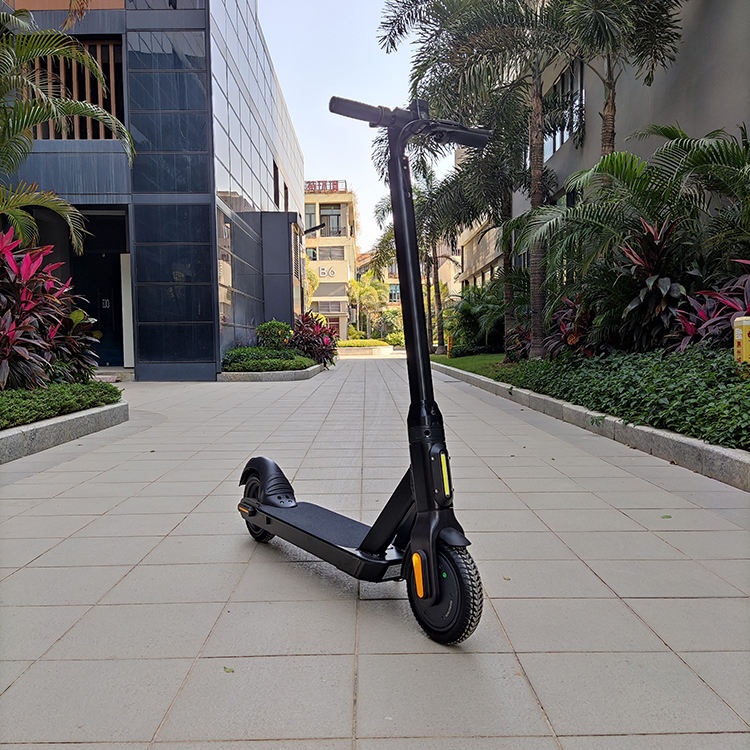
Geofencing is where policy turns into machine behavior. That’s the big shift. Lime says geofenced zones can make vehicles slow down, stop, or warn the rider, and it says its zone commands became up to 90% faster with improved detection. NACTO’s micromobility guidance goes one step further: cities should define restricted areas, operators must comply with geofencing requests, and speed reductions should kick in in high-pedestrian or prohibited spaces. In plain English, geofencing is not a map decoration. It is an enforcement layer. (Sources: Lime, NACTO)
But geofencing isn’t magic either. NACTO explicitly notes there are technology limitations, which matters because operators often oversell it. If GPS drift is weak, if the zone map is rough, or if the rider app doesn’t explain what just happened, then a safety tool turns into a customer-support mess. Good geofencing needs decent positioning, clear rider prompts, and rules that match how people actually move through a city.
Shared Scooter Parking Management
Parking is where shared scooter programs usually get judged. Not on investor decks. On sidewalks, outside transit stops, near hotels, beside campuses, right where city staff and non-riders see the fleet. The data here is useful because it cuts through the noise. Some studies show parking problems are real. Others show the problem gets exaggerated. Both can be true at once. (Sources: Portland State, San Jose State)
Evidence Table: concrete arguments behind GPS tracking and geofencing
| Concrete point | 증거가 말하는 것 | Why it matters for fleet buyers | Source label |
|---|---|---|---|
| GPS tracking is an ops tool, not just a security feature | It supports live vehicle visibility, fleet monitoring, and telematics-driven maintenance | Better rebalancing, less dead inventory, faster issue triage | EZBKE / Joyride |
| Geofencing turns city rules into automatic action | It can trigger slow zones, no-ride zones, no-parking rules, and rider warnings | Fewer compliance misses and cleaner city relations | Lime / NACTO |
| Parking compliance needs physical parking support too | Research points to dense parking networks, around 20–30 corrals per km², with parking roughly every 200 m | Better compliance without killing convenience | JTLU / Transportation Research |
| Hard parking rules can cut usage if parking is too sparse | Users in Stockholm and Malmö reported using shared scooters less after parking policy changes; parking-zone density mattered most | Don’t over-tighten rules without enough parking supply | Transportation Research Part A |
| Real rollout success comes from full-stack control | White-label app, OTA, alerts, pricing controls, and IoT-ready hardware reduce ops drag | Faster launch, fewer support tickets, cleaner expansion | EZBKE Sharing Scooter stack |
표의 소스 노트: Lime’s geofencing article explains zone-based slowdowns, stops, warnings, and faster command response. NACTO’s guideline says cities should define restricted areas and operators must comply with geofencing requests. Recent parking studies say compliance improves with dense parking networks, roughly 20–30 parking corrals per square kilometer, and prior work points to parking availability about every 200 meters. Another 2025 study found parking-zone density was the most consistent factor shaping user attitudes and reduced usage after parking rules changed. EZBKE’s fleet pages tie that policy layer back to telematics, OTA, white-label apps, and hardware fit. (Sources: Lime, NACTO, JTLU, Transportation Research)
There’s one more detail buyers should keep in mind. A Portland study found 76% of observed e-scooters failed at least one local parking requirement, which sounds rough. But a San Jose study found that among scooters parked on sidewalks, 90% were out of the way of pedestrian traffic. So the lesson isn’t “parking is always chaos.” The real lesson is this: cities need better parking design, and operators need better end-of-trip control. GPS plus geofencing helps, but dedicated parking supply still matters a lot.
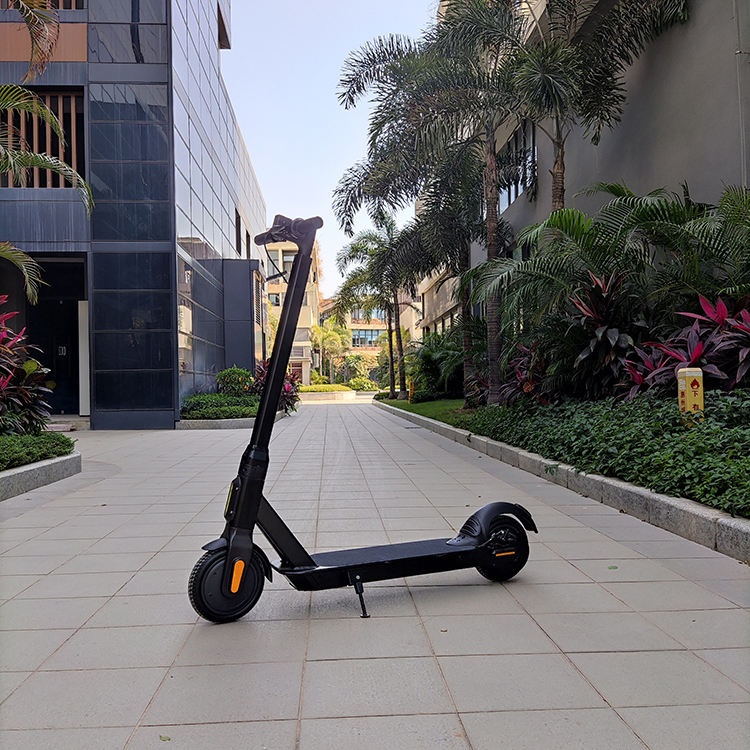
공유 스쿠터 차량 관리를 위한 SaaS 플랫폼
This is where the conversation gets practical. Shared scooters don’t scale on hardware alone. They scale on a control stack: telematics, lock control, geofencing, OTA, rider app, payments, KYC, pricing rules, and ops dashboards. EZBKE’s own 공유 스쿠터 차량 관리를 위한 SaaS 플랫폼 page makes that pretty clear. It ties product fit to fleet workflows: faster launch, lower support load, better rider UX, longer fleet life, and easier compliance docs. That’s the stuff buyers actually ask about when they’re trying to win a city tender or stand up a private network.
You can see the real-world use cases on the site too. 캠퍼스 이동성 needs tight geofence lanes, lock-to behavior, and simple rider flows. 관광객 이동성 needs reliable morning readiness, battery discipline, and less random damage. 기업 출퇴근 needs traceability, incident logs, and quick lockdown when weather or property rules change. Same category, very different field conditions. That’s why full-stack fleet management matters more than one flashy headline spec.
Sharing Scooter Models: Super S, FS Pro, S1
EZBKE’s product mix works best when you map each model to an operating scene, not when you dump all models into one tender and hope for the best. The site itself more or less says that. Pick by job, not hype. Yep, that’s the right way.
| Sharing scooter model | Best-fit scene | Why it fits fleet ops |
|---|---|---|
| Super S | Dense urban sharing, campus mobility, tight parking regulations | Compact fold, IoT-ready setup, stable geometry, good for multi-modal trips and small parking bays |
| FS Pro | Mixed-surface routes, heavy daily duty, longer trips | Airless tires, swappable batteries, 450W motor, fewer flats, fewer wrench hours |
| S1 | Campus, hospitality, corporate commute, inclusive fleets | Foldable, easier indoor staging, higher rider load tolerance, useful where weight limits matter |
Why this table is credible: EZBKE describes Super S as a sharing-first workhorse for fleets, FS Pro as a low-maintenance model with airless tires and swappable packs, and S1 as a compact option for campus, corporate, and hospitality-style deployment. The SaaS page also links these models to citywide sharing, rugged use, and inclusive fleet planning.
And this is where 어반 M fits naturally. It gives the range a cleaner fleet identity without making the pitch feel over-polished. In shared mobility, brand feel still matters a bit. Clean hardware, stable lock behavior, and a consistent rider flow can lift trust and repeat use, especially in campus or private-network rollouts. Small thing on paper. Big thing in the street.
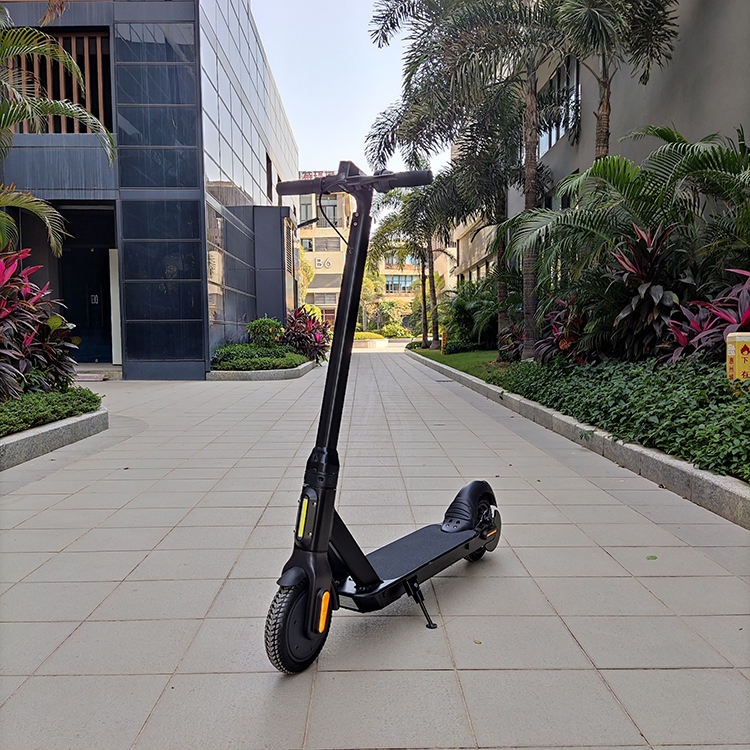
OEM/ODM Shared Scooter Manufacturer for Fleet Buyers
If you’re a wholesaler, distributor, startup operator, or municipal bidder, the real buying question is not “Which scooter is fastest?” It’s “Which supplier can help me ship a reliable fleet, keep batch quality stable, support customization, and plug the hardware into my software and compliance process?” EZBKE’s positioning speaks directly to that B2B need: wholesale durable e-scooters, OEM/ODM, bulk-order support, Sharing Scooter hardware, and a broader catalog across Electric Bike, Electric Kick Scooter, Electric Motorcycle, Foldable Electric Scooter, and Sharing Scooter.
That matters because once a fleet goes live, every weakness gets expensive in non-obvious ways: more downtime, more angry riders, more curb clutter, more truck rolls, more support noise. GPS tracking and geofencing don’t fix every ops problem, but they do give you the control layer to stop small issues from turning into a street-level mess. Put simply, shared scooters need hardware that can be found, managed, updated, and governed in real time. That’s why GPS tracking and geofencing are must-haves. Not extras. Just baseline.
One last point. A Nature Energy study on a geofencing policy in a major US city found that remote shutdown delivered near-perfect compliance, but it also came with trade-offs in congestion and travel time. That’s a good reality check. Smart control works. Still, it works best when the city rules, parking supply, rider messaging, and hardware stack all line up. Good operators know that already. The rest usually learn it late.