


-
414 Block B, ZT Times Plaza, Wuhan, Hubei, China

Blog
How to Choose the Right Frame Size for Global E-Bike Markets
But first—confession. I’ve bought the “right size” and hated it.
One brand’s “Large” felt like a relaxed commuter couch; another brand’s “Large” rode like a stretched crit bike with a battery bolted on as an afterthought, and both were sold to the same height range because somebody upstream decided SKU simplification mattered more than rider anatomy and return rates. It’s messy. Always.
So, when people ask me “what frame size e-bike do I need,” I don’t start with height charts. I start with the ugly stuff: geometry drift, factory jig tolerance, and the quiet truth that “M/L/XL” labels are marketing wrappers that change by region, by distributor, sometimes even by production month.
You want a global strategy? Cool. Then stop treating frame sizing like a universal language.
Here’s the ugly truth about “electric bike sizing chart” content
Most sizing charts are designed to close a sale, not to keep your wrists, neck, and knees happy after 300 km. They reduce friction at checkout. They don’t reduce friction in your shoulders.
And yes, I know—every blog says “standover height.” But standover is a checkbox now, not the steering wheel. The variables that actually survive across markets are:
- Reach: how stretched you feel at the bars
- Stack: how upright the front end puts you
- Contact points: saddle height range, bar height, crank length (people ignore crank length… then wonder why their knees complain)
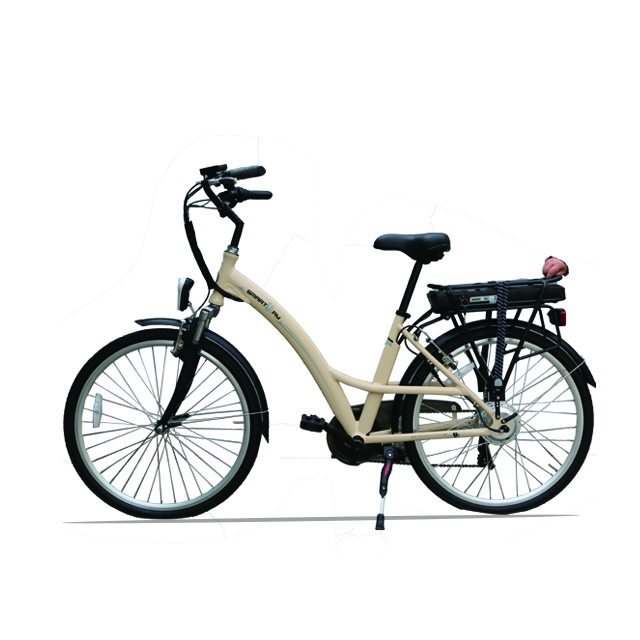
The global angle makes this worse because “frame size” becomes a translation problem. Europe buys a ton of commuter-style EPACs (typically more upright). North America buys everything (including a lot of weird, repurposed frames). Dense-city markets tolerate tighter cockpits because they’re optimizing for stops, starts, curb hops, short trips—not three-hour comfort.
And cargo? Cargo is a different animal.
The sizing method I use when I’m forced to be right
Step 1: Don’t trust height alone (use it as a filter, not a verdict). Height is a blunt instrument. Two riders at 175 cm can have completely different inseams and torsos—meaning one will feel fine on a longer reach, the other will feel like they’re doing a plank at every stoplight.
Quick self-checks I’ve seen save people:
- Long inseam + short torso = often needs more stack, not more reach
- Short inseam + long torso = may need more reach, but watch standover and saddle range
Step 2: Normalize with reach/stack, not “M/L.” If you can get geometry, you can compare across countries, brands, and labels. If you can’t get geometry, you’re stuck doing the expensive workaround: test fit, measure a known bike, and match the cockpit feel.
Step 3: Match sizing to the market’s dominant use-case. This is where the “global e-bike markets” thing becomes real—not theoretical.
- Commuter-heavy regions usually reward upright comfort + predictable handling.
- Mixed-regulation regions often have label drift because frames get reused across categories.
- Cargo-heavy usage demands stability and easy mounting, not “bigger is better.”
If you’re selling internationally, you’re not just shipping bikes. You’re shipping expectations.

The cargo exception (where most people screw up)
Cargo buyers (and a lot of merchants) treat sizing like a mountain bike: “Go bigger for stability.” That advice is how you create low-speed wobble, awkward mounting, and riders who quit because the bike feels like a refrigerator on wheels.
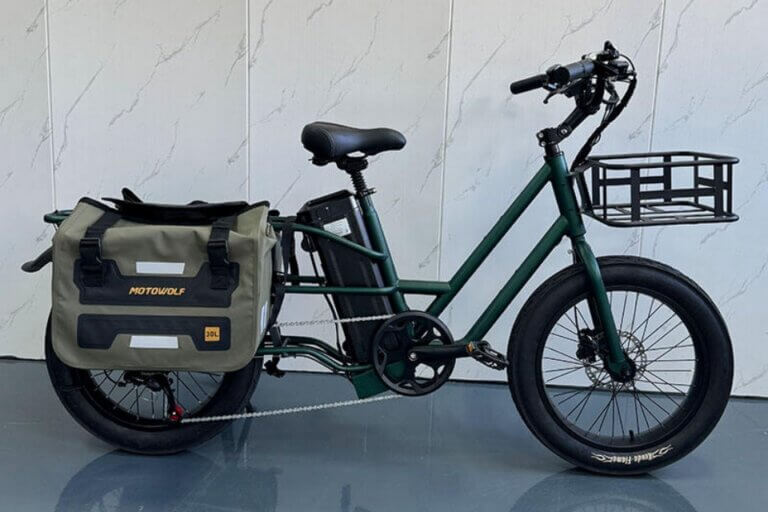
Look at a cargo lineup inside a catalog like the electric bike product category and you’ll see the real constraint: battery packaging + load layout. That changes geometry. That changes fit.
Concrete examples, because hand-waving is cheap:
- The 350W electric cargo bike with dual battery & heavy-duty rack is basically shouting “upright control under load,” which means bar height and stable leverage matter more than chasing a longer frame for ego points.
- The 750W 3-wheel electric cargo bike with large front box is a totally different fit problem—mount/dismount frequency, steering leverage, low-speed behavior. Oversizing here can feel clumsy fast.
- If you need a consistent “anchor” model to compare feel (same brand family, less noise), use a specific SKU like B01 to keep your mental map from drifting.
Beginners do it constantly. Then they slam the saddle, death-grip the bars, and blame the bike when their wrists hurt. It’s not stability. It’s a bad fit with coping mechanisms.
A simple comparison table I actually trust
Below is the checklist I’d use if I were buying one frame size for multiple global markets (or selling online into them).
| Market reality | What sizing charts usually say | What I recommend you use instead | Common failure mode |
|---|---|---|---|
| EU commuter-heavy mix, tighter standards pressure | “Pick size by height; choose comfort” | Prioritize stack (upright comfort) + moderate reach; check step-through options | Buyer picks “sporty” geometry, hates neck/wrist pain |
| North America mixed regulation + broad SKU reuse | “M fits 5’7–5’11” | Normalize with reach/stack; assume label drift; verify cockpit length | “Large” feels like XL, returns spike |
| Cargo-dominant usage (delivery, utility) | “Size up for load” | Fit for low-speed control: upright torso, stable steering, easy mount/dismount | Oversized frame becomes unsafe in traffic stops |
| Short-trip, stop-start dense cities | “Smaller is more agile” | Smaller can work, but don’t crush reach; keep knee tracking clean; check bar height | Knees hit bars, rider quits in 2 weeks |
| Cross-border D2C sales | “Universal sizing chart” | Require geometry or measure a known bike and match reach/stack | Buyer trusts chart, complains “feels wrong” |
FAQs that answer what people actually ask
What is an e-bike frame size? An e-bike frame size is a manufacturer’s fit label (numbered or S/M/L) intended to match rider body dimensions and posture, but real fit is governed by geometry—especially reach, stack, effective top tube, and saddle/bar adjustment range—because labels vary by brand and can shift across regions and production runs. If you remember one thing: the label is a hint; geometry is the contract.
How do I choose the right frame size e-bike if I only know my height? Choosing the right frame size with only height means using a height-based range as a first-pass filter and then validating it with standover comfort, achievable saddle height, and cockpit reach feel, because height alone ignores inseam and torso proportions that strongly affect knee extension, hand pressure, and long-ride comfort on an e-bike. Between sizes? Short torso usually prefers sizing down; long torso can tolerate sizing up (then tune the cockpit).
What frame size e-bike do I need for cargo or delivery work? A cargo/delivery e-bike frame size should be selected for low-speed control and repeatable comfort under load—upright torso angle, stable steering leverage, easy mount/dismount, and knee clearance—because cargo bikes are heavier, used in stop-start patterns, and punish oversized fits with fatigue, wobble, and awkward handling at intersections. Cargo isn’t “just a bike.” Treat it like a working tool.
Is an e-bike frame size calculator reliable across global markets? An e-bike frame size calculator is only reliable when it incorporates geometry inputs (reach/stack) or detailed rider measures (inseam, torso, arm length), because global sizing labels aren’t standardized and many sellers reuse frames across categories, tweak cockpit parts by region, or simplify SKU ranges in ways that break height-only sizing logic. Use calculators as a shortlist maker, not a judge and jury.
What’s the best e-bike frame size for beginners? The best beginner e-bike frame size is usually the smallest size that still allows correct leg extension and a comfortable, non-stretched reach, because it improves confidence at low speed, makes stops safer, and reduces the common “oversize + slam saddle” pattern that leads to wrist pain, neck tension, and unstable handling in traffic. If you feel stretched, you’re probably too big.
CTA
If you’re buying for multiple markets or building a catalog that won’t implode under returns, stop trusting generic charts and start comparing reach/stack like you mean it. Browse the full products lineup to see how categories change the fit problem, and if you want help turning sizing into something you can defend to customers (and to your own support team), use the contact page.