


-
414 Block B, ZT Times Plaza, Wuhan, Hubei, China

Blog
How Dealers Can Reduce Returns And Complaints On e-Bikes
What are the most common reasons for refunds?
Most “returns” don’t start as a product problem. They start as an expectation problem.
BikeExchange lists the usual suspects: wrong product/size, wrong item shipped, damage, product not matching description, late arrival, customer changed mind, gift didn’t fit the recipient.
Here’s the dealer truth: e-bikes amplify this because you’re selling a vehicle, not just a bike. One mismatch (speed class, range, weight, assembly level) can trigger tickets, RMAs, bad reviews… the whole chain reaction.
How to reduce and even avoid returns
BikeExchange says the “overarching rule” is simple: don’t let the need for a sale mislead the customer—use total transparency.
I’d push it further for e-bikes:
- Sell the job-to-be-done, not the spec sheet.
- Lock your listing → packing → dispatch → onboarding as one clean SOP.
- Treat complaints like early warning signals, not “annoying emails.”
EZBKE already frames it the right way: “don’t start with pretty photos. Start with the job.”
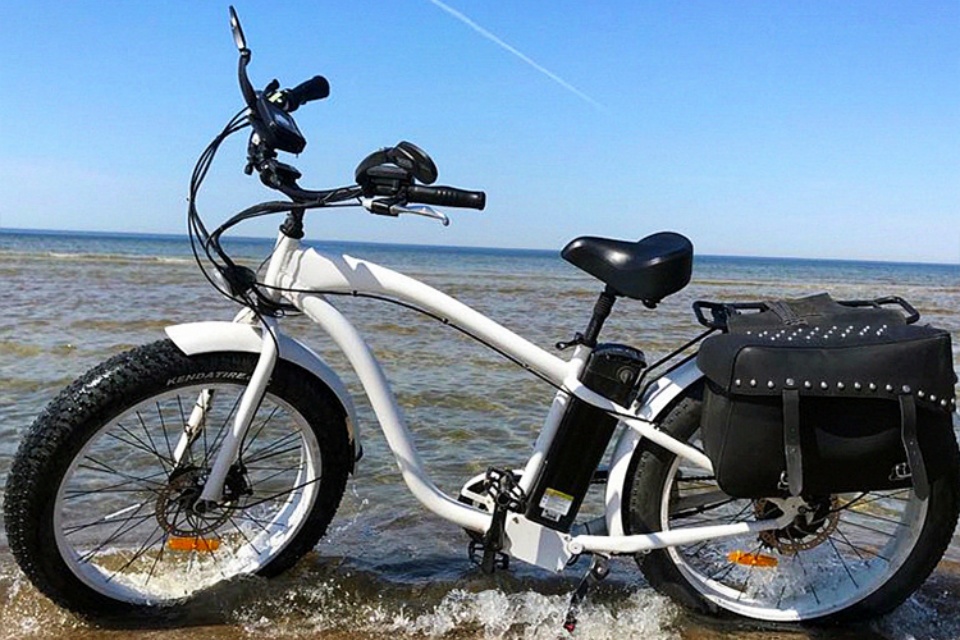
Commercial Fat Tire e-Bike Supplier (OEM/ODM, Wholesale)
If you’re a dealer doing wholesale, fleet, or B2B, returns usually come from route mismatch and ops mismatch.
EZBKE calls out real fleet scenes (broken asphalt, wet cobblestone, beach paths) and explains the tradeoffs (fat tires help stability/comfort but add weight and rolling resistance). That’s exactly the kind of honest copy that prevents post-purchase regret.
Also, our “15Y manufacturer Plant + OEM/ODM” positioning is a big trust lever for buyers who hate surprises.
Electric Bike Cargo Solutions (3-Wheel, Dual-Battery)
Cargo buyers complain about stability, range anxiety, and “this isn’t built for my load.”
Match the scenario:
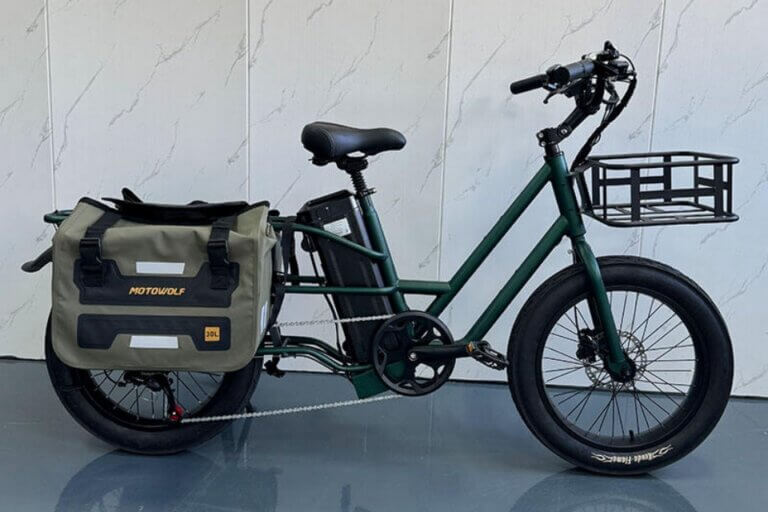
- 750W 3-Wheel Electric Cargo Bike with Large Front Box fits predictable loading + low-speed stability (last-mile, family transport).
- 350W Electric Cargo Bike with Dual Battery & Heavy-Duty Rack speaks directly to long shifts and delivery duty cycles (dual battery + long range).
When you sell these, don’t just say “cargo.” Say what kind of cargo day they run: grocery routes, campus logistics, hotel ops, etc. EZBKE even name-drops courier workflows like Urban M—use that as your “real scene” anchor.
Folding Electric Commuter for Micro-Depots
Folding models reduce complaints in dense cities because they solve the annoying parts: elevators, vans, tight storage.
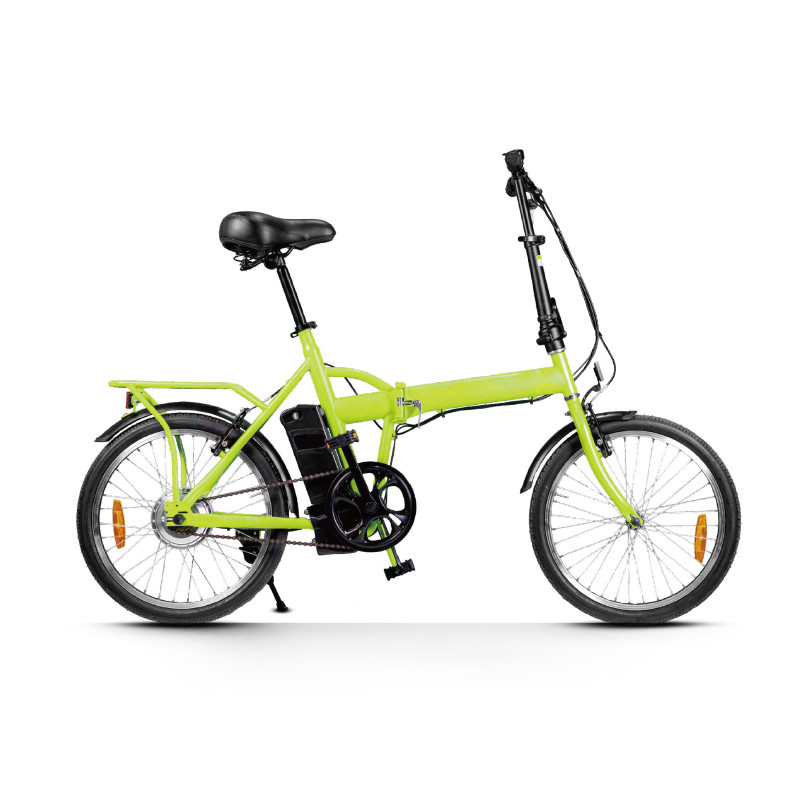
- F20 small folding electric commuter city bicycle wholesaler positions itself for compact delivery and commuter use, with a clear feature breakdown (design/portability, speed/range, safety, bulk packaging).
- LN26M03 highlights “ships flat-packed” and “warehouse-to-store ready,” which matters because shipping damage + missing parts are classic RMA triggers.
If your customer runs pop-up depots, say it plainly: “This bike is built for micro-depots.” EZBKE literally recommends that exact keyword structure.
1.0 An accurate product description
BikeExchange tells retailers to answer three basic questions: what is it, who buys it, why they buy it.
For e-bikes, add three more “no drama” lines:
- Assembly level (boxed vs tuned).
- Real use-case (hills? cargo? short hops?).
- What it is NOT (so the wrong buyer self-selects out).
Also—tiny but huge—make sure the title and spec table agree. For example, EZBKE’s C02 title says “mid drive,” but the specs show a 36V/250W brushless hub motor. If a buyer expects mid-drive torque and receives hub behavior, you’ll get complaints fast. Fixing naming consistency is boring work, but it saves you alot of support tickets.
6.0 Check the item before dispatch
BikeExchange says to double confirm you’re shipping the right item and it’s in perfect condition before it leaves.
Dealer ops translation: do a fast PDI (pre-delivery inspection) even for boxed units:
- torque check critical bolts
- brake rub / rotor true
- PAS + throttle function (if applicable)
- charger + battery handshake
- lights + display
- photo proof for DOA disputes
This is how you cut “NFF returns” (No Fault Found) that waste everyone’s time.
Post a Clear Refund Policy
NBDA says a clear refund policy sets expectations and helps defend disputes/chargebacks, especially when it’s visible and acknowledged.
They also recommend making the policy visible in multiple touchpoints (receipts, signage, website footer, checkout checkbox).
For e-bikes, keep it short and human:
- What counts as “unused” (battery cycles, miles, packaging).
- What counts as shipping damage (and the photo window).
- What counts as “fit issue” (size exchange rules).
Customers don’t read walls of text. They scan.
Quality Counts
NBDA says quality matters—wobbly wheels and sticky brakes drive dissatisfaction, returns, and chargebacks.
This connects directly to your OEM/ODM pitch: buyers want predictable quality, traceable process, and fewer warranty surprises. EZBKE’s category page leans into scalable OEM production and even mentions things like IoT diagnostics and IATF certification (that’s the language fleet buyers understand).
Safety and compliance: UL 2849 / UL 2271 should be in the contract
EZBKE explicitly calls out putting UL 2849 / UL 2271 requirements into the contract and asking for a documented safety stack (BMS protections, thermal paths, charging guidance).
This reduces complaints in a quiet way: customers trust you more when you talk about safety like an adult, not like a marketer.
Dealer playbook table: arguments + sources
| Dealer argument (what you’re really fixing) | What you do in the real world | Which returns/complaints it prevents | Where EZBKE fits | Source |
|---|---|---|---|---|
| Expectation mismatch causes refunds | Write listings that answer what/who/why + add “what it’s not” | “Didn’t match description”, “wrong product” | Use-case mapping across Electric Bike lineup Electric Bike | |
| Wrong buyer picks wrong model | Sell the job (route, load, storage), not pretty photos | “Changed mind”, “not for my needs” | Fleet-first copy + real scenes (Urban M, resorts, campus) | |
| Shipping + dispatch errors create RMAs | Dispatch checklist + photo proof | “Wrong item shipped”, “damaged”, DOA claims | Flat-packed + bulk-ready packaging messaging | |
| Cargo buyers hate instability and weak range | Recommend 3-wheel front box or dual-battery cargo | “Unsafe”, “range anxiety”, “not built for load” | 750W 3-wheel + 350W dual battery cargo | |
| City buyers complain about storage/portability | Push folding commuter for micro-depots | “Too big”, “hard to store” | F20 folding commuter | |
| Confusing labels trigger disputes | Keep descriptors crystal clear (product + billing) | Chargebacks, “I don’t recognize this” | Clean dealer branding + consistent naming | |
| Vague refund rules create escalation | Post a clear refund policy everywhere | Returns turning into chargebacks | Dealer policy + checkout acknowledgment | |
| Safety ambiguity creates fear-based complaints | Put UL + safety stack into PO and onboarding | “Battery unsafe”, “I’m scared to ride” | UL 2849 / UL 2271 language + SOP |