


-
414 Block B, ZT Times Plaza, Wuhan, Hubei, China

Blog
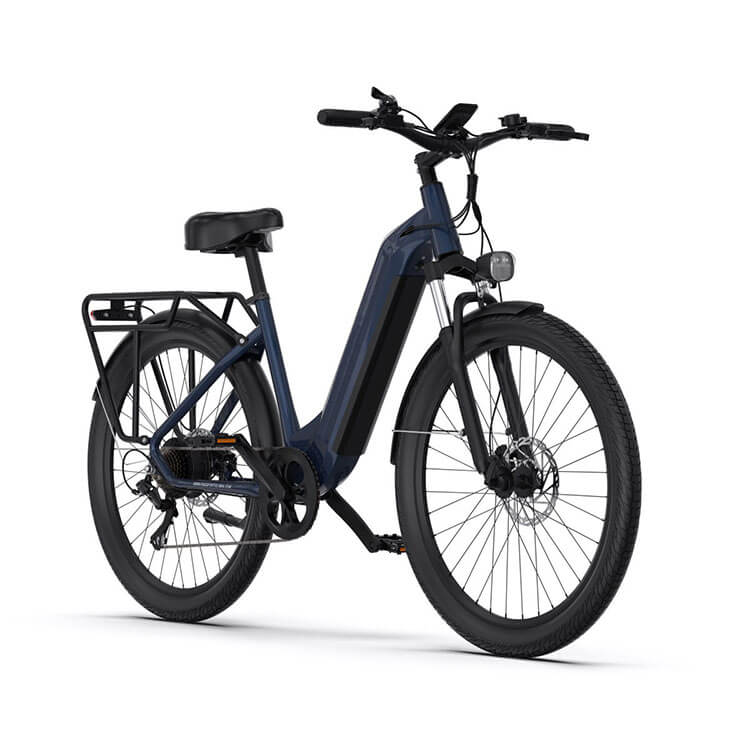
E-Bike Cargo Racks: Structural Validation Methods
Racks fail fast.
When you hang a “25 kg rated” carrier off a long-tail and then add a 48V pack, panniers, and curb hits at ~25 km/h, the rack becomes a vibrating cantilever where weld toes, fastener preload, and mount geometry matter more than the marketing sticker ever will.
And we’re supposed to trust the sticker?
I’m going to say the quiet part out loud: a lot of “cargo rack validation” in this industry is theater. Static load photos. One lab test on a golden sample. Zero torque audit in production. Then everyone acts surprised when a customer shows up with a cracked stay and a loose M6 bolt rattling around in the dropout.
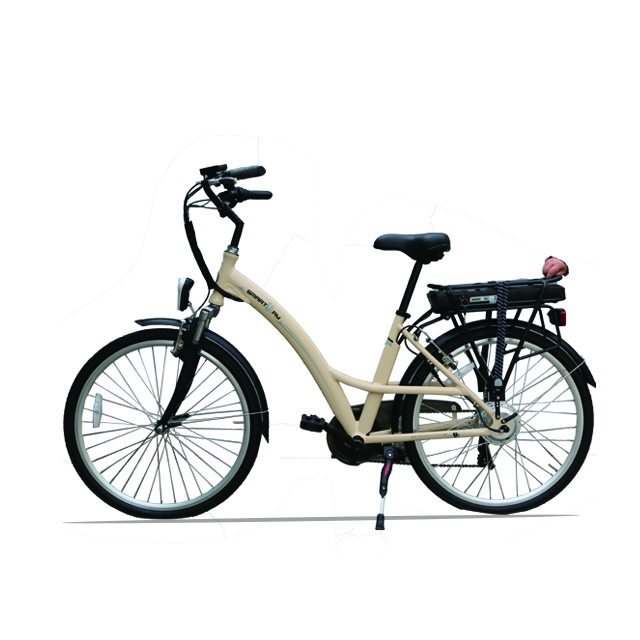
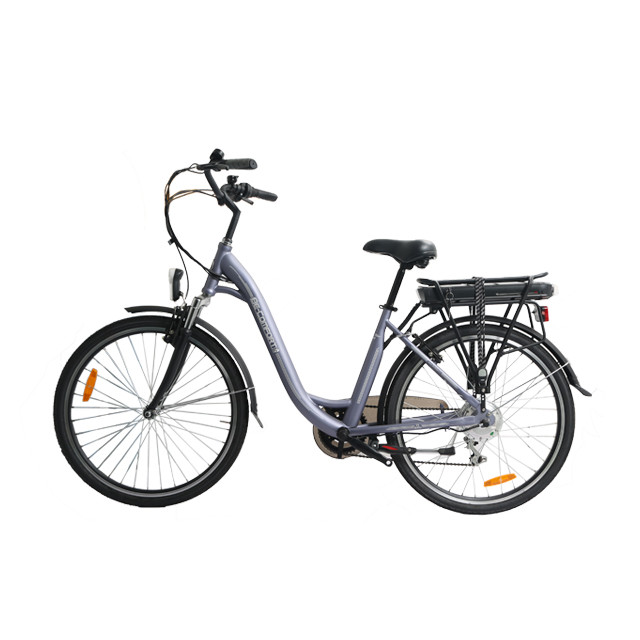
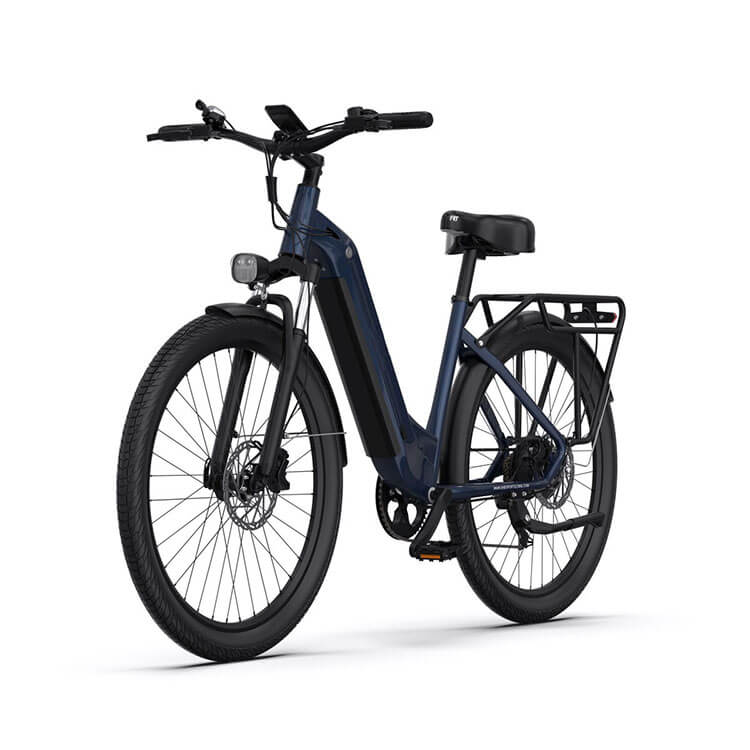
If you’re speccing a working rig—like the long-tail format in EZBKE’s 350W electric cargo bike with dual battery & heavy-duty rack or a front-box platform like the 750W 3-wheel electric cargo bike with large front box—you need structural validation methods that survive lawyers, procurement, and actual roads. (Not vibes.)
Table of Contents
The uncomfortable baseline: why “static load” is the weakest promise
Static load test for cargo racks is necessary. It is also the easiest test to pass while still building a rack that will die in the field.
Why? Because fatigue is the assassin. Every pothole is a stress cycle. Every start-stop delivery loop is another chance for preload loss at the fastener stack (bolt–washer–rack tab–frame boss). Add e-bike mass, higher average speed, and stop-and-go duty cycles, and you’re feeding cracks on a schedule.
The U.S. Consumer Product Safety Commission has been blunt about the scale of micromobility injury growth, with injuries trending upward and a large share of e-bike injuries concentrated in recent years. That doesn’t “prove” racks are the cause—but it absolutely raises the cost of pretending validation is optional.
The standards: ISO 11243 and EN 14872 (and what they really do for you)
If you sell globally, you’ll keep running into two phrases customers don’t understand but regulators and retailers do:
- ISO 11243 luggage carrier testing (current edition is ISO 11243:2023)
- EN 14872 luggage carrier standard (older European framing; often referenced in product literature)
ISO 11243 is the umbrella that matters in modern discussions: it specifies safety and performance requirements and test methods for bicycle luggage carriers mounted above/adjacent to wheels. ISO’s official listing for ISO 11243:2023 is the clean reference point you can cite in a spec sheet without starting a standards-paywall argument.
Hard truth: standards compliance is not the finish line. It’s the minimum entry ticket to be taken seriously.
And regulators are getting less patient about “trust me” documentation. In February 2024, the Dutch regulator NVWA publicly stated Babboe had to halt trade until safety was sufficiently demonstrated, including via complete technical documentation—the kind of paperwork most brands treat like an afterthought until a crisis hits.
Yes, that case was about frames. But the lesson applies directly to racks: if you can’t prove structural safety with documentation and repeatable tests, you don’t “have a product,” you have a pending problem.
The validation stack I trust (cargo bike rack testing that isn’t cosplay)
1 Define the duty cycle like an operator, not a marketer
Write it down. Quantify it.
- Payload: 25 kg “rated” is common; working fleets often push beyond it.
- Road input: curb drops, cobbles, speed bumps, off-axis hits.
- Mount geometry: seatstay/chainstay bosses, axle mounts, integrated rack frames.
- Vibration exposure: 1–7 Hz band is where a lot of “bike-shaped” fatigue lives.
- Corrosion: salt + dissimilar metals = hidden preload loss.
If you don’t start here, your test plan is just random suffering.
2 Run static load, but treat it as a geometry sanity check
Static load test for cargo racks should answer:
- Do the rack rails permanently deform?
- Do mounts slip?
- Do fasteners yield?
- Does a child-seat interface (if allowed) create local overstress?
This is where you catch dumb design errors early: thin rack tabs, no gussets, under-sized bolts, no anti-rotation features.
3 Run dynamic load (fatigue) test for bike racks—vertical and lateral
This is the money test.
I care about:
- Cracks at weld toes and heat-affected zones (HAZ)
- Elongated bolt holes
- Fretting at interfaces
- Loosening after X cycles (torque audit before/after)
If your lab says “no visible damage” but never checks bolt preload loss, I don’t trust the lab. Period.
4 Use finite element analysis (FEA) for bike rack design—but don’t worship it
FEA is great for:
- Stress hotspots (weld toes, bends, bolt bosses)
- Comparing gusset shapes
- Deciding whether 6061-T6 vs 7005 vs steel tubing buys you fatigue margin
- Torsion paths (one-sided pannier loads are nasty)
FEA is weak for:
- Real weld quality variation
- Surface defects
- Preload loss + joint slip behavior unless you model contacts properly (most don’t)
- Corrosion effects
So: use FEA to reduce prototypes, not to replace tests.
5 Validate the manufacturing process (because production is where racks die)
This is the part people hate because it’s boring and expensive:
- Weld procedure consistency (heat input control)
- Fixture repeatability (alignment)
- Fastener grade verification (8.8 vs “mystery metal”)
- Torque spec + verification (example: M6 into alloy boss often lives around 8–12 N·m depending on interface; you document the exact stack)
- Threadlocker spec (blue Loctite 243 is common; define cure time and surface prep)
If you want the “operations” version of this mindset, EZBKE’s own writing on process discipline is worth skimming—different product category, same principle: what makes an OEM worth partnering with.
The case studies that should scare you into doing it right
Case 1: Babboe cargo bikes — regulators demanded proof, not promises (2024)
The U.S. CPSC recall for Babboe cargo bicycles spells out the hazard plainly: frames can crack/bend/break and cause a fall hazard; prices listed were $3,500–$7,000 and sales spanned years.
Again: frames, not racks. But structurally it’s the same failure mode family—fatigue + insufficient proof + delayed response.
Case 2: Hitch rack recall — latch mechanics failed under real loads (NHTSA, 2024)
Different rack type, same validation lesson: “it held in the shop” is not a test plan.
NHTSA’s Part 573 safety recall report for the Kuat Transfer v2 hitch-mounted bicycle carrier documents complaints where a fully loaded rack body disengaged and dropped toward the ground; it even notes a case where a bike was dragged behind a vehicle.
If that can happen on a car rack with a big brand, imagine what happens when an e-bike cargo rack gets validated by “trust me, bro.”
Case 3: Injury trendlines — the tolerance for weak validation is shrinking (2023–2024)
CPSC’s September 2024 micromobility report summarizes reported fatalities and ED-visit estimates across 2017–2023, including a rising fatality count and a steep increase in e-bike ED visits over the period.
You don’t want to be the next brand learning “documentation” means “the thing you show after something breaks.”
Bicycle luggage carrier test methods: what to measure (not just what to run)
Here’s what I want recorded in every test report:
- Load applied (kg, N) and where applied (distance from mount points matters)
- Cycle count and frequency (and whether you paused for inspections)
- Deflection over time (creep / looseness trend)
- Fastener torque/preload before and after (with tooling calibration records)
- Crack detection method (visual is weak; dye penetrant on suspect areas is cheap insurance)
- Failure criteria (crack length? permanent set? loosened joint? defined, not vibes)
Also: don’t ignore the “human factor” safety layer. Shops and fleets teach riders quick checks because loose hardware often shows up as wobble first. If you need language for that, EZBKE’s e-bike safety pre-ride checks is surprisingly practical.
Comparison table: what each validation method catches
| Method | What it catches | What it misses | Best use |
|---|---|---|---|
| Static load test for cargo racks | Gross bending, permanent deformation, obvious weak mounts | Fatigue cracks, preload loss over time | Early design screening + compliance baseline |
| Dynamic load (fatigue) test for bike racks | Crack initiation/propagation, joint fretting, long-cycle loosening | Rare overload events unless you include them | Real-world durability gate before production |
| Lateral/side-load fatigue | Pannier-induced sway, asymmetric loading, torsion | Vertical-only impacts | Courier and commuter pannier scenarios |
| FEA for bike rack design | Hotspot mapping, gusset optimization, material comparisons | Weld variation, corrosion, assembly drift | Prototype reduction + “where to reinforce” decisions |
| Production torque + weld audits | Assembly drift, fastener grade issues, fixture misalignment | Design that’s fundamentally underbuilt | Keeping a validated design from being ruined in manufacturing |
FAQs
How do I test an e-bike cargo rack for strength?
An e-bike cargo rack strength test is a controlled sequence of static and dynamic loading (vertical and lateral) that verifies the rack, mounts, welds, and fasteners resist cracking, loosening, and permanent deformation under defined payloads and road-shock cycles, with clear pass/fail criteria and documented measurements.
Start with static load to catch geometry mistakes, then run fatigue to expose crack growth and joint slip. If your report doesn’t include pre/post fastener torque or preload checks, treat it as incomplete.
What is ISO 11243 luggage carrier testing?
ISO 11243 luggage carrier testing is a standardized set of design safety requirements and lab test methods for bicycle luggage carriers mounted near the wheels, intended to confirm carriers withstand specified loads and repeated cycling without fractures, cracks, or unsafe deformation, while also requiring instructions and use/care guidance.
Use it as your baseline spec language, then add your own “worst-case operator” cycles for fleet duty.
What’s the difference between static and dynamic fatigue testing for bike racks?
A static load test applies a steady force to a rack to confirm it doesn’t permanently bend or fail immediately, while a dynamic fatigue test repeatedly cycles loads to reproduce vibration, curb hits, and asymmetric pannier forces that cause microcracks, bolt loosening, and weld-toe failures over time.
Static tells you “it won’t collapse today.” Fatigue tells you “it won’t crack next month.”
Can finite element analysis replace physical testing for a cargo rack?
Finite element analysis (FEA) is a computational method that estimates stress and deflection across a rack under modeled loads, helping identify likely crack initiation zones and compare design variants, but it cannot reliably capture real weld variability, assembly preload loss, corrosion, or manufacturing drift without complex contact and process modeling.
So: FEA narrows the design. Physical tests certify reality.
What documentation should I demand from a cargo rack supplier?
Supplier validation documentation is the organized evidence pack proving a rack design and production process meet defined requirements, typically including test plans/results, drawings with revision control, material certs, weld procedures, torque specs with calibration logs, traceability by lot/serial, and corrective-action records tied to failures or field returns.
If a supplier can’t produce it quickly, that’s information.
Conclusion
If you’re building a cargo program and you want racks that behave under real duty cycles, stop shopping on wattage and start shopping on validation. Look at platforms designed for load use cases, then interrogate the test stack behind them—especially the rack and mounting system—like you’re the one who’ll be deposed later.
If you’re evaluating cargo SKUs, start by comparing real configurations (front + rear load paths, box geometry, battery mass) across EZBKE’s heavy-duty cargo e-bike manufacturer guide and the two workhorse formats highlighted in their urban cargo bestseller breakdown. Then, when you’re ready, pressure-test the accessory ecosystem too—because racks, panniers, and mounts live or die together—using their best accessories to upsell with electric bicycles as a quick map.