


-
414 Block B, ZT Times Plaza, Wuhan, Hubei, China

Blog
What To Look For In An Electric Bike Supplier
If you’re sourcing bikes for wholesale, retail, fleet, or private label, the big question isn’t just who can send you a low quote. The real question is simpler: who can help you sell without creating a mess later. A weak supplier gives you spec drift, battery complaints, late delivery, and after-sales tickets that never stop. A solid electric bike supplier gives you safer products, cleaner SKU planning, better sell-through, and fewer headaches after the container lands. Closely related sourcing guides keep pointing to the same checks: product quality, safety certification, sample testing, delivery capacity, logistics, and after-sales support.
Related Articles About What To Look For In An Electric Bike Supplier
Before writing this piece, I reviewed several articles around the same topic. They don’t use the exact same title every time, but the logic is very consistent.
| Related topic | Spezifisches Argument | Why it matters for buyers | Quelle |
|---|---|---|---|
| Product quality | Check battery, motor, brake system, and frame quality before bulk purchase | These parts drive warranty risk and customer trust | OKAI, PXID |
| Safety certification | Ask for full e-bike electrical safety proof, not vague claims | Safety isn’t a brochure line. It is a market-entry issue | UL, SGS, CPSC |
| Production and logistics | Review lead time, factory capacity, container loading, and shipping support | A nice sample means little if mass production slips | OKAI, Made-in-China |
| Market fit | Define the right bike category first: commuter, cargo, folding, utility | Wrong SKU mix creates dead stock fast | PXID, EZBKE |
| Unterstützung nach dem Verkauf | Parts supply and service response matter as much as the first shipment | The sale is not the end, that’s where pain often starts | OKAI, EZBKE |
The source labels above come from supplier-selection articles and official safety references that focus on quality checks, certification, production, and support.
Electric Bike Supplier: Safety Certification Matters More Than Low Quotes
A lot of buyers still start with price. That is normal. But price-first sourcing is where many projects go wrong. A supplier may offer a decent-looking spec sheet, but if the electrical system is not backed by proper testing, you take the risk, not them.
UL 2849 Certification for E-Bikes
UL says UL 2849 evaluates the electrical drive train system, battery system, and charger system combinations of an e-bike for electrical and fire safety. CPSC has also called on manufacturers, importers, distributors, and retailers of micromobility products to comply with established UL safety standards through accredited certification. In plain English: if you sell into serious markets, safety paperwork can’t be soft or half-done.
Finished E-Bike Certification vs Component Compliance
This point gets missed all the time. SGS notes that having approved components does nicht automatically mean the finished e-bike meets UL 2849. That matters a lot. A supplier might tell you the battery is compliant, the charger is compliant, maybe the motor system too. Still not enough. The full bike system has to work together safely. Buyers don’t need pretty words here. They need test reports, marks, and traceable compliance.
OEM/ODM Electric Bike Manufacturer: SKU Fit Comes Before Price
A good OEM/ODM electric bike manufacturer should not push one bike for every market. That never works for long. What really matter is SKU fit. Commuters need something different from delivery fleets. Family cargo buyers don’t shop like folding bike buyers. EZBKE’s Kategorie Elektrofahrräder already shows a broad Urban M range across commuter, cargo, folding, and utility styles, plus OEM electric bicycle solutions with cold-climate battery options, IoT diagnostics, and scalable production positioning. That is the kind of range B2B buyers usually want to see before they open a serious conversation.
Electric Cargo Bike Supplier
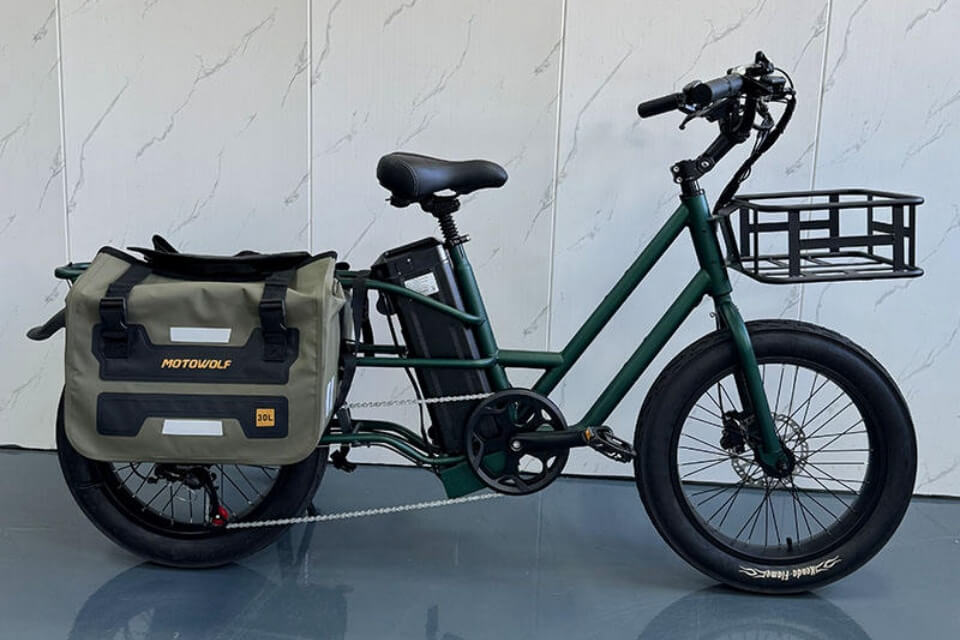
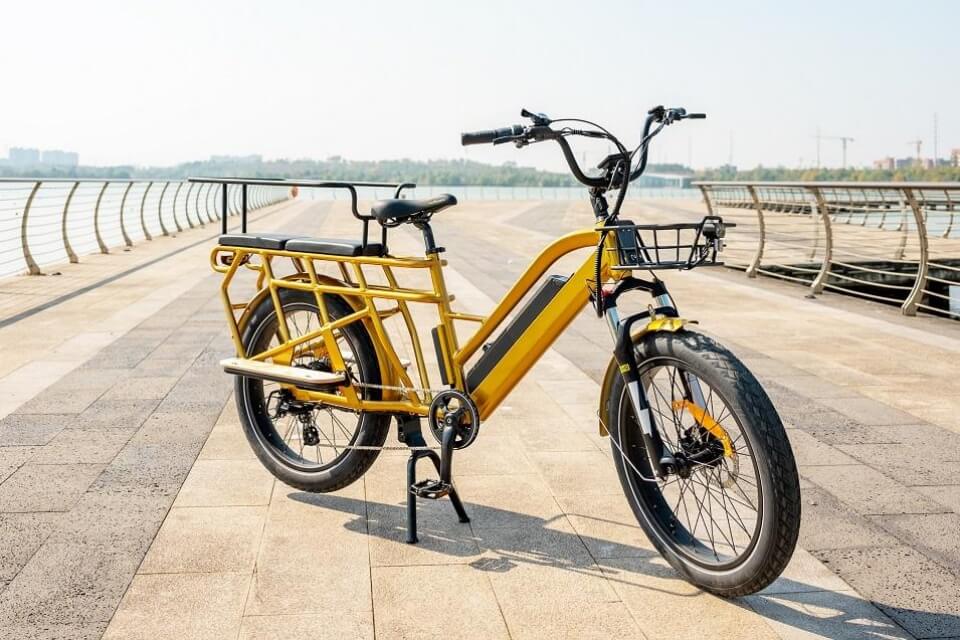
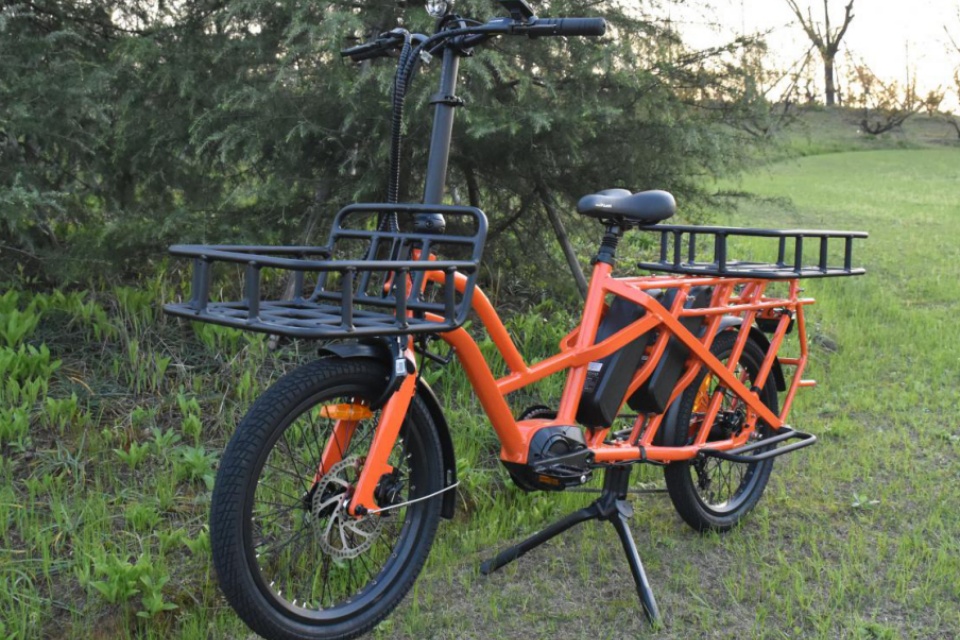
If your buyer serves delivery, logistics, or family transport, cargo matters more than trend. EZBKE’s 350W Elektro-Lastenrad uses a Bafang mid-drive system, dual battery options, front and rear racks, and a pedal-assist range up to 160 km. The 750-W-Elektro-Lastenfahrrad mit drei Rädern adds a front cargo box, 60 km max range, CE/FCC certification, and a listed delivery time. That tells you something important: a supplier that can support both two-wheel and three-wheel cargo formats is usually better prepared for real utility use cases, not just showroom use.
Folding Electric Bike Wholesaler
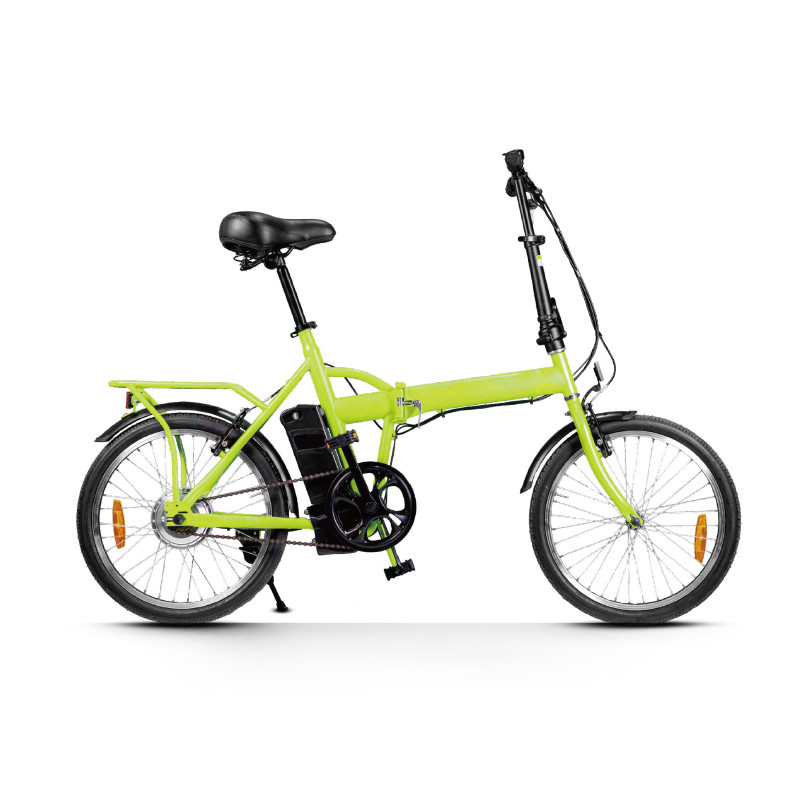
Now think about tight apartments, mixed commuting, and small-store retail. A folding model solves different problems. EZBKE’s F20 folding bike uses a 20-inch steel folding frame, compact packaging, and high loading efficiency for wholesale. That makes it easier for dealers chasing commuter demand or delivery riders who need a bike that stores easy. Small details like foldability and container density aren’t sexy, but they move product.
Commuter Electric Bike Manufacturer
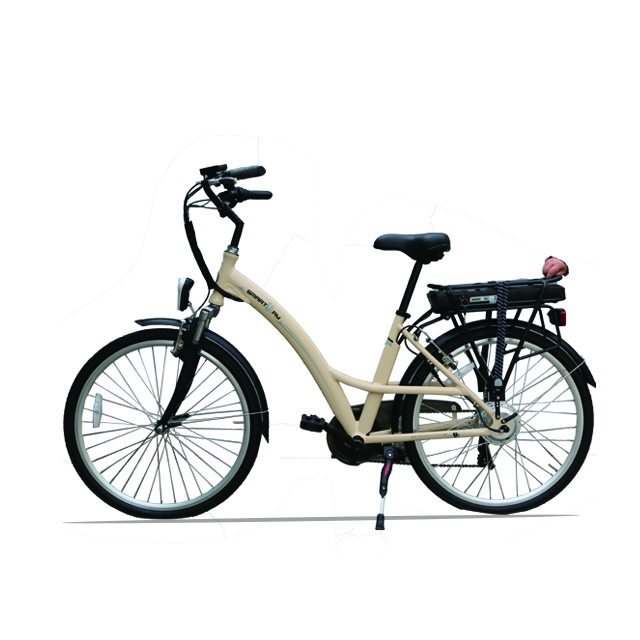
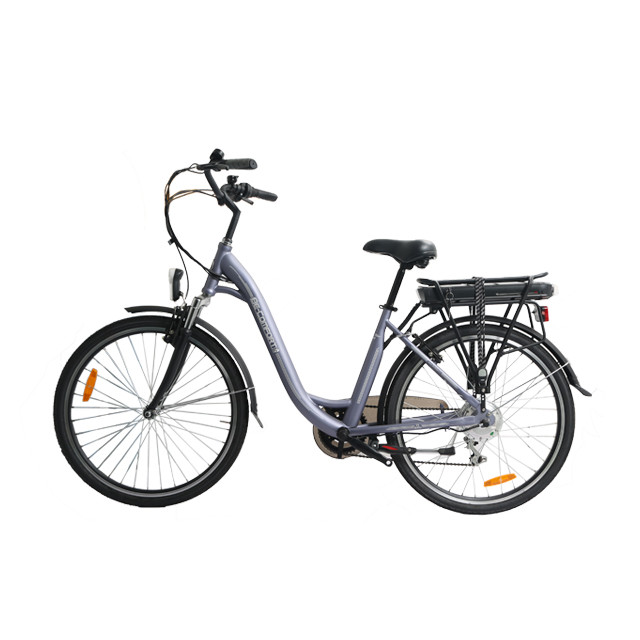
For daily urban use, balance wins. The B01 und C02 lean into that. B01 is built around everyday riding with a removable battery, disc brakes, and up to 70 km range. C02 adds urban-friendly geometry, Shimano gears, lighting, a global voltage charger, and compact packaging for bulk orders. This is where Urban M fits naturally: not every buyer wants a flashy bike. Many want a clean commuter SKU that sells, ships, and survives city use without too much after-sale drama.
Electric Bike Quality Control and Sample Testing
This is the part buyers skip when they are rushing. Don’t. Related supplier guides keep repeating the same advice: define your quality standard, request samples, and test the bike before mass production. That means checking braking feel, pedal-assist cut-off, display function, battery removal, weld finish, rack strength, and ride stability. A spec sheet can hide a lot. A sample usually can’t.
Here is a practical way to think about it:
| Buyer scenario | What to check first | Why this check matters | Urban M example |
|---|---|---|---|
| City commuter program | Battery removal, braking, night visibility | Daily users hate charging friction and weak stopping | B01, C02 |
| Delivery fleet | Rack setup, motor system, range, controller stability | Fleet downtime kills repeat orders | 350W Cargo Bike |
| Family cargo / local retail | Frame stability, cargo box, low-speed control | Safety and comfort matter more than top speed | 750W 3-Rad Cargo Fahrrad |
| Small apartment / folding demand | Fold size, weight, carton efficiency | Compact bikes win where storage is tight | F20 |
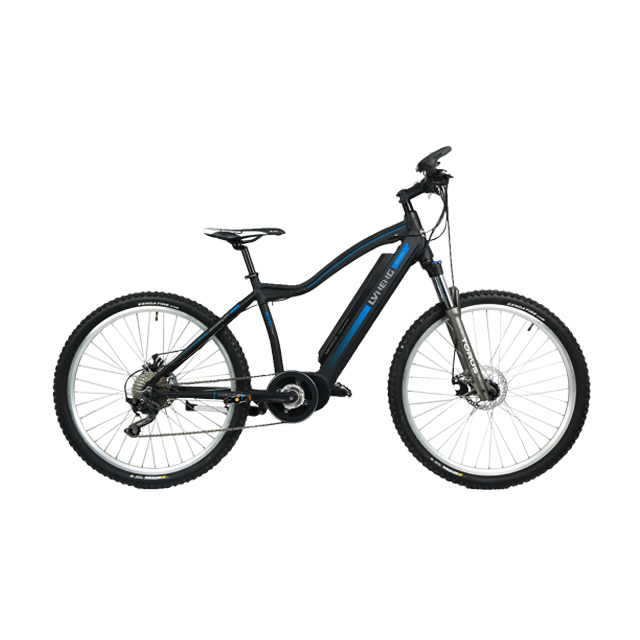
| Utility / style-led wholesale | Tire size, suspension, gear system, certification | Buyers want rugged looks without weak build | Peak Power 450W |
The examples above are based on the EZBKE / Urban M product pages and product-category positioning.
E-Bike Lead Time, MOQ, and Container Loading
A supplier can pass the sample stage and still fail you in bulk. That happens more than people admit. Related buying guides stress production capability, delivery, and logistics for one reason: late bikes don’t sell on time. On the EZBKE side, you can already see wholesale-facing details like loading quantity, packaging size, MOQ language, and delivery timelines on several models. The 3-wheel cargo bike lists delivery time and MOQ. C02 and F20 highlight packaging and container loading. B01 even frames export-friendly loading as part of the product value. That is good B2B thinking, because container efficiency and repeatable delivery are part of the product, not separate from it.
Electric Bike After-Sales Support and State Laws
This is where many supplier relationships either become long-term or fall apart. You don’t just need bikes. You need spare parts, battery support, warranty response, and market compliance. PeopleForBikes notes that electric bike laws differ by state, and the rules can be confusing for riders, retailers, and suppliers. SGS also points out that finished-bike compliance matters, not just loose component claims. So yes, your supplier should understand more than production. They should understand where the product will be sold and what proof the market expects.
For a brand like Urban M, that means the value pitch should not stop at “we can build it.” The better pitch is: we can help you match the right model to the right market, keep the spec clean, and reduce after-sales drag. EZBKE already presents OEM/ODM capability, R&D support, quality systems, and electric bike options across cargo, folding, commuter, and utility scenes. That gives buyers more room to build a workable line, not just a random catalog.
How to Choose an Electric Bike Supplier
So, what should you really look for in an electric bike supplier?
Not the cheapest quote. Not the loudest promises. Look for five things: real certification, the right SKU mix, solid sample quality, stable bulk delivery, and after-sales support that doesn’t vanish after shipment. If a supplier can cover commuter, folding, cargo, and custom OEM/ODM work while also speaking the language of compliance and QC, you’re in a much better place. That is why Urban M feels commercially useful here. The line already maps to real buyer scenes, and that is what serious sourcing is about. Less fluff. More bikes that actually move.