


-
414 Block B, ZT Times Plaza, Wuhan, Hubei, China

Blog
Common Electric Bike Complaints (and How Ezbke Solves Them)
Cheap parts. Most electric bike problems that I see people blame on “bad luck” are boringly systematic: pack-level QC that misses a weak cell, connector tolerances that loosen after vibration, brakes specced for price not heat, and a supply chain that treats chargers like disposable accessories instead of high-current electronics. Sound harsh?
Here’s the hard truth: the industry has trained buyers to obsess over wattage and top speed while ignoring the stuff that actually causes the angry support emails—range collapse, intermittent cut-outs, squealing brakes, and charger failures. The failures aren’t random; they cluster.
One more hard truth: regulators are catching up, and they’re using fire risk as the battering ram. New York City’s Local Law 39 explicitly ties legal sale/rental to accredited-lab certification against UL standards (UL 2849 for e-bikes, UL 2271 for batteries). That’s not marketing. That’s compliance math.
So what does Ezbke do differently, based on what they actually publish?
I’ll stick to the receipts on their site: their electric-bike catalog leans on mainstream components (Shimano, Kenda, Bafang), publishable spec tables (voltage, Ah, range, brake type), and a manufacturing narrative that claims robotics-driven assembly and real-time diagnostics modules for fleets. You can argue about the prose. The numbers are the point.
If you want the full lineup first, start at the Ezbke electric bike wholesale lineup and keep it open while you read—because I’m going to reference specific models, not vibes.
Complaint 1: “My battery drains fast.”
Three words: physics wins. When riders ask “why is my e-bike battery draining fast,” they’re usually seeing one (or more) of these: cold-temperature sag, high rolling resistance, under-inflated tires, a controller that pulls peak current too aggressively, or a battery pack whose stated capacity doesn’t survive real-world discharge curves. And the quiet killer?
Charging. Bad chargers and off-brand packs are where “battery problems” turn into headlines—and into laws. FDNY reported 18 lithium-ion-battery-related deaths in 2023 and 6 in 2024 in NYC, after a major crackdown and policy push. That delta doesn’t happen because people suddenly learned to love torque sensors; it happens because enforcement and safer equipment move the needle.
How Ezbke tries to solve it (with published specs):
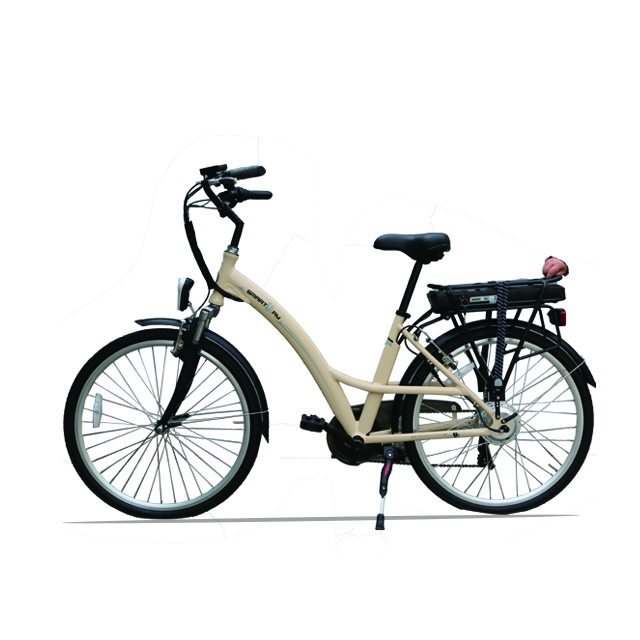
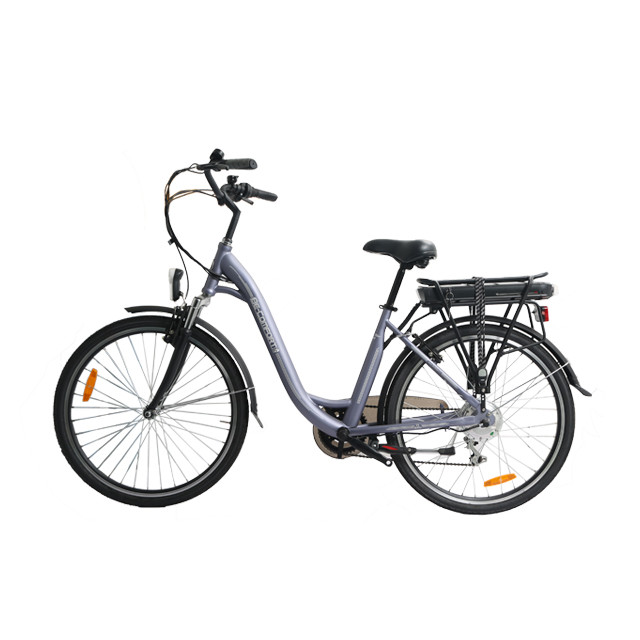
- The commuter-style B01 36V 10Ah commuter e-bike calls out a removable 36V10Ah (360Wh) battery and up to 70 km range. Removable matters because apartment charging is where user behavior gets sloppy—people charge in hallways, on carpets, near exits.
- The city-focused C02 30 km/h city e-bike with Shimano 6-speed also lists 36V 10Ah with ~70 km range and global 110–220V charging, plus a defined controller spec (36V, 13A). That’s not “safer” by itself, but it’s at least legible engineering, not mystery hardware.
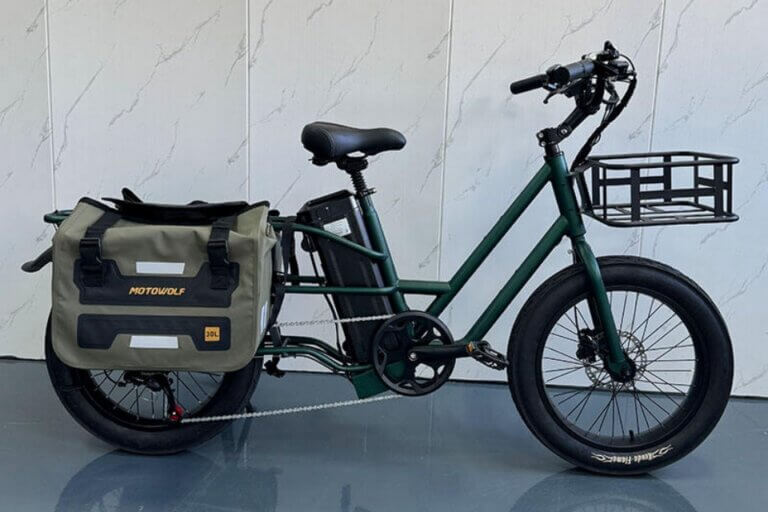
- For fleets and heavy users, the 350W cargo e-bike with dual 48V batteries is the blunt instrument: one 48V 13Ah pack (or two for 26Ah) and stated pedal-assist range up to 160 km. Dual packs are a practical solution to range anxiety—swap strategy instead of “charge anxiety.”
What I’d still demand (because buyers get burned): ask for cell brand, BMS cut-off specs, thermal protection behavior, and proof of third-party testing if you’re selling into strict jurisdictions. NYC has already made the “show me the certification” posture normal.
Complaint 2: “My motor cuts out / e-bike motor not working.”
Annoying. Dangerous. A motor that quits under load is usually not “the motor”—it’s the harness, water ingress, a loose connector, a hall sensor glitch, or a controller that overheats and self-protects, then comes back like nothing happened, gaslighting the rider into thinking they imagined it. Ever notice that?
The CPSC has been explicit that micromobility hazard patterns are not just crashes; they include product and battery hazards, and the agency continues to push voluntary standards and safer systems while collecting injury/fatality data. That’s the backdrop, whether brands like it or not.
How Ezbke tries to solve it (with component choices):
- The cargo model specs a Bafang mid-drive and a simple 48V architecture; that’s a mature ecosystem for serviceability (parts, diagnostics, training).
- The C02 lists an “intelligent” controller and 1:1 speed + PAS sensor; again, not magic, but it signals a defined sensor/control stack rather than whatever the factory had in a bin.
Where Ezbke’s “factory story” matters: their About page claims robotic assembly precision and “real-time diagnostics and GPS tracking” modules, plus acceptance of third-party factory inspections (SGS/BV). If you’re buying OEM/ODM, that’s the part you pressure-test—because intermittent cut-outs often trace to assembly consistency, not design intent. If you want to start that conversation, the shortest path is their contact Ezbke for OEM documentation and inspection options.
Complaint 3: “My brakes squeal / don’t stop well.” (aka electric bike brake problems)
Three words: heat budget. Electric bike brake problems show up when braking systems designed for 18–22 km/h acoustic bikes get slapped onto 25–30 km/h, 25–35 kg e-bikes with cargo loads, because stopping power is a thermal problem first, a “pad compound” problem second, and a rider-skill problem last. Who pays?
The buyer. In time, money, or skin.
How Ezbke solves it (sometimes):
- The B01 explicitly lists front and rear disc brakes—a sane baseline for city traffic and wet conditions.
- The C02 lists front/rear V-brakes, which I’ll call out bluntly: V-brakes can be fine, but on heavier e-bikes they become maintenance-heavy and fade-prone when abused. If you’re selling C02-like specs, you upsell discs or educate the rider. Pretending otherwise is how returns happen.
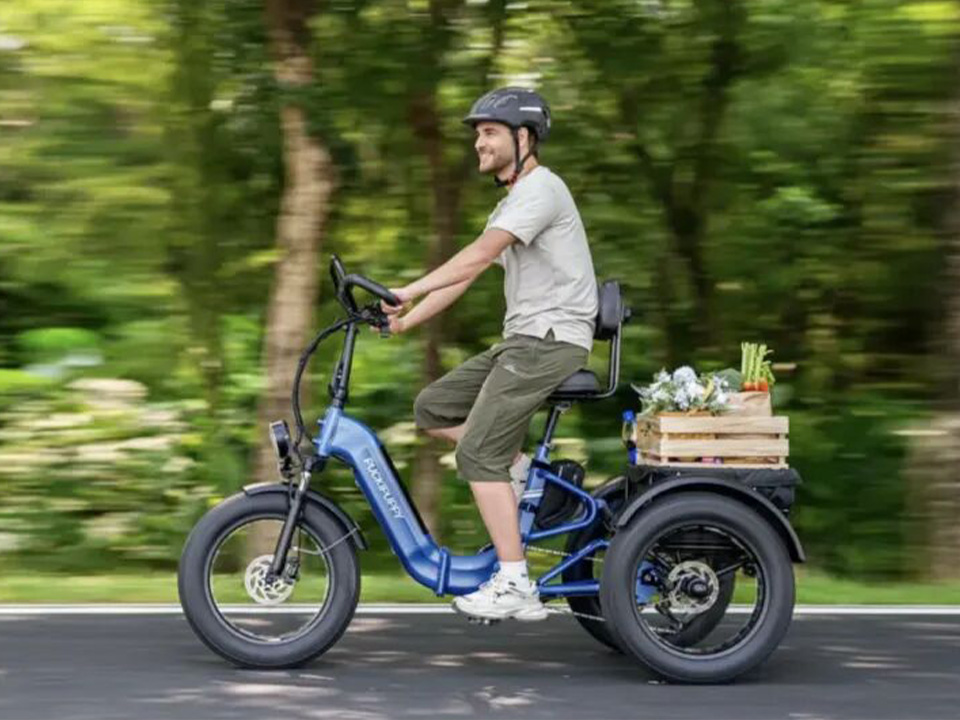
For cargo duty, don’t play games—spec brakes for payload. The cargo model is positioned for logistics and lists rack hardware and high range; it should be treated like a small vehicle, not a “bike with a motor.”
Complaint 4: “It rattles, flexes, or the frame feels sketchy.”
Simple question: why? In OEM e-bikes, “frame issues” often correlate with two things: material choice plus welding consistency. Aluminum 6061 is common; the variability is in execution—alignment, weld quality, and how the bike handles repeated pothole impacts and curb drops. So what’s Ezbke doing?
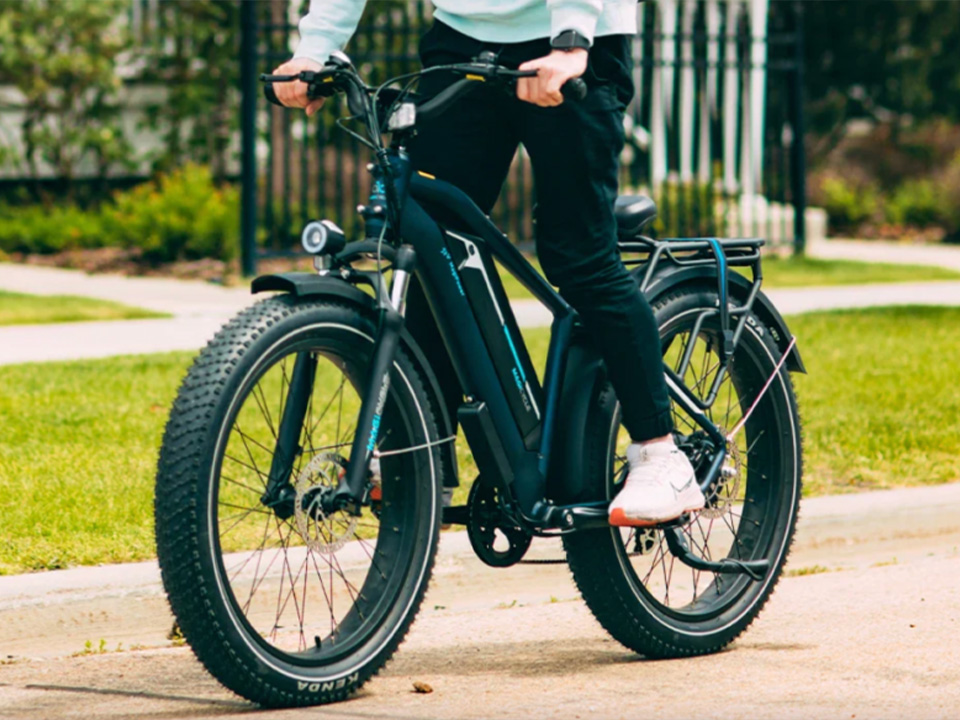
The C02 publishes a 26″ aluminum 6061 city frame and a named suspension fork (Zoom), plus named tires (Kenda) and drivetrain (Shimano 6-speed). Those are not guarantees, but they’re traceable parts in a system that can be serviced. And their corporate page claims a 30-day production-to-shipment cycle and robotics-driven precision; again, you verify via inspection or third-party audit if you’re serious. If you want to see how they present that capability, read Ezbke’s manufacturing and production story.
Complaint 5: “Troubleshooting is a nightmare.”
True. Often avoidable. Electric bike troubleshooting becomes painful when the bike is a Frankenstein of unbranded controller, unmarked battery pack, and a charger that isn’t matched to the BMS logic; diagnosis turns into guesswork, and guesswork turns into parts-cannon repairs. Want an antidote?
Transparency: voltage, current limits, sensor types, and replaceable components.
Ezbke leans into publishable parameter tables (C02) and mainstream brands (Shimano/Kenda/Bafang). For fleets, they also claim diagnostics/GPS modules and cold-weather sodium-battery options (-15°C). Sodium chemistry (often positioned as an alternative to lithium) is a strategic bet for cold climates and cost control—but if you’re buying it, you’ll want cycle-life data and pack-level safety testing, not slogans.
The complaint-to-fix map (what actually matters)
| Complaint (what riders say) | Typical root cause (what’s really happening) | What to demand from any supplier | Where Ezbke’s published specs help |
|---|---|---|---|
| Battery drains fast / range feels fake | Cold sag, high current draw, weak cell group, mismatched charger | Cell/BMS details, matched charger, realistic range method | Published Wh/Ah and ranges on B01/C02; dual-pack option on cargo model |
| E-bike motor not working / cuts out | Connector looseness, water ingress, controller thermal protection | IP strategy, harness strain relief, controller thermal behavior | Bafang mid-drive option; defined sensor/controller stack on C02 |
| Brake squeal / weak stopping | Heat fade, cheap pads/rotors, wrong brake type for weight | Disc brakes for speed/weight; payload-rated braking | B01 specifies disc brakes; C02’s V-brakes require buyer honesty/education |
| Frame flex / rattles | Alignment, weld quality, low-spec hardware | Inspection, torque spec sheet, service parts availability | Traceable mainstream components; manufacturing/inspection claims on About page |
| Troubleshooting takes forever | Unbranded components + no documentation | Parameter tables, wiring diagrams, spare parts SKUs | C02 parameter table + global charger spec; IoT diagnostics claim for fleets |
| Compliance risk (can’t sell into strict markets) | No accredited-lab certification to UL standards | UL 2849 / UL 2271 evidence where required | Ezbke doesn’t publish UL proof on the pages I reviewed—buyers should request it explicitly |
FAQs
Why is my e-bike battery draining fast? E-bike battery “fast drain” is the gap between the battery’s labeled energy (e.g., 36V×10Ah=360Wh) and the real energy you can use under your conditions, where cold temperatures, high assist modes, heavy loads, under-inflated tires, and controller peak-current spikes can cut usable range sharply. If you want a quick triage: drop assist one level, pump tires to spec, stop throttle-only testing, and check whether your charger is the correct voltage and properly matched.
What should I check first when my e-bike motor is not working? When an e-bike motor “isn’t working,” the failure is usually upstream of the motor itself—power delivery, connectors, sensors, or the controller—so the first checks are battery output under load, visible harness damage, loose waterproof connectors, sensor alignment, and whether the controller is heat-soaking and temporarily shutting down to protect itself. If you’re buying OEM, insist on a wiring diagram and a standard connector set so your techs aren’t improvising.
How do I do electric bike troubleshooting without swapping random parts? Electric bike troubleshooting is a structured process of isolating faults by testing the system in layers—battery/charger, controller, sensors, then motor—using known-good components and measurable outputs (voltage sag, error codes, connector continuity) instead of guessing, because random part swapping is expensive, slow, and often masks the real issue until it fails again. Start with the battery and charger, then move inward; document every change.
Are V-brakes okay on an e-bike, or should I insist on disc brakes? V-brakes on an e-bike can be acceptable for lighter, lower-speed commuter use, but disc brakes are generally better suited to e-bike loads because stopping performance is dominated by heat dissipation, wet-weather consistency, and pad/rotor longevity, and heavier e-bikes amplify fade and maintenance demands on rim-based systems. If you’re selling to delivery riders or cargo users, discs are the safer default.
What does UL 2849 mean for e-bikes, and why should buyers care? UL 2849 is a safety standard focused on the electrical system of e-bikes—including battery, charger, wiring, and drive system integration—intended to reduce fire and electrical hazards, and it matters because jurisdictions like New York City have tied legal sale/rental to accredited-lab certification (with batteries often expected to meet UL 2271). If you’re importing or wholesaling, treat certification evidence as a gate, not a bonus.
Conclusion
Want fewer returns and fewer “my e-bike died” tickets? Start by picking designs with publishable specs and serviceable parts, then demand the paperwork that matches your target market.
Browse the Ezbke electric bike wholesale lineup, sanity-check the spec sheets on the B01 36V 10Ah commuter e-bike and the C02 30 km/h city e-bike with Shimano 6-speed, and if you’re building for delivery fleets, look hard at the 350W cargo e-bike with dual 48V batteries.
Then go straight to contact Ezbke for OEM inspection options and documentation and ask the uncomfortable questions: cell sourcing, BMS behavior, charger matching, ingress protection, and—if you sell into regulated markets—accredited-lab certifications aligned with UL requirements.