


-
414 Block B, ZT Times Plaza, Wuhan, Hubei, China

Blog
City–Scooter OEM Partnerships Explained
Partnership levers cities actually use with scooter OEMs and operators
| Partnership lever (keyword) | What the city wants | What the operator/OEM must deliver | Why it matters in the real world | Source |
|---|---|---|---|---|
| Public right-of-way (ROW) + permitting | Orderly use of sidewalks/curb + fewer complaints | A permit-ready ops plan + compliance tooling | Cities treat scooters like “curb inventory,” not consumer toys | PBIC notes cities balance ROW order with private-sector interest and set service levels. |
| Vendor limits / small set of vendors | Less staff time + easier enforcement | Program maturity + predictable service | Many cities prefer a small vendor set to reduce admin load | PBIC reports this preference directly. |
| Service levels (SLAs) | Fast incident response + reliable availability | Rebalancing, retrieval, repair cadence | If your SLA is weak, your permit gets political fast | PBIC mentions expected service levels and incident response times. |
| Data reporting (MDS) | Rule enforcement + planning + auditing | MDS endpoints + clean telemetry | Cities don’t “trust screenshots.” They want machine-readable proof | LADOT explains MDS as the API cities use to pull data; SFMTA requires test data for MDS. |
| Public availability feed (GBFS) | Public transparency + trip planning ecosystem | GBFS feed for real-time system availability | GBFS helps cities + apps know what’s available now | GBFS definition and intent (open, real-time, non-PII). |
| Privacy governance | Avoid sensitive-data blowups | Minimization + secure handling policies | “Not personal data” doesn’t mean “no risk” | OMF says MDS focuses on vehicles (not rider PII) but still has sensitivity; privacy guide exists for cities. |
| Parking + curb management | Clear sidewalks + accessibility | Designated parking + corrals + enforcement workflows | Bad parking kills programs faster than bad pricing | NACTO requires a minimum clear path for sidewalk corrals and recommends controlled parking approaches. |
| Concession contracts | City control + sometimes revenue | Bid-ready package + compliance confidence | Some cities run this like a concession, not a friendly pilot | Liverpool describes a concession where the operator pays the city. |
Public right-of-way (ROW) permits and “rules exchange”
Cities don’t partner with scooter OEMs because they love hardware catalogs. They do it because the public right-of-way is regulated space. When scooters show up, cities need levers: where scooters can ride, where they can park, how fast they move in sensitive zones, and how quickly someone fixes problems.
Right-of-way, permits, and compliance (keywords: ROW, permit, compliance)
PBIC’s scan of mid-sized U.S. cities spells it out: cities try to balance orderly ROW use while keeping private operators interested. They build permit structures and define service expectations (minimums/maximums, speed thresholds, incident response).
How this hits your sales reality: if you pitch “nice scooter,” the city hears “future complaints.” If you pitch “permit-ready system,” they hear “lower admin pain.”
Vendor limits and relationship management (keywords: vendor cap, procurement, permitting)
PBIC also reports many cities prefer working with a small set of vendors to build relationships and reduce staff burden.
That’s why OEMs that support operators with documentation, stability, and standard data feeds show up more often in final shortlists. Fewer surprises. Less chaos.
Contract term length, performance incentives, and enforcement
Let’s be honest: most city programs start polite, then get strict after the first wave of sidewalk clutter.
Contract term length + performance incentives (keywords: term, SLA, fleet performance)
Cities bake performance into program operations. PBIC highlights service level expectations and incident response times.
That pushes OEMs into the partnership, because hardware reliability and maintainability decide whether an operator can hit the SLA.
Here’s a scene you’ve probably lived:
It’s Tuesday morning. A neighborhood group posts photos of scooters blocking ramps. The city gets calls. Your ops team scrambles. If your fleet has weak locks, no telemetry, or slow repair cycles, you’ll bleed time and goodwill. And yeah, you’ll feel it in the next permit renewal.
Permit fees, penalties, and compliance ops (keywords: enforcement, citations, 311)
Cities use enforcement and complaint channels as feedback loops. Permit programs can include investigator responses, complaint intake, and compliance meetings.
I’m not listing fine amounts here, but the message is simple: cities can and do penalize sloppy ops.
Data standards are the partnership “contract language”: MDS + GBFS
This is where “city + OEM” partnerships get very technical, very fast.
Mobility Data Specification (MDS) (keywords: MDS API, provider endpoints)
LADOT explains MDS as an API system, and in Los Angeles providers must share data through it.
San Francisco’s permit application explicitly requires test data for MDS provider API and GBFS endpoints as part of the application process.
So if your fleet stack can’t support MDS cleanly, you’re not “missing a feature.” You’re missing the language the city speaks.
General Bikeshare Feed Specification (GBFS) (keywords: GBFS feed, real-time availability)
MobilityData’s GBFS repo defines GBFS as an open, real-time standard for shared mobility availability, designed for public consumption and not for personally identifiable information.
In practice: MDS helps cities regulate; GBFS helps ecosystems and transparency.
Privacy and data governance isn’t optional
Some operators still say, “We don’t share personal info, so we’re fine.” That thinking gets you in trouble.
OMF states MDS focuses on vehicle status/location/trips and doesn’t include rider PII, but it also warns the data can still be sensitive and requires risk management.
And the OMF privacy guide frames mobility data exchange as having unique privacy considerations, even when cities already handle sensitive data in other contexts.
Practical takeaway: build a “minimum necessary” data posture. Keep logs tight. Document retention. Don’t act like “vehicle data” can’t become identifying at scale. It can, sometimes.
Parking, corrals, geofencing, and curb management: where programs win or die
Parking problems create the loudest headlines. Cities respond with physical infrastructure and digital controls.
NACTO’s shared micromobility guidelines include sidewalk corral rules like a minimum clear path requirement and city approval of corral plans.
That’s not abstract. That’s a checklist item.
On the OEM/operator side, your controls are usually: geofencing, speed zones, movement alerts, and lock behavior. EZBKE’s sharing solution page describes geofencing controls (rideable areas, speed control, movement alerts) and frames it as a safety/legal tool.
I’ll say it blunt: if your platform can’t support geo-fence rules reliably, the city will treat you like a risk.
Concession contracts and procurement: sometimes it’s not a “pilot,” it’s a bid
Some cities run shared scooter programs as formal concessions. Liverpool’s notice describes a concession contract for public hire where payment is made by the operator to the city.
That shifts the tone. You’re not “testing scooters.” You’re competing in procurement, with compliance and credibility as scoring factors.
Where EZBKE and Urban M fit in (Sharing Scooter + OEM/ODM + bulk)
EZBKE’s Sharing Scooter category page positions the offering as sharing-grade hardware (e.g., IP rating, commercial battery cycle claims, GPS/Bluetooth lock), plus OEM customization and “city compliance kits.”
Their integrated solution page also leans hard into the operator pain points: dead batteries, lost units, fleet mix chaos, and the idea of a one-stop stack (scooter + IoT + app + backend).
Urban M appears as the brand styling/positioning inside EZBKE’s ecosystem, including “Urban M-inspired designs.”
(And yeah, if you’re selling into cities, aesthetics still matters. It’s not the main KPI, but it helps adoption.)
EZBKE sharing models mapped to city partnership needs (keywords: Sharing Scooter, OEM/ODM, IoT, swappable battery)
| Model | Typical fleet scenario | Ops-friendly hardware hooks | City-program relevance | Source |
|---|---|---|---|---|
| Super S | Last-mile + commute-heavy districts | Battery/maintenance-friendly build, fleet-ready framing | Easier uptime + faster field swaps means fewer complaint spikes | Super S mentions removable battery + maintenance-friendly thinking. |
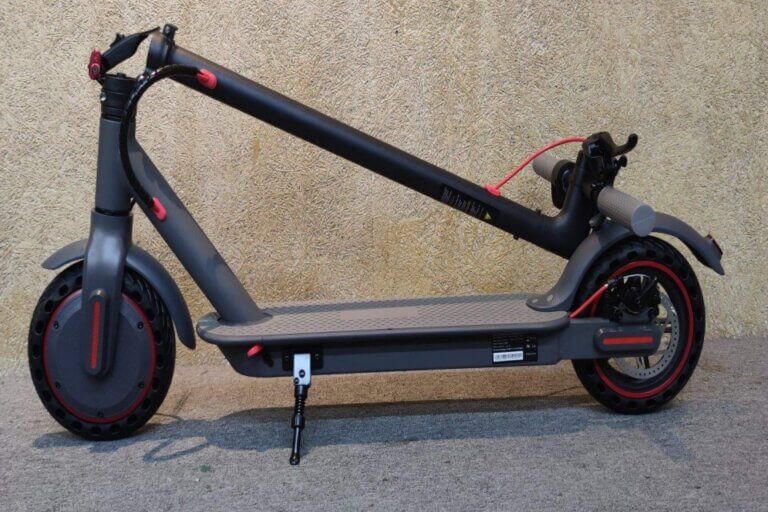
| FS Pro | Adult riders + longer routes + tougher duty cycles | Airless tires, swappable battery, thicker brakes | Lower flats + quicker turnaround = better SLA performance | FS Pro lists airless tires and swappable battery. |
| S1 | Inclusive fleets / heavier riders / mixed user base | Swappable battery, reinforced build approach | Cities care about access and reducing “not for me” complaints | S1 page describes swappable battery and higher load focus. |
And if you want the business positioning in one line (without sounding like a brochure):
EZBKE pitches itself as a long-running manufacturer offering OEM/ODM, bulk wholesale, and ISO-certified production lines, which is exactly what fleet buyers want when they’re trying to win permits and not get burned on QA drift.
Final take: the “partnership” is a triangle (city rules × operator ops × OEM hardware)
If you’re trying to sell sharing scooters in 2026, you’re not just selling a vehicle. You’re selling a permit-ready operating capability.
- Cities want control (parking, speed zones, compliance).
- Operators want uptime (fast swaps, fewer flats, stable IoT).
- OEMs win when they ship hardware + docs + data readiness, so operators can pass procurement and keep the city calm.