


-
414 Block B, ZT Times Plaza, Wuhan, Hubei, China

Blog
Best Cities For Kick Scooter Demand In The US And EU
Argument 1: EU kick scooter demand tracks cycling modal share, bike network per 10,000 people, and search interest
If you want a “where will scooters move fast” shortcut in the EU, look for places with:
- High cycling modal share (people already ride daily),
- Dense bike network (the city makes it easy),
- High search interest (people actively look up “bike lanes”, “e-scooter rules”, etc.). (comparethemarket.com.au)
Table 1 — EU cities with strong demand signals (same scoring method)
(Data points below come straight from the ranking write-up.) (comparethemarket.com.au)
| City (EU) | Cycling modal share | Bike network per 10,000 people (km) | Search interest per 10,000 people | Cycling Friendliness Score |
|---|---|---|---|---|
| Utrecht, NL | 48.40% | 75.63 | 3,609.96 | 93.56 |
| Freiburg im Breisgau, DE | 34.00% | 122.94 | 374.62 | 80.00 |
| Malmö, SE | 26.00% | 83.11 | 1,117.96 | 75.20 |
| Eindhoven, NL | 24.00% | 92.58 | 926.97 | 74.90 |
| Poznań, PL | 8.40% | 70.25 | 2,431.53 | 73.32 |
So what? In cities like these, riders don’t need a huge “education push.” They already get it. Your job becomes simple: keep the SKU tight, keep uptime high, and don’t drown in RMAs.
Argument 2: In the US, search interest can beat daily riding
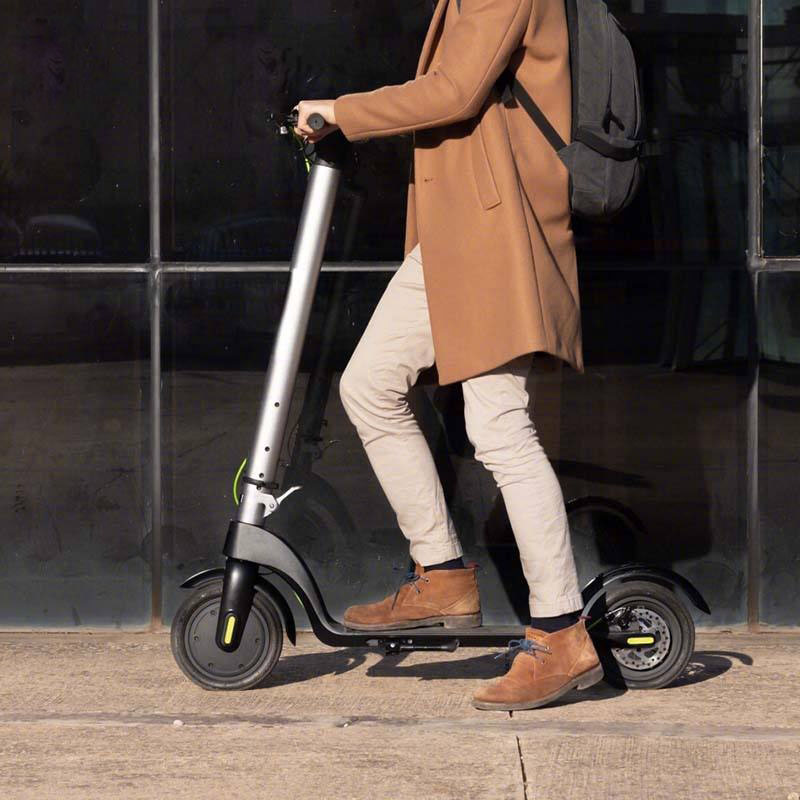
In a lot of US cities, people want alternatives, but the daily habit lags. You see that gap when you compare “search interest” vs “people actually riding every day.”
- Boston lands as a global honorable mention largely due to high search volume (3,212.17 searches per 10k) and a score of 70.88. (comparethemarket.com.au)
- Austin shows the pattern even more clearly: strong interest online, decent network per capita, but tiny daily cycling share (0.01%). (mysanantonio.com)
Table 2 — US demand signals (what the public numbers show)
| City (US) | Signal type | Search interest per 10k | Bike lanes / network per 10k | Daily cycling share | Score |
|---|---|---|---|---|---|
| Boston | Global honorable mention | 3,212.17 | — | — | 70.88 |
| Austin | US top 10 (in that study) | 795 | 21.3 miles per 10k | 0.01% | 58.27 |
How you use this: In the US, you often win with “try-it” moments—demo days, fleet pilots, campus programs, delivery partnerships. People won’t convert just because your scooter looks cool. They convert because it fits their day, and it doesn’t break.
Argument 3: Shared micromobility trips show scooters are already mainstream
Here’s the blunt truth: kick scooters aren’t a niche toy anymore, at least in shared mobility.
- In 2023, the US had 133 million shared micromobility trips, split almost evenly: 65 million scooter trips vs 68 million bike trips. (energy.gov)
- NACTO also reports dockless e-scooter trips bounced back in 2023: 69 million vs 58.5 million in 2022 (US + Canada). (nacto.org)
When a market pushes tens of millions of rides, buyers stop asking “Is there demand?” and start asking:
- “What’s the right fleet spec?”
- “How do I keep downtime low?”
- “Can I pass compliance without customs roulette?”
Argument 4: Rental e-scooter bans and municipal licences can flip demand overnight
EU demand can be huge, but policy can also slam the door. If you ignore this, you’ll get stuck with dead stock. It happens.
- Paris moved to ban rental e-scooters after a vote where 89.03% of votes cast opposed them, and the mayor said rental licences wouldn’t continue from Sept. 1. (cnbc.com)
- Madrid cancelled licences for major operators and planned a rental ban starting October 2024, pointing to parking and safety compliance failures. (reuters.com)
- Finland tightened rules with a minimum age of 15 and required municipal licences for rental companies. (reuters.com)
Practical takeaway: Build a lineup that can handle rule changes. Speed caps, lighting, braking, traceability, and clear paperwork aren’t “nice to have.” They’re how you keep selling when rules tighten.
Electric Kick Scooter: product lineup fit
EZBKE already frames this the right way: distributors don’t buy “a scooter,” they buy a low-drama business line—clean docs, fewer failures, clear positioning. (ezbke.com)
And the category pitch stays simple: IP54-rated durability + UL-certified batteries + wholesale + custom branding/OEM/ODM. (ezbke.com)
Table 3 — EZBKE Electric Kick Scooter lineup by scenario (quick sell sheet)
(These specs are listed in EZBKE’s distributor-focused lineup section.) (ezbke.com)
| Model keyword | Best-fit scenario | Fast specs buyers understand |
|---|---|---|
| 4000W Dual Motor Electric Kick Scooter with 100km Range | Performance shops, fleet demos, premium buyers | up to 75 km/h, up to 100 km, dual hydraulic disc brake, motorcycle-class suspension, swappable battery |
| GS1/GS1-Pro electric scooter for heavy adults 400lbs | Retail “one scooter fits most”, delivery fleets | 350W/500W, up to 30 km/h, 30–50 km range, E-ABS + drum brake, suspension, NFC (Pro) |
| H0/H0 Pro best electric scooter foldable for heavy adults | Entry retail + campus runs | 250W/350W, 8–18 km range, electronic + foot brake, magnesium alloy frame |
| H1 foldable electric scooter for adults for commuting | Corporate fleet, short-trip commuting | 150W, 15–20 km range, 25 km/h, ~8 kg net weight |
| M365 lightweight fast electric scooter for adults 20 mph | Fast-moving commuter SKU | 350W, 15/20/30 km range options, 25–30 km/h, CE/FCC/ROHS listed |
| Urbanm G1 electric scooter foldable 40 mph | Urban M line: commuter + delivery + rental | 500W, 40–60 km range, 38 km/h max, foldable, solid tires, CE listed, 150 kg load |
| X3 long range electric folding scooter for adults | Practical commuting + light fleet | 350W, 25–40 km range, EABS + disc brake, 10-inch pneumatic tires, USB port |
Main Application
EZBKE’s own homepage calls out where scooters actually earn their keep. This matters because “demand” isn’t abstract. It’s tied to daily routines. (ezbke.com)
Last-Mile Commuting
If you’re selling into EU cities with high cycling share, commuting SKUs win when they feel stable + boring (that’s a compliment). Think: clean fold, reliable brakes, easy spare parts.
For the US, commuting still works, but you usually need partners—campus programs, apartment complexes, maybe even “subway-to-office” bundles. (ezbke.com)
Food & Parcel Delivery
Delivery riders care about torque, braking feel, and “can it take abuse.” They also ask about load rating and controller heat. That’s why heavy-rider models and the Urban M commuter/delivery lane make sense. (ezbke.com)
Tourist Mobility
Tourism is where policy can bite. A city can love visitors, then clamp down on parking chaos. So fleet buyers should spec for easy ops: durable frame, simple maintenance, and a clean RMA loop. Kinda boring again, but it prints money when done right. (ezbke.com)
OEM/ODM: MOQ and bulk orders, MAP pricing and channel protection, After-sales support and spare parts
This is where wholesalers and distributors either win big or burn out.
EZBKE’s B2B guidance is basically distributor speak: MAP, channel protection, sensible onboarding POs, and an RMA loop that doesn’t wreck your week. (ezbke.com)
Here’s a simple “no drama” checklist you can actually use:
- MOQ + starter PO: start small, prove sell-through velocity, then expand SKUs. (ezbke.com)
- RMA loop: video + serial number, decide parts swap vs unit swap, ship a parts kit, track failure codes. dont overcomplicate it. (ezbke.com)
- Docs pack: you want buyers to feel “this will clear customs.” EZBKE already talks through CE/RoHS/FCC/EN 17128/UN 38.3 style paperwork language. (ezbke.com)
A city-demand-to-SKU plan you can use tomorrow
Table 4 — Turn demand signals into a clean Electric Kick Scooter SKU plan
(Left side comes from the demand proxies and policy examples; right side uses EZBKE lineup positioning.) (comparethemarket.com.au)
| What you see in a city | What it usually means | SKU direction (EZBKE examples) |
|---|---|---|
| High cycling modal share + dense bike network | Riders already trust 2-wheel transport | Commuter + light fleet (M365, X3), plus a “step-up” model for upsell |
| High search interest but low daily riding | People are curious, habit isn’t locked yet | Demo-friendly commuter (Urbanm G1), plus entry models (H0/H0 Pro) for fast conversion |
| Strong shared-mobility activity | Fleet operators care about uptime and service | Fleet-ready specs, parts support, and clear RMA workflow (Urbanm G1, GS1/GS1-Pro) |
| Rental bans / licence pressure | Demand becomes “private ownership” or shifts cities | Compliance-ready tuning (speed/lighting/braking) + OEM/ODM differentiation, avoid overloading on rental-only configs |
Wrap-up (quick, because you’ve got work)
If you’re trying to answer “Best Cities For Kick Scooter Demand in the US and EU,” don’t chase one magic ranking. Watch the three levers:
- Infrastructure + daily riding habit (EU leaders show it clearly). (comparethemarket.com.au)
- Intent vs reality (US often has high curiosity before daily use). (mysanantonio.com)
- Policy (a ban or licence rule can re-shape demand fast). (cnbc.com)
Then build a lineup that feels easy to sell and easy to support. That’s where the Urban M lane (Urbanm G1) and the “commuter + heavy rider + performance” mix starts to look like a real business, not a guessing game. (ezbke.com)